EN
Georgia is one of the most vibrant, welcoming, and varied countries in the world. In a small area, it brings together snow-capped 5,000-meter peaks of the Caucasus, thousand-year-old Orthodox shrines, subtropical forests, Black Sea resorts, and ancient wine valleys. In one trip, you can explore Tbilisi’s historic entryways and domed baths, taste qvevri wines in Kakheti, climb to Gergeti Trinity Church below Mount Kazbek, swim in Batumi, and visit Svaneti’s medieval towers.
When planning a trip across Georgia, independent travelers inevitably face the question: what should you see first, how do you distribute time wisely, and how do you build an optimal itinerary? To help you plan an ideal vacation by car or public transport, we selected the top 50 main attractions of Georgia, grouping them into 8 key tourist regions of the country.
This detailed illustrated guide brings together not only famous UNESCO sites and postcard landmarks, but also quiet natural locations, the best viewpoints, and verified practical information: how to get there, optimal timing, seasonality, practical tips for travelers, and interesting historical facts.
Guide contents:
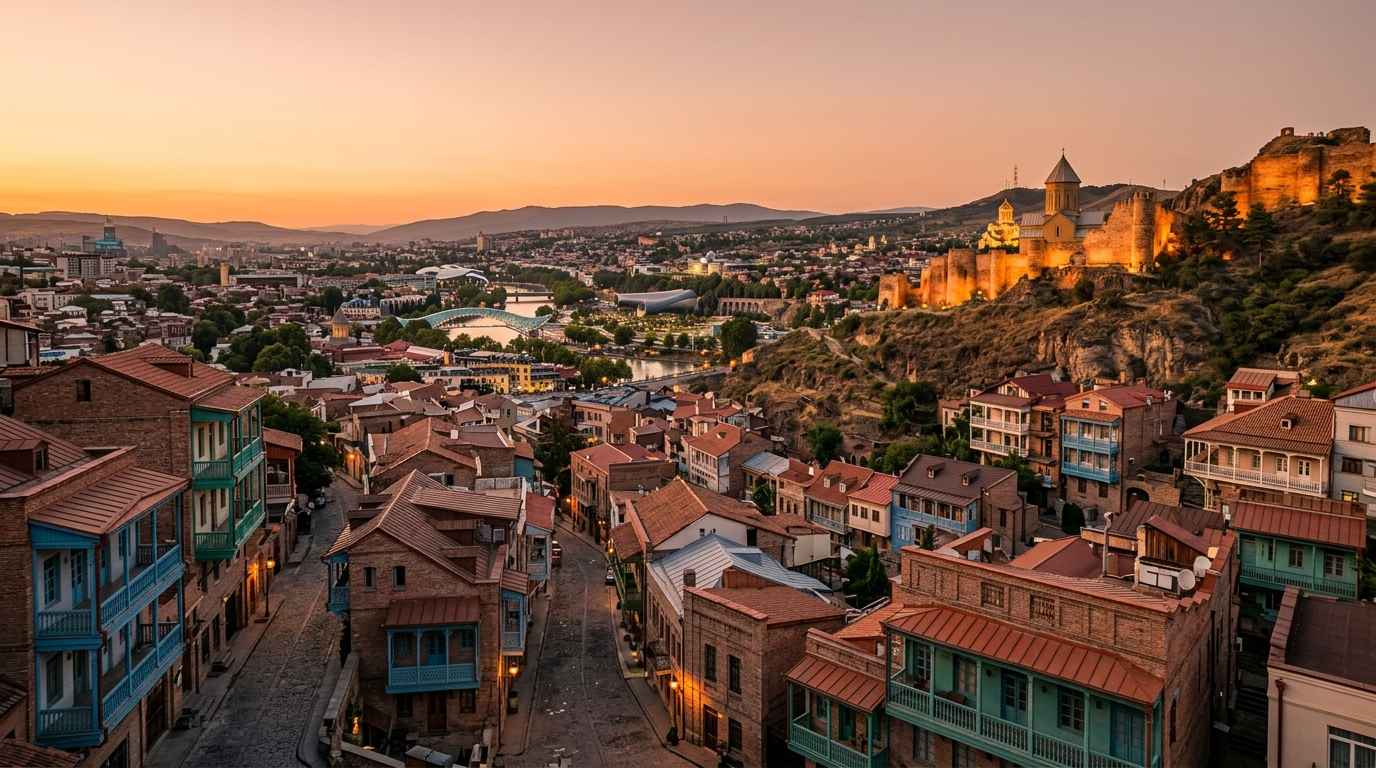
Tbilisi is a city you fall in love with from your first cup of coffee on a carved balcony. It is a living mix of thousand-year history and vibrant modern life: cobblestone streets and the domes of sulfur baths sit right next to trendy wine bars, concept galleries, and futuristic bridges.
The main magic of the capital lies in the details. Here, you want to lose yourself in the labyrinths of the Old Town, peek into secret entryways with century-old wall paintings, listen to the sound of the Kura River from the walls of the ancient Narikala Fortress, and watch sunsets from the Mtatsminda viewpoint. It is an ideal city for long walking tours and culinary discoveries.
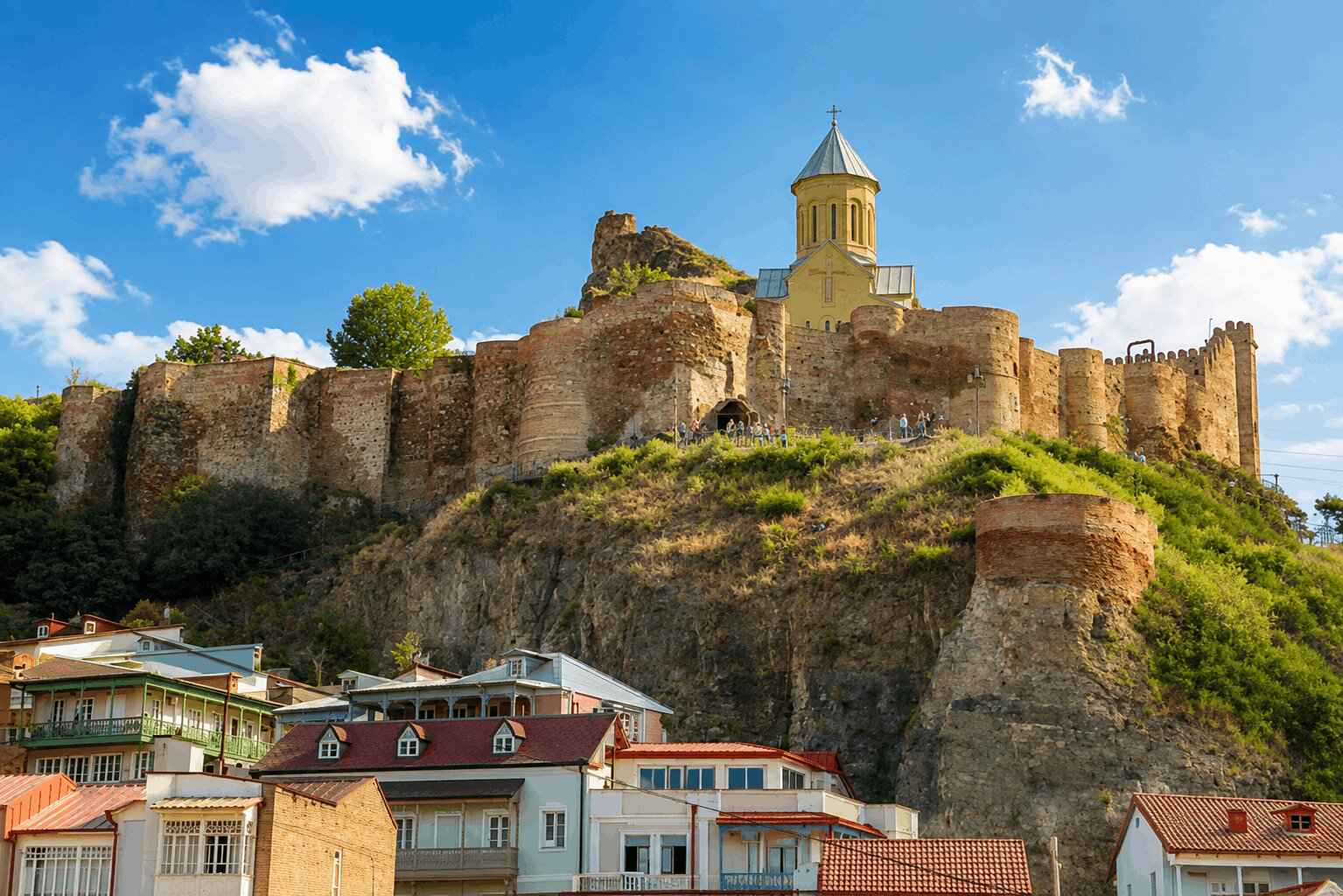
Tbilisi • Old Town
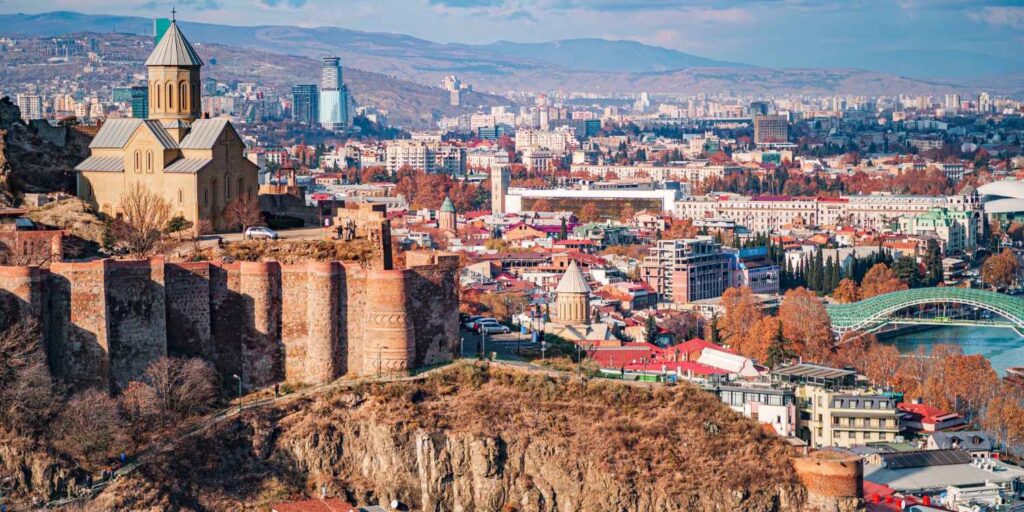
Narikala is the heart of old Tbilisi and the best place to start exploring the city. The fortress has towered over the Kura for more than fifteen hundred years, and its walls offer one of the most beautiful panoramas of the capital. It is from here that you can see the red roofs of the Old Town, modern neighborhoods, and surrounding mountains all at once.
🔥 What you should definitely see:
📌 Practical information:

BeeTravel tip: Take the cable car up to the fortress and walk back down through the Old Town; it is one of the most beautiful routes in Tbilisi.
Interesting fact: The name "Narikala" presumably comes from a Persian word meaning "impregnable fortress."
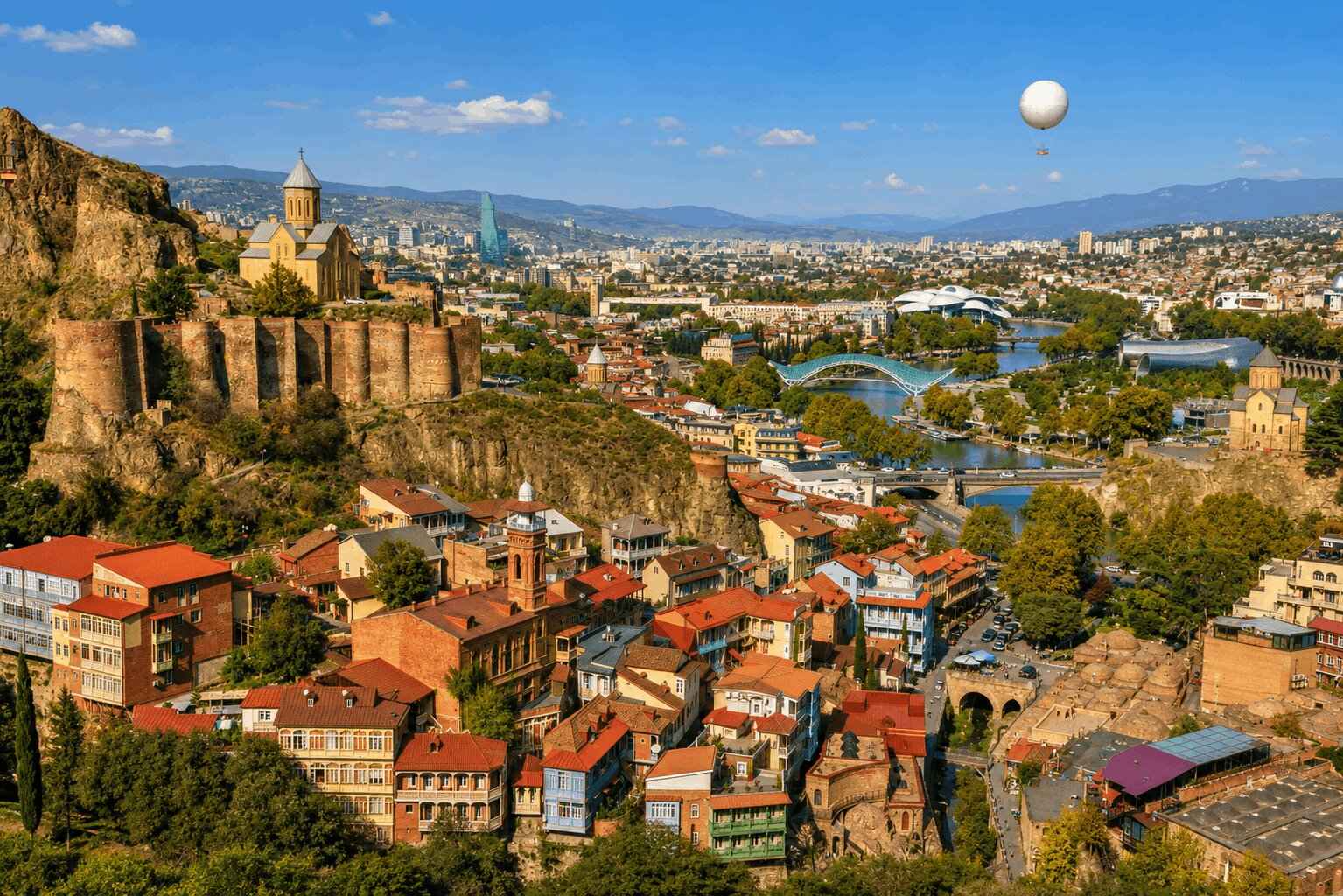
Tbilisi • Historic Center
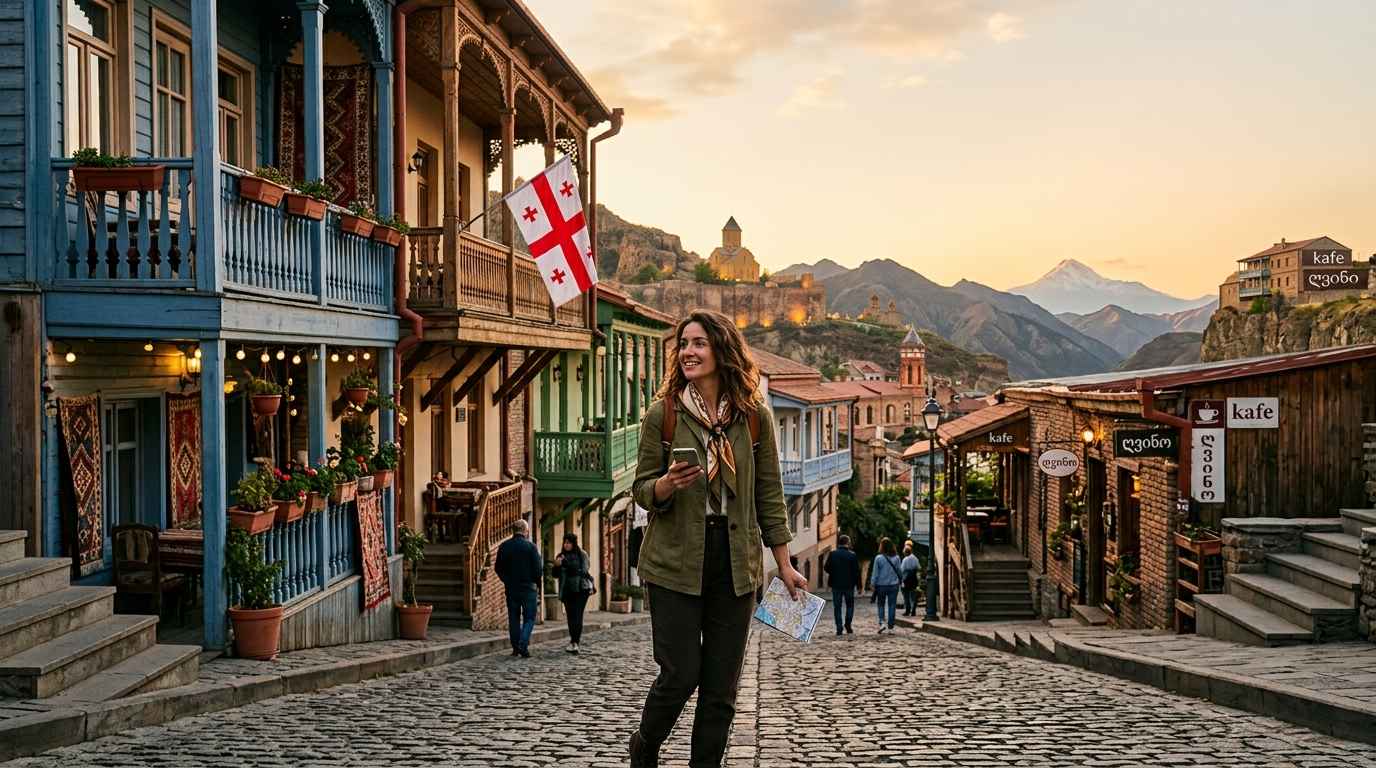
Old Tbilisi is a real labyrinth of narrow streets, carved wooden balconies, cozy courtyards, and ancient churches. This is where you can best feel the city's atmosphere, where the East and Europe have existed side by side for centuries. Here, you want to take your time and simply stroll, looking into small courtyards, cafes, and wine bars.
🔥 What you should definitely see:
📌 Practical information:
BeeTravel tip: Do not plan your route in advance. The most beautiful corners of Old Tbilisi are often discovered completely by chance.
Interesting fact: Many of the famous wooden balconies were built over a hundred years ago and still remain residential homes.
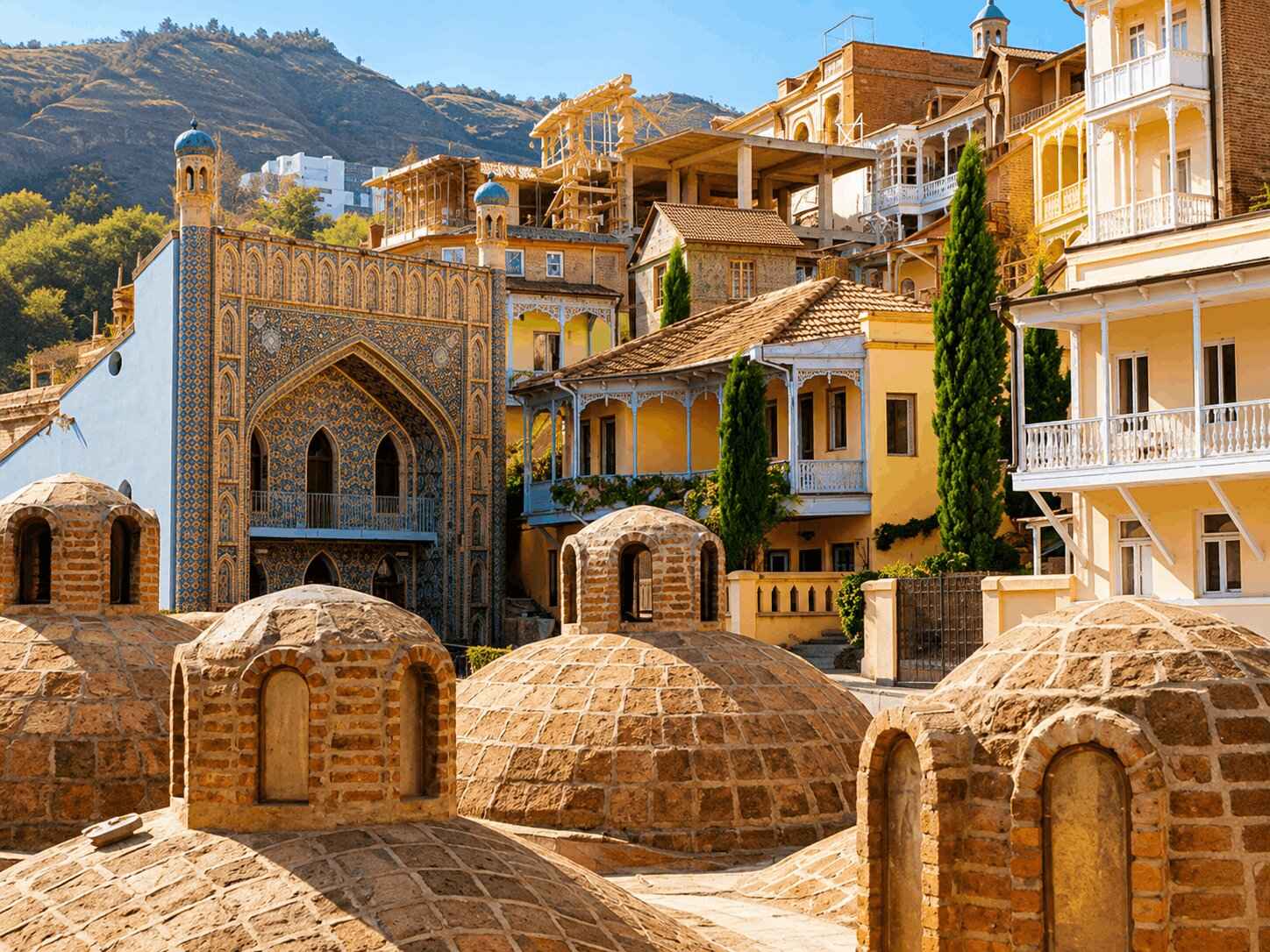
Tbilisi • Abanotubani
The history of Tbilisi began precisely with hot sulfur springs. Domed baths have been operating here for several centuries, and natural mineral water flows directly from underground springs. Even if you do not plan to visit a bathhouse, the Abanotubani district is one of the most atmospheric places in the capital.
🔥 What you should definitely see:
📌 Practical information:

BeeTravel tip: If you want to visit a bathhouse, it is better to book a private room in advance, especially during high season.
Interesting fact: The name “Tbilisi” comes from the Georgian word “tbili”, meaning “warm,” a reference to these hot springs.
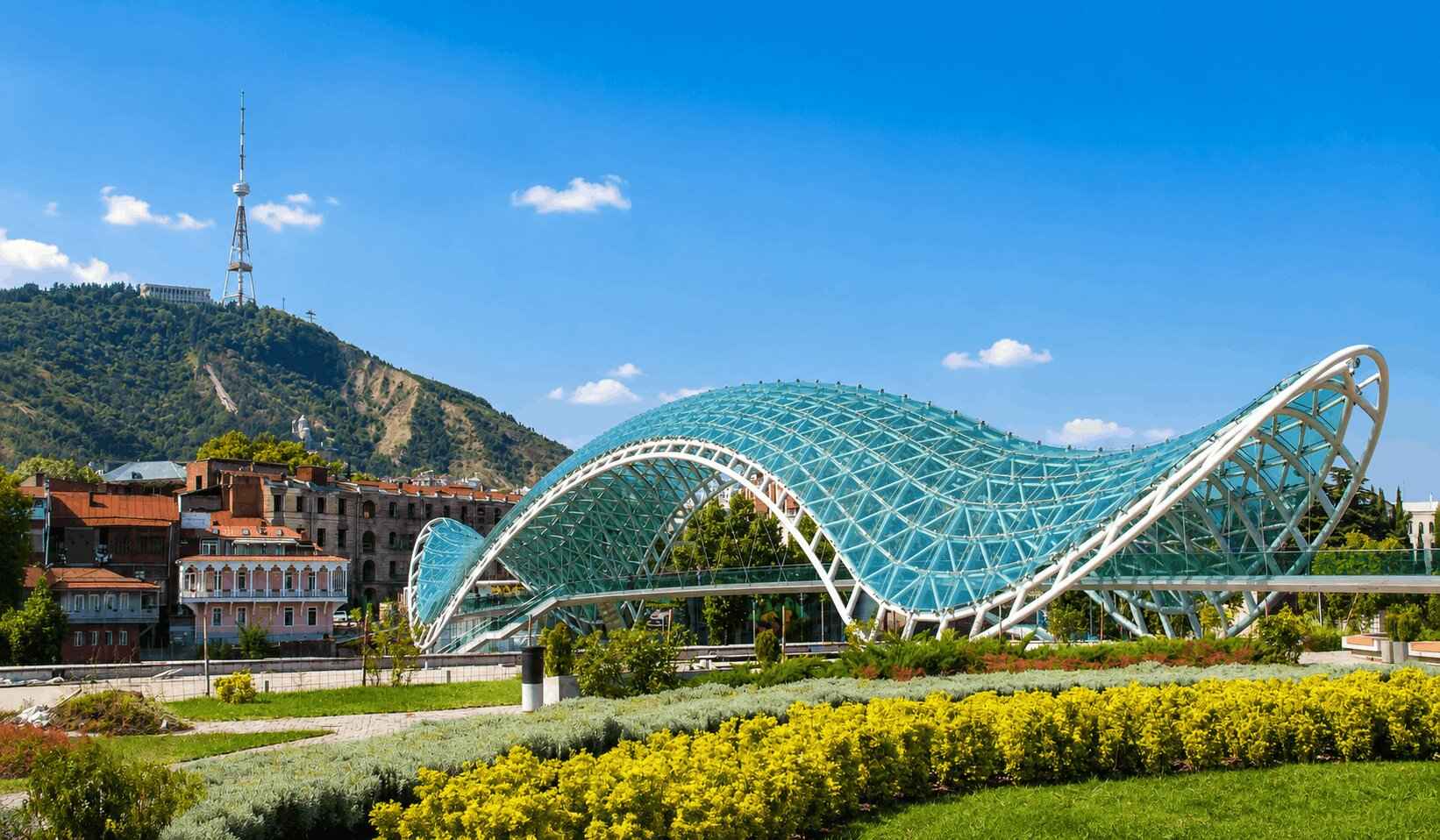
Tbilisi • City Center
The Bridge of Peace is one of the symbols of modern Tbilisi. A glass structure of unusual shape connects the historic city center with Rike Park and looks especially striking in the evening, when artistic illumination turns on. It is a great place for a walk and beautiful photos.
🔥 What you should definitely see:
📌 Practical information:

BeeTravel tip: The best photos are taken from the opposite bank of the Kura or from Narikala Fortress.
Interesting fact: The bridge is about 150 meters long, and its structure is assembled from thousands of glass elements and steel parts.
Tbilisi • Avlabari
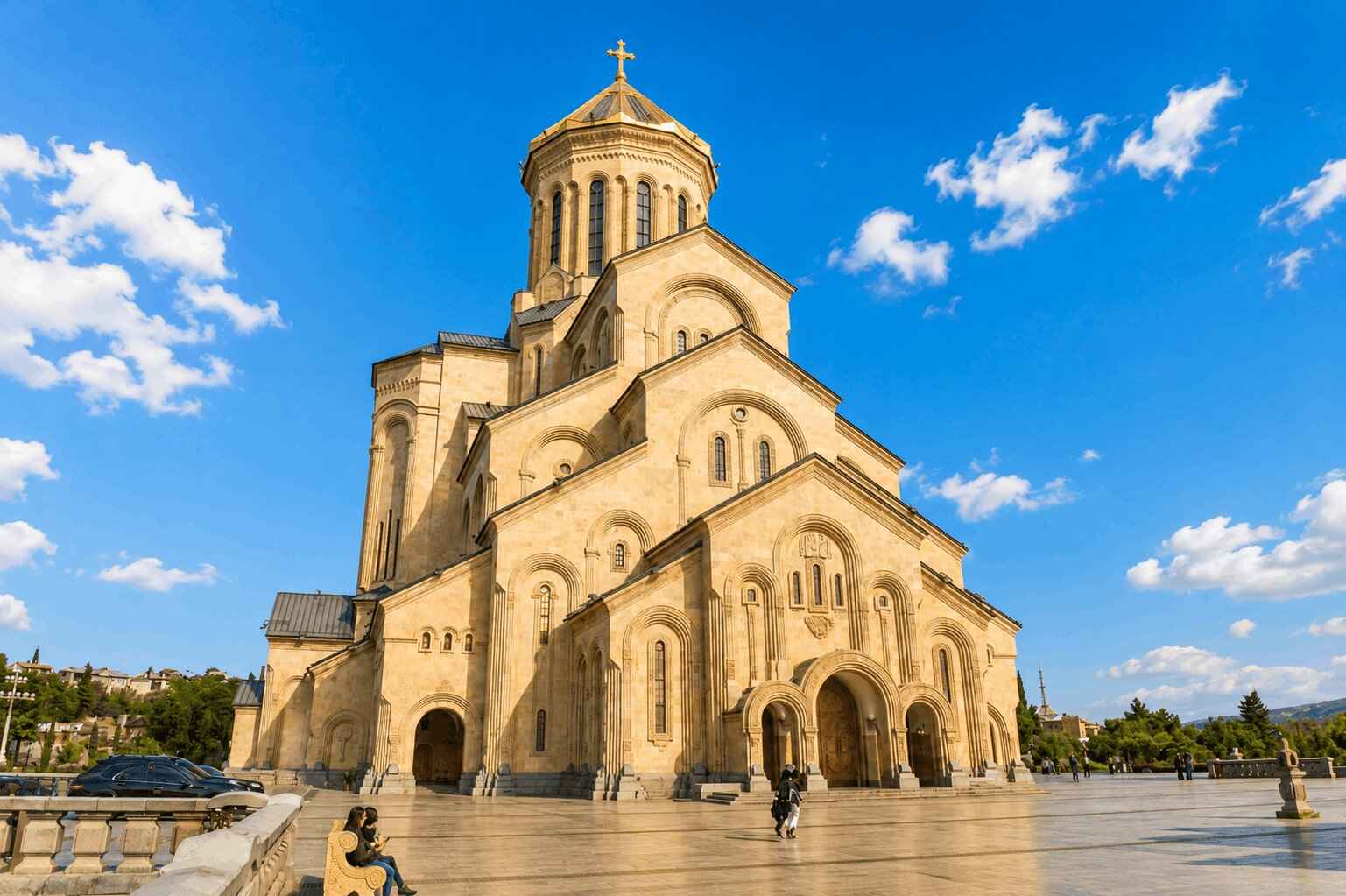
Sameba is the main cathedral of the Georgian Orthodox Church and one of the largest Orthodox churches in the world. Its golden dome is visible from almost anywhere in Tbilisi. The spacious grounds, majestic architecture, and peaceful atmosphere make this place well worth visiting regardless of religious beliefs.
🔥 What you should definitely see:
📌 Practical information:
BeeTravel tip: When visiting the church, choose modest clothing and maintain silence, as this is an active cathedral.
Interesting fact: The height of the cathedral along with its cross exceeds 100 meters, making Sameba one of the tallest Orthodox churches in the world.
Tbilisi • Old Town
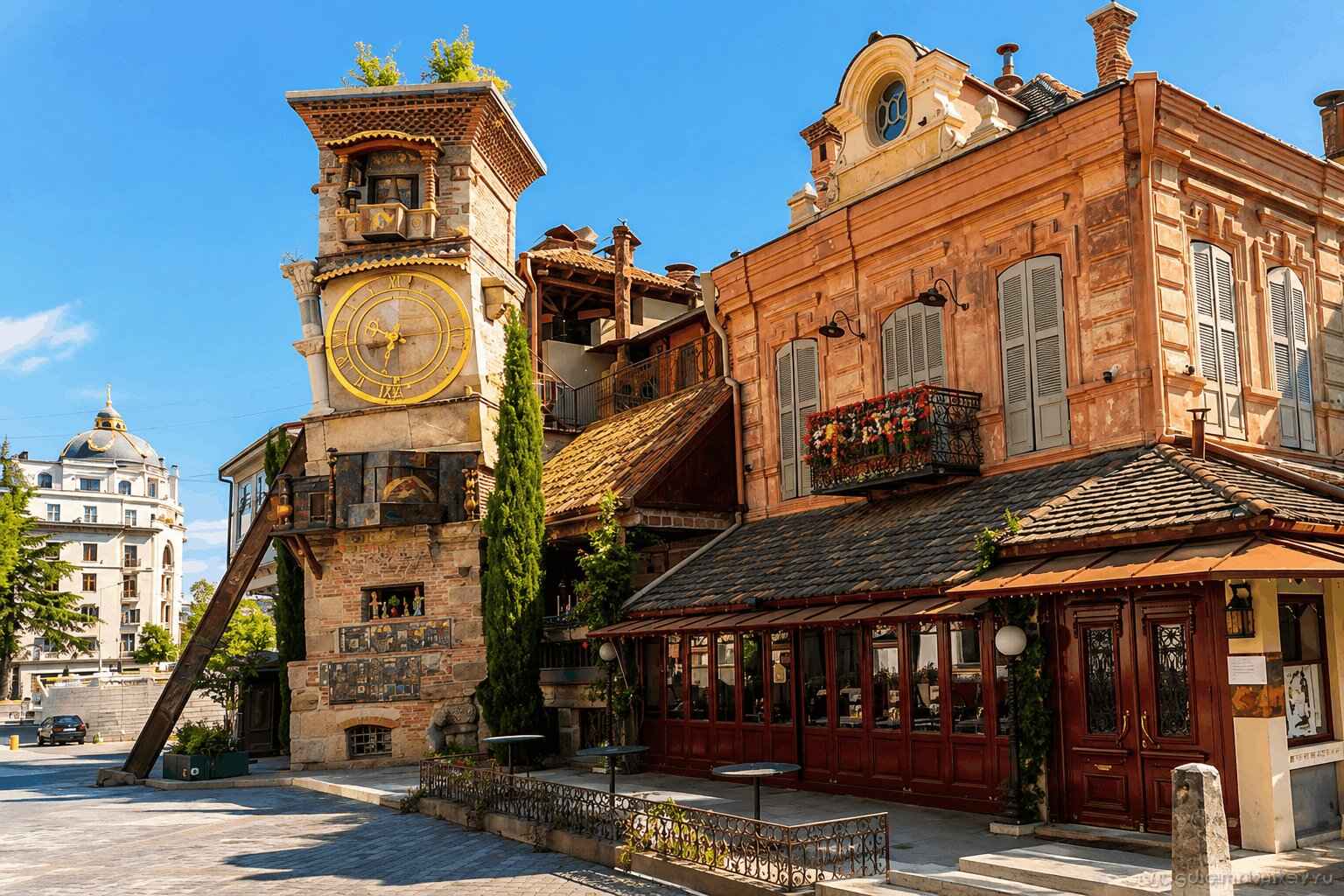
This is one of the most fairy-tale corners of Tbilisi. The unusual tower seems assembled from old bricks, balconies, and turret clocks, and every hour a small angel appears above the clock face and strikes a bell. Here, you want to pause, take photos, and simply enjoy the atmosphere of the old city.
🔥 What you should definitely see:
📌 Practical information:

BeeTravel tip: Try to arrive a few minutes before the top of the hour to see the mini-performance with the angel on the tower.
Interesting fact: The clock tower was built according to a design by artist, director, and screenwriter Rezo Gabriadze, deliberately crafted to appear slightly crooked and whimsical, as if straight out of the pages of a children's book.
Tbilisi • City Center
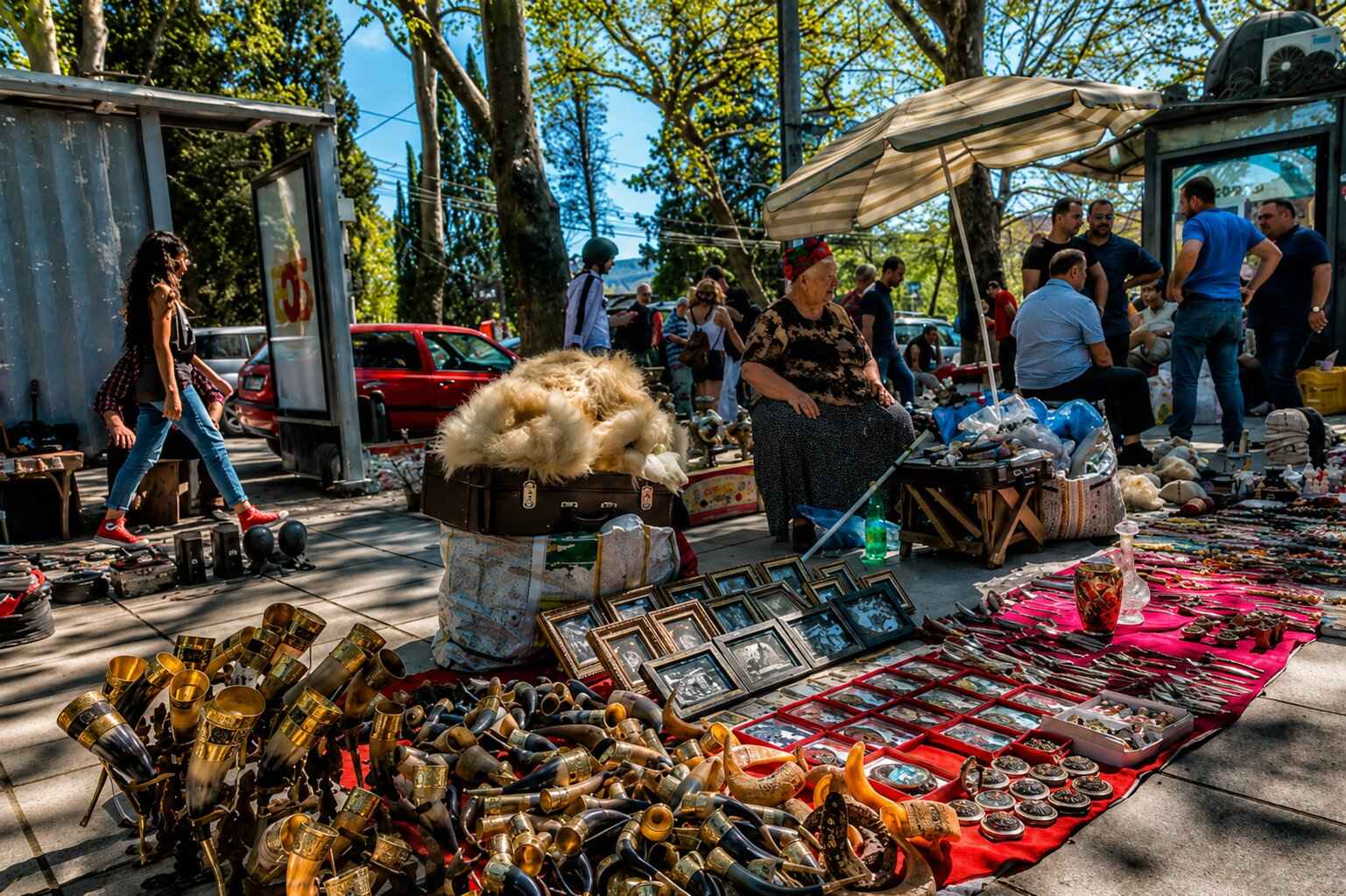
Dry Bridge is the most famous place in Tbilisi for finding unusual souvenirs and vintage items with history. Here, vendors sell old cameras, vinyl records, paintings, Soviet porcelain, jewelry, books, coins, and dozens of other rarities. Even if you do not plan to buy anything, a walk through the market turns into a true journey back in time.
🔥 What you should definitely see:
📌 Practical information:
BeeTravel tip: Do not hesitate to bargain, as for many sellers this is a customary part of interacting.
Interesting fact: Dry Bridge got its name because a river used to flow underneath it, but the riverbed was later diverted, leaving the bridge dry.
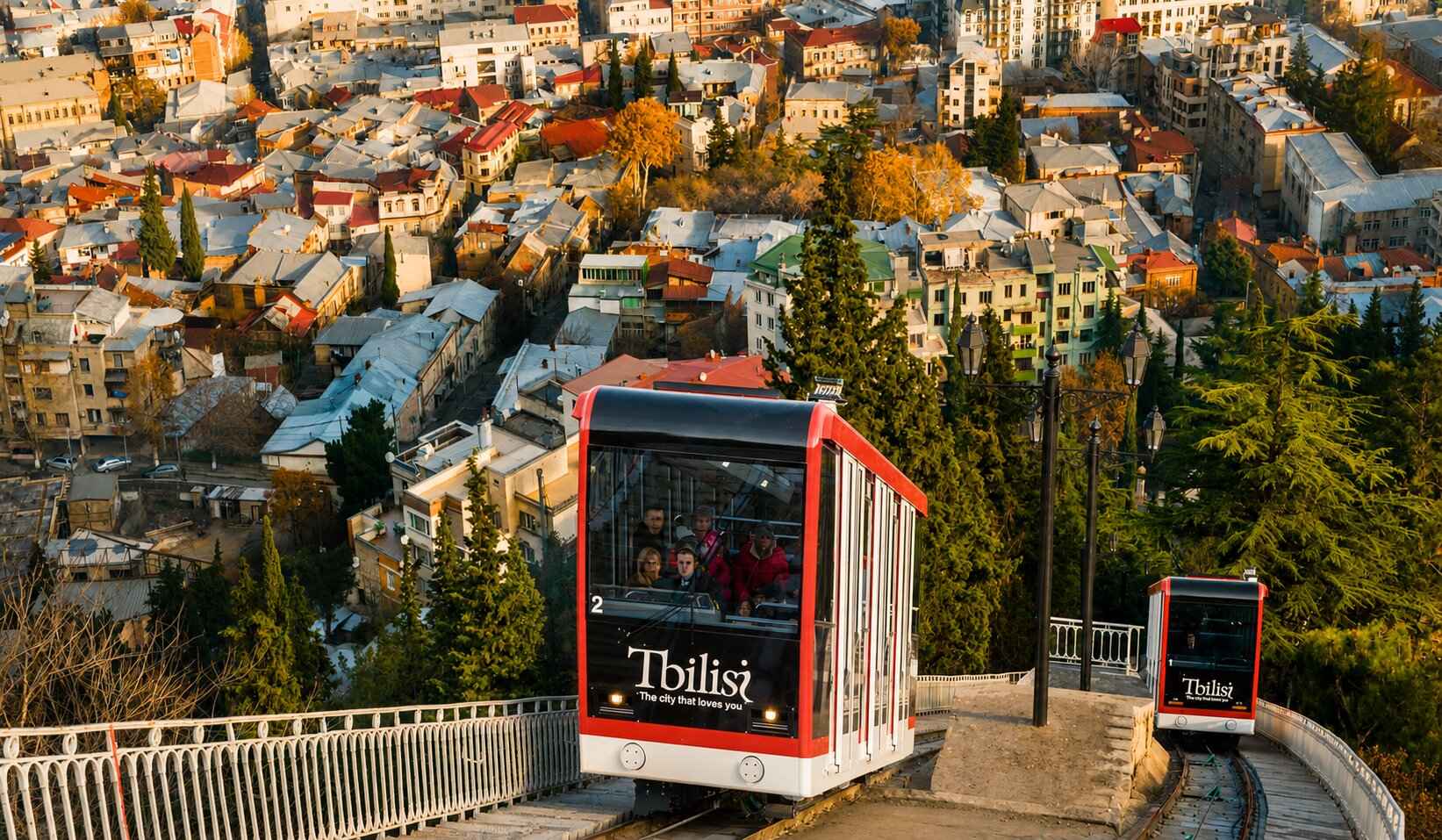
Tbilisi • Mtatsminda
The Tbilisi funicular has been running for more than a hundred years and remains one of the most unusual forms of urban transport. The train slowly climbs the steep mountainside, offering beautiful views of the historic center. Along the way, you can get off at the Pantheon and then continue your ascent to Mtatsminda Park.
🔥 What you should definitely see:
📌 Practical information:
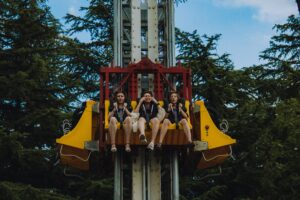
BeeTravel tip: If you plan to visit Mtatsminda Park, choose the funicular instead of a car, so the ride itself becomes part of the experience.
Interesting fact: The first line of the funicular was opened in 1905 and quickly became one of the main landmarks of Tbilisi.
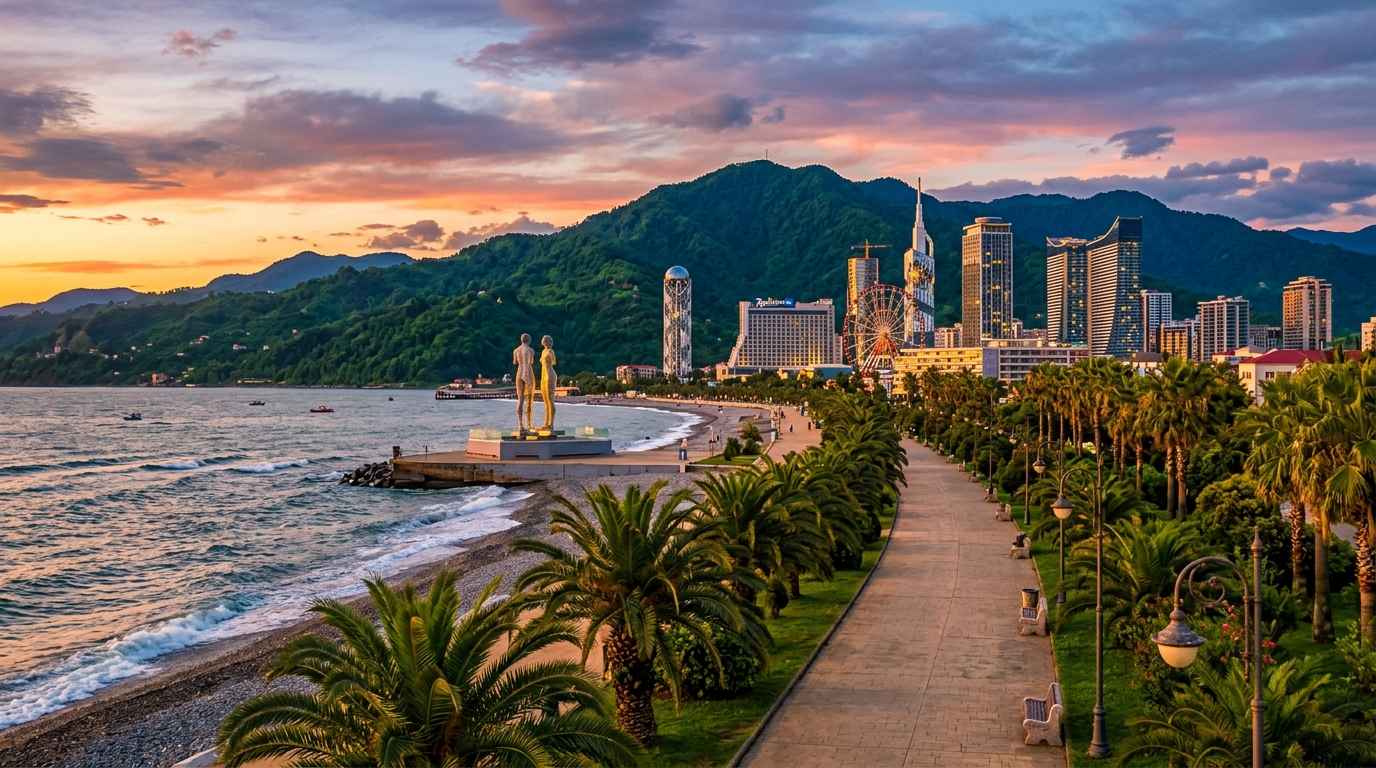
Batumi is Georgia's main seaside resort, where subtropical lightheartedness meets bold modern architecture. People come here for the scent of eucalyptus trees, long walks along the 7-kilometer Seaside Boulevard, sea sunsets, and that authentic piping-hot boat-shaped Adjarian khachapuri.
Yet Adjara is far more than just the sea and skyscrapers. Just half an hour's drive from the beaches, you will find the lush jungle of the Botanical Garden at Green Cape, rushing mountain waterfalls, ancient arched bridges dating to the time of Queen Tamar, and Byzantine fortresses with postcard views of the waves.
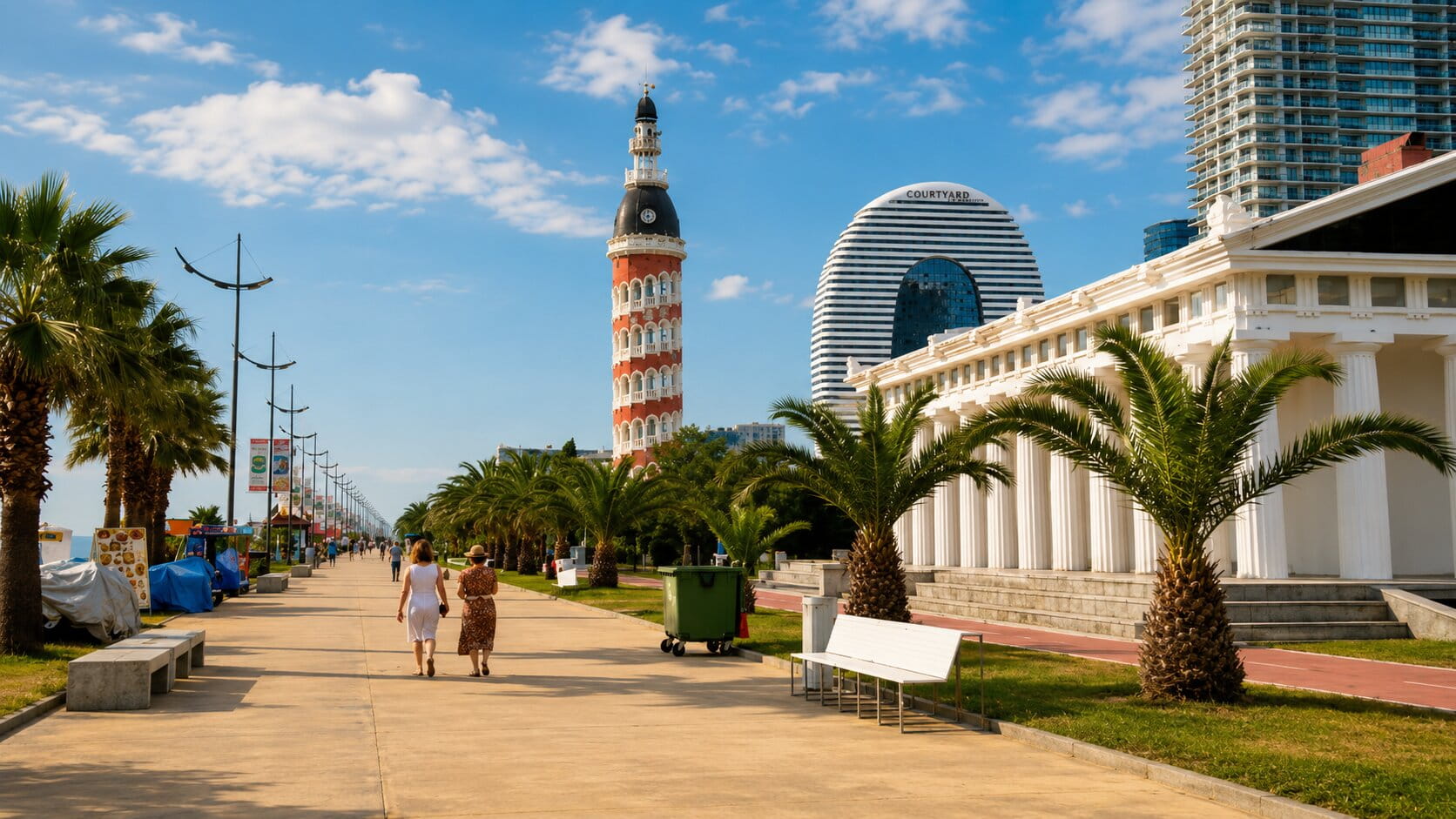
Batumi • Seafront
Batumi Boulevard is the heart of the city's resort life and one of the most beautiful places on the Black Sea coast. The spacious promenade stretches along the sea for several kilometers, uniting parks, fountains, modern sculptures, cafes, and beaches. It is equally pleasant to stroll here in the morning, afternoon, and especially in the evening, when the city lights up.
🔥 What you should definitely see:
📌 Practical information:
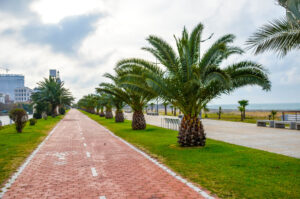
BeeTravel tip: Do not limit yourself to the central section of the boulevard; the northern and southern stretches are much quieter and great for walks.
Interesting fact: The history of Batumi Boulevard began back in 1881, and today it is considered one of the oldest seaside parks on the entire Black Sea coast.
Batumi • Batumi Boulevard
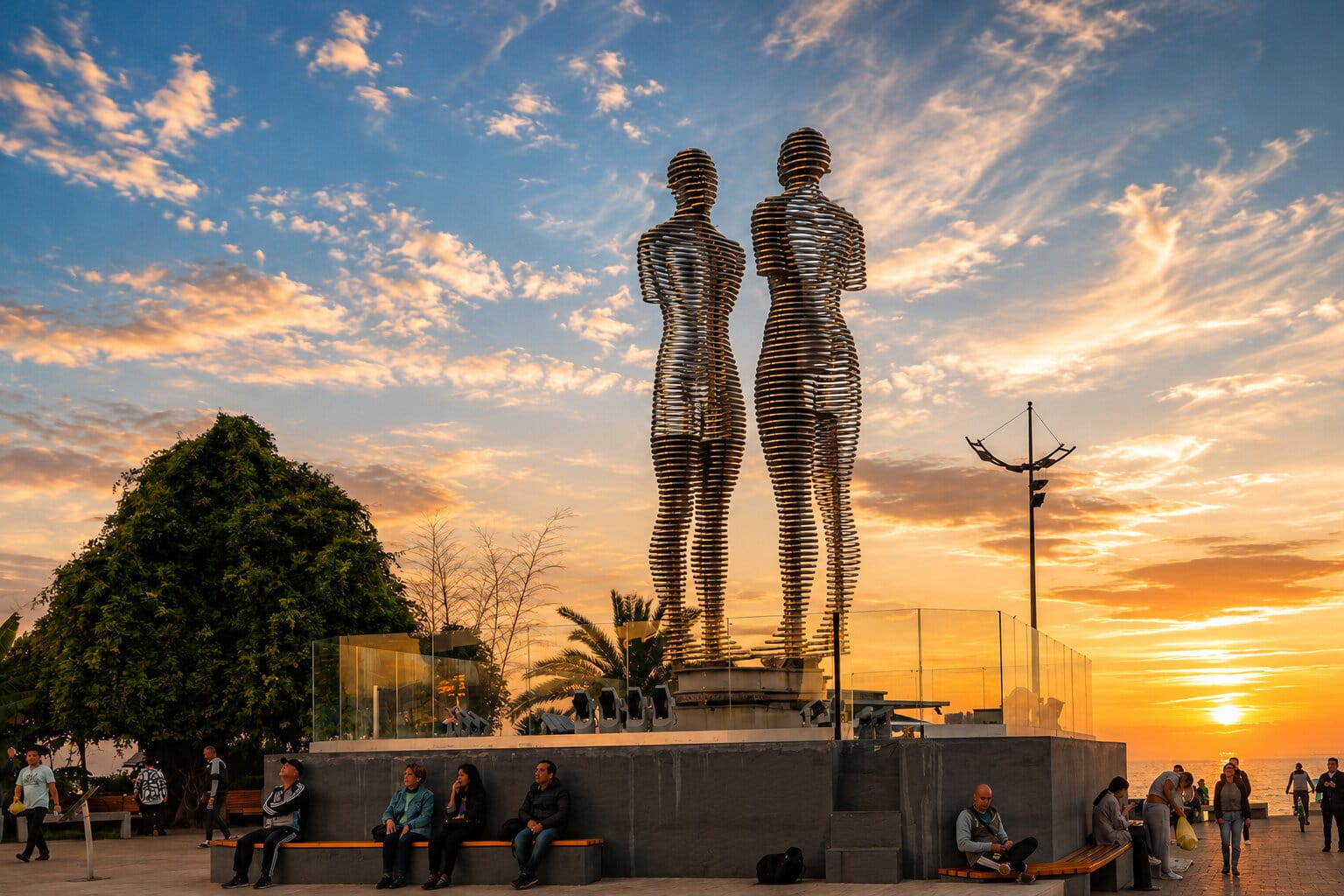
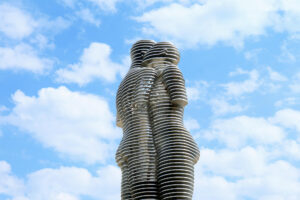
"Ali and Nino" is the most famous modern sculpture in Batumi. Two seven-meter figures move slowly toward each other, merge for a moment, and then part again. This touching symbol of love overcoming cultural and religious differences looks especially beautiful against the backdrop of the sunset sea.
🔥 What you should definitely see:
📌 Practical information:
BeeTravel tip: Arrive about half an hour before sunset, when the sea, sky, and illumination of the sculpture create ideal conditions for photos.
Interesting fact: The sculpture was created by Georgian artist Tamar Kvesitadze, inspired by the novel "Ali and Nino," which tells the love story of an Azerbaijani young man and a Georgian princess.
Batumi • Green Cape
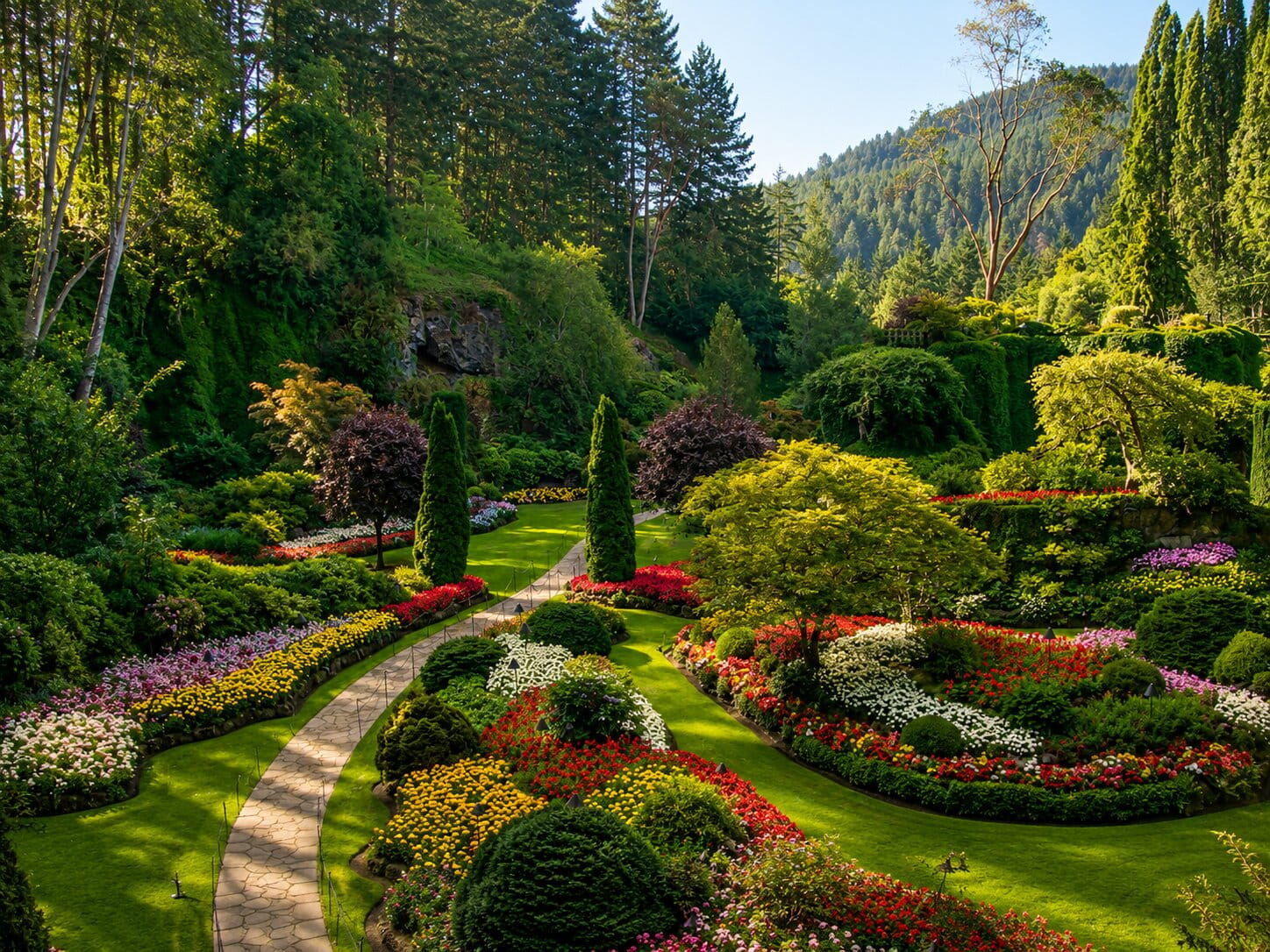
Batumi Botanical Garden is one of the largest and most beautiful botanical gardens in Europe. Thousands of plant species from all continents are gathered across its vast grounds, and walking paths run along picturesque sea cliffs with magnificent views of the Black Sea.
🔥 What you should definitely see:
📌 Practical information:

BeeTravel tip: It is better to enter through the upper entrance and gradually walk down to the sea, making the route much easier.
Interesting fact: Plants from nine floristic regions of the world grow in the garden, allowing you to "visit" several continents during a single walk.
Gonio • Adjara
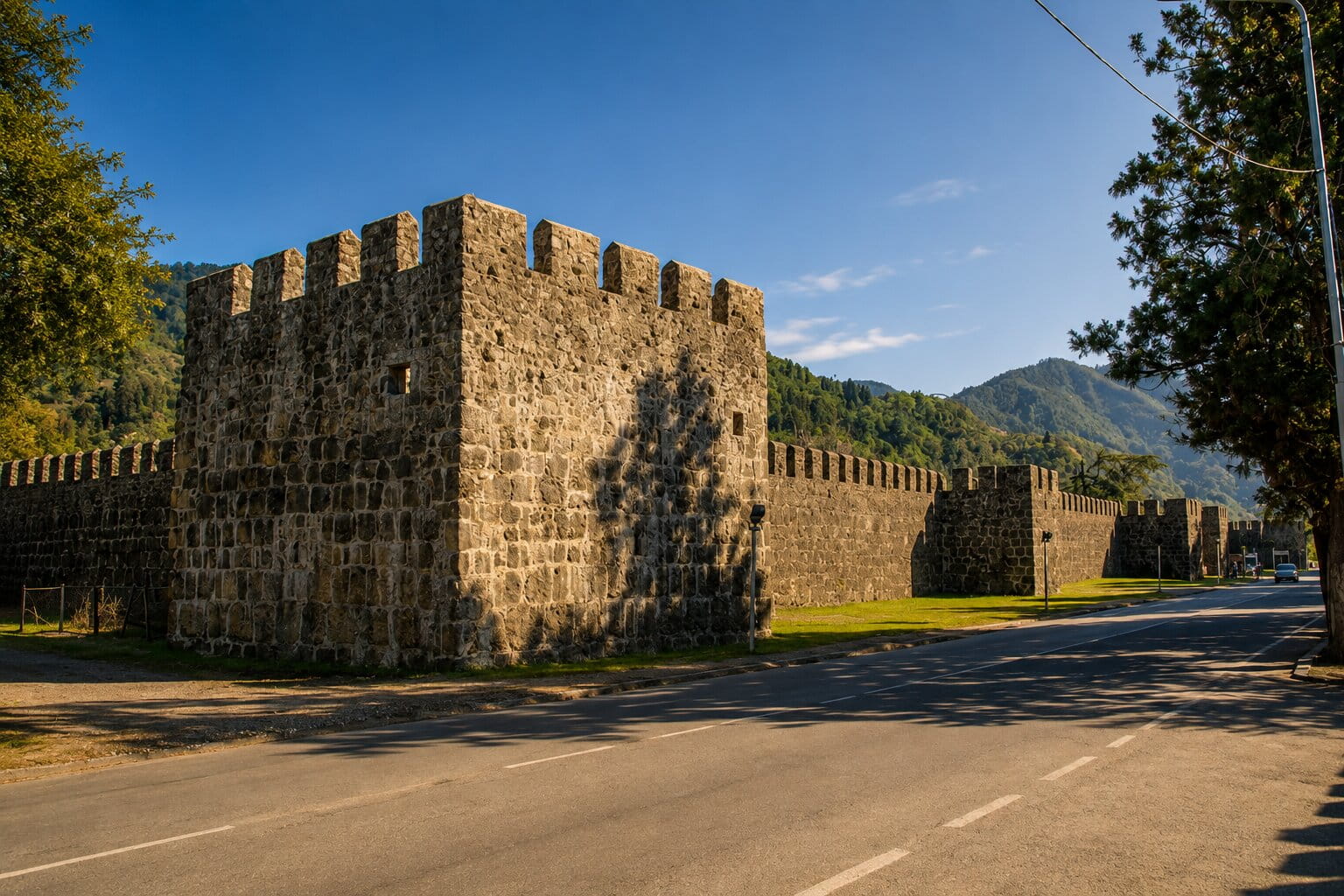
Gonio Fortress is one of the oldest fortresses in Georgia, with a history spanning nearly two thousand years. Remains of ancient Roman structures survive behind its massive stone walls, while the fortress itself is surrounded by scenic mountains and stands just minutes from the sea. It is a great place to discover the ancient history of the region.
🔥 What you should definitely see:
📌 Practical information:
BeeTravel tip: After visiting the fortress, head to Gonio Beach or Kvariati Beach; they are right nearby and complement the trip nicely.
Interesting fact: According to an ancient Christian tradition, the fortress grounds are believed to hold the burial place of the Apostle Matthias, one of the twelve apostles of Jesus Christ.
Keda • Adjara
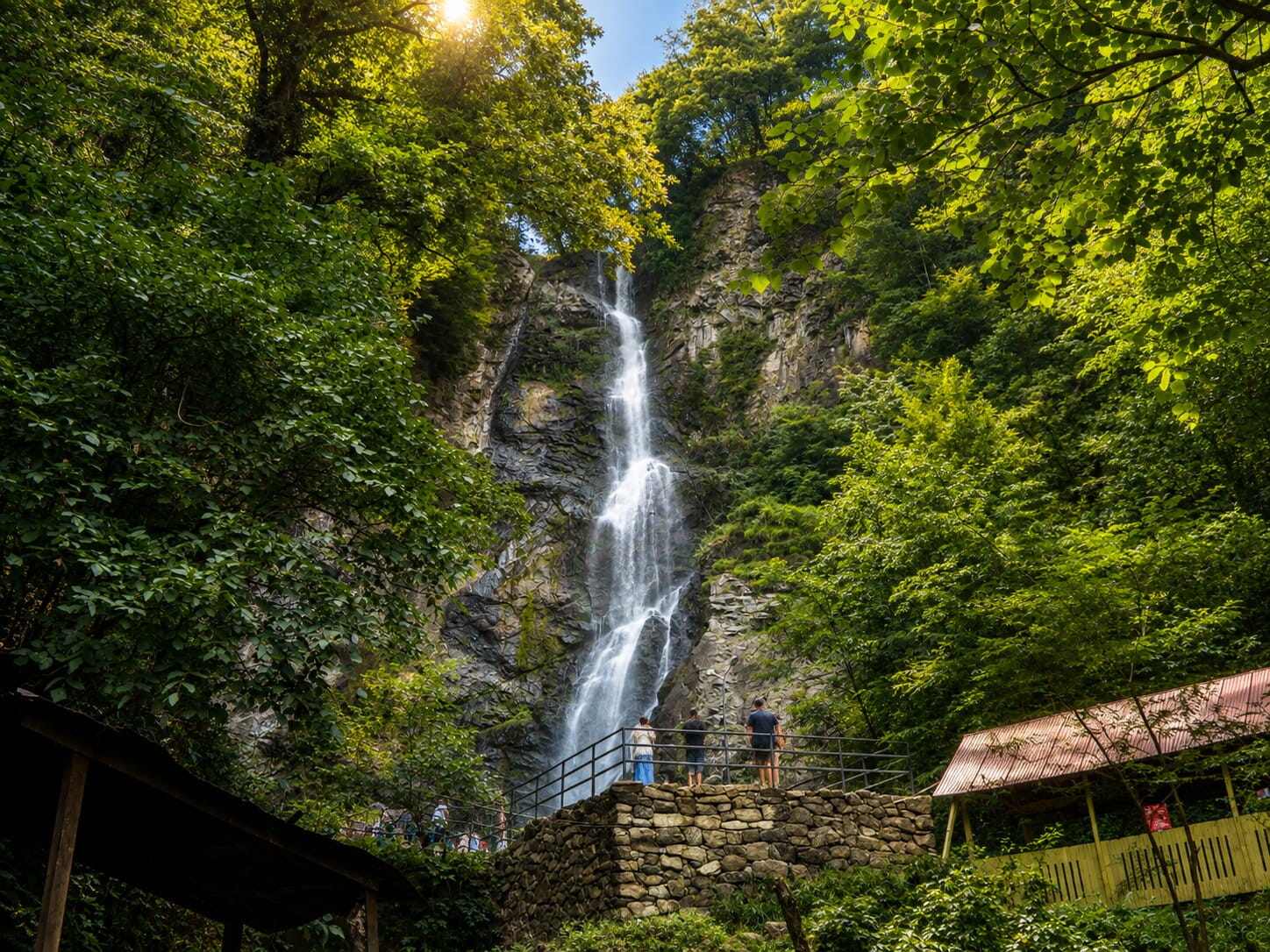
Makhuntseti Waterfall is one of the most famous natural symbols of Adjara. A cascade of water from a height of about 30 meters plunges into a small pool surrounded by dense subtropical forest. It is an ideal spot to briefly escape the city heat and enjoy nature.
🔥 What you should definitely see:
📌 Practical information:
BeeTravel tip: It is best to arrive in the morning so you can take photos in peace without large crowds of tourists.
Interesting fact: After heavy rains, the flow of water becomes so powerful that the roar of the waterfall can be heard several hundred meters away.
Makhuntseti • Adjara
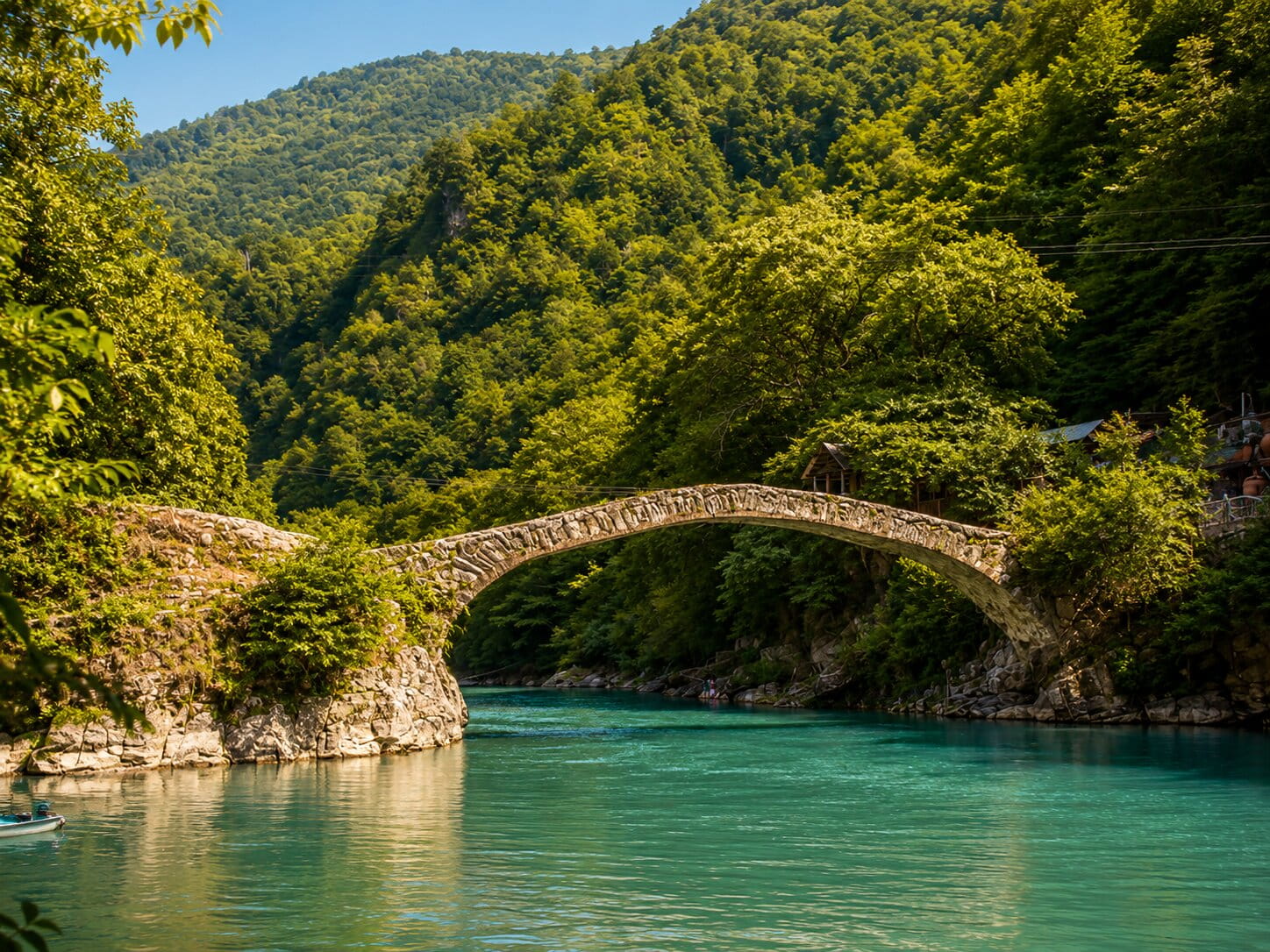
Just a few minutes' walk from Makhuntseti Waterfall stands one of the most beautiful medieval stone bridges in Georgia. The graceful arch thrown across the swift mountain river seems to transport you to another era and is considered one of the most recognizable landmarks of Adjara.
🔥 What you should definitely see:
📌 Practical information:
BeeTravel tip: Be sure to combine the bridge and waterfall into one visit, as they are located literally right next to each other.
Interesting fact: Despite the popular name, most such bridges were built not during Queen Tamar's reign, but significantly later. However, her name became a symbol of Georgia's "Golden Age," so many historic bridges are traditionally named in her honor.
Batumi • Old Batumi
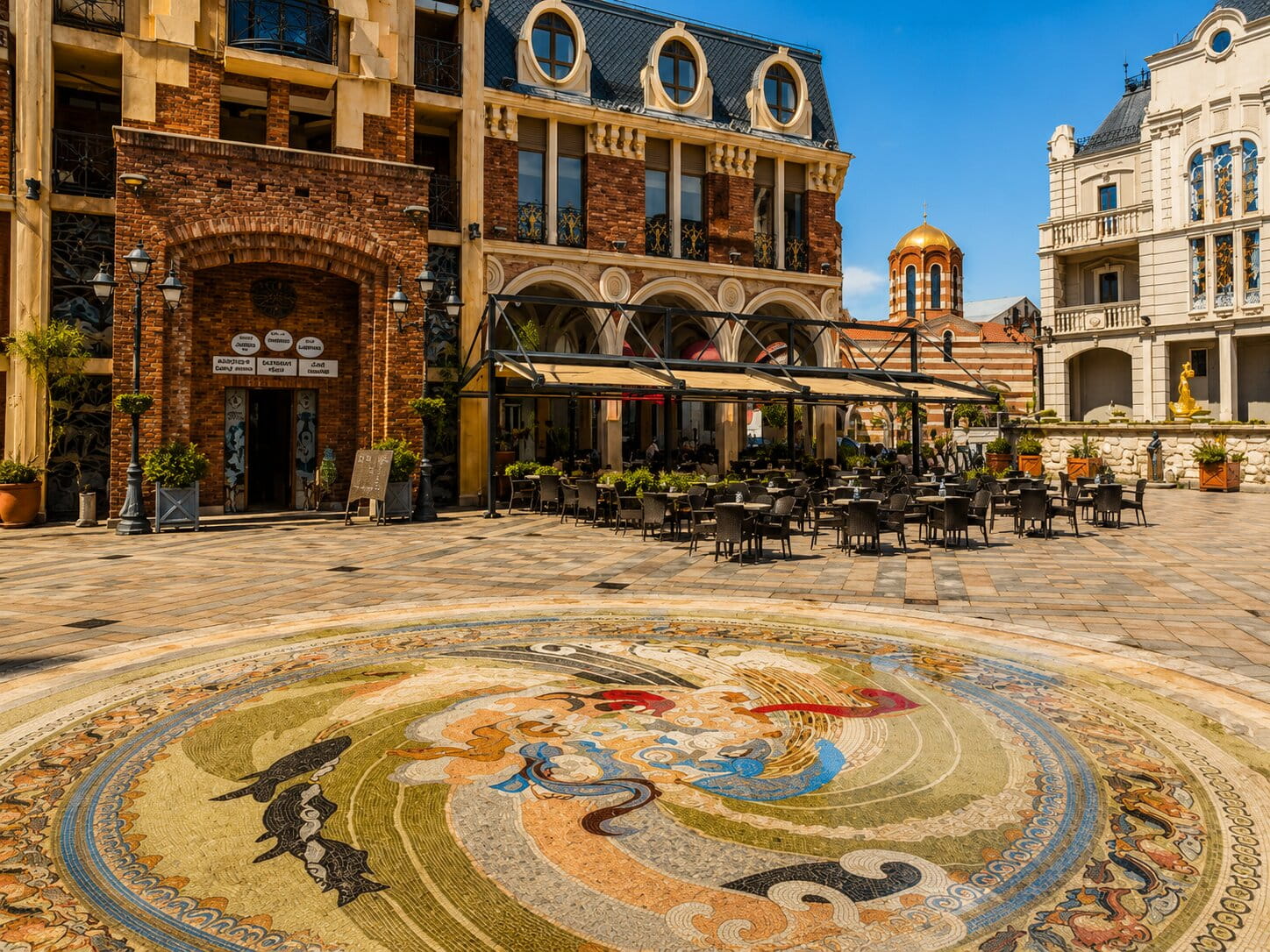
Piazza Square is one of the coziest corners of Batumi, inspired by Italian architecture. A leisurely atmosphere reigns here: cafes and restaurants are open, live music plays, and the square lights up in the evening. It is an ideal spot to take a break during a walk around Old Batumi.
🔥 What you should definitely see:
📌 Practical information:

BeeTravel tip: If you want to experience authentic evening Batumi, come here after sunset and choose a table on the outdoor terrace.
Interesting fact: Piazza Square opened in 2010 and quickly became one of the most popular city squares thanks to its distinctive European architecture.
Tsikhisdziri • Adjara
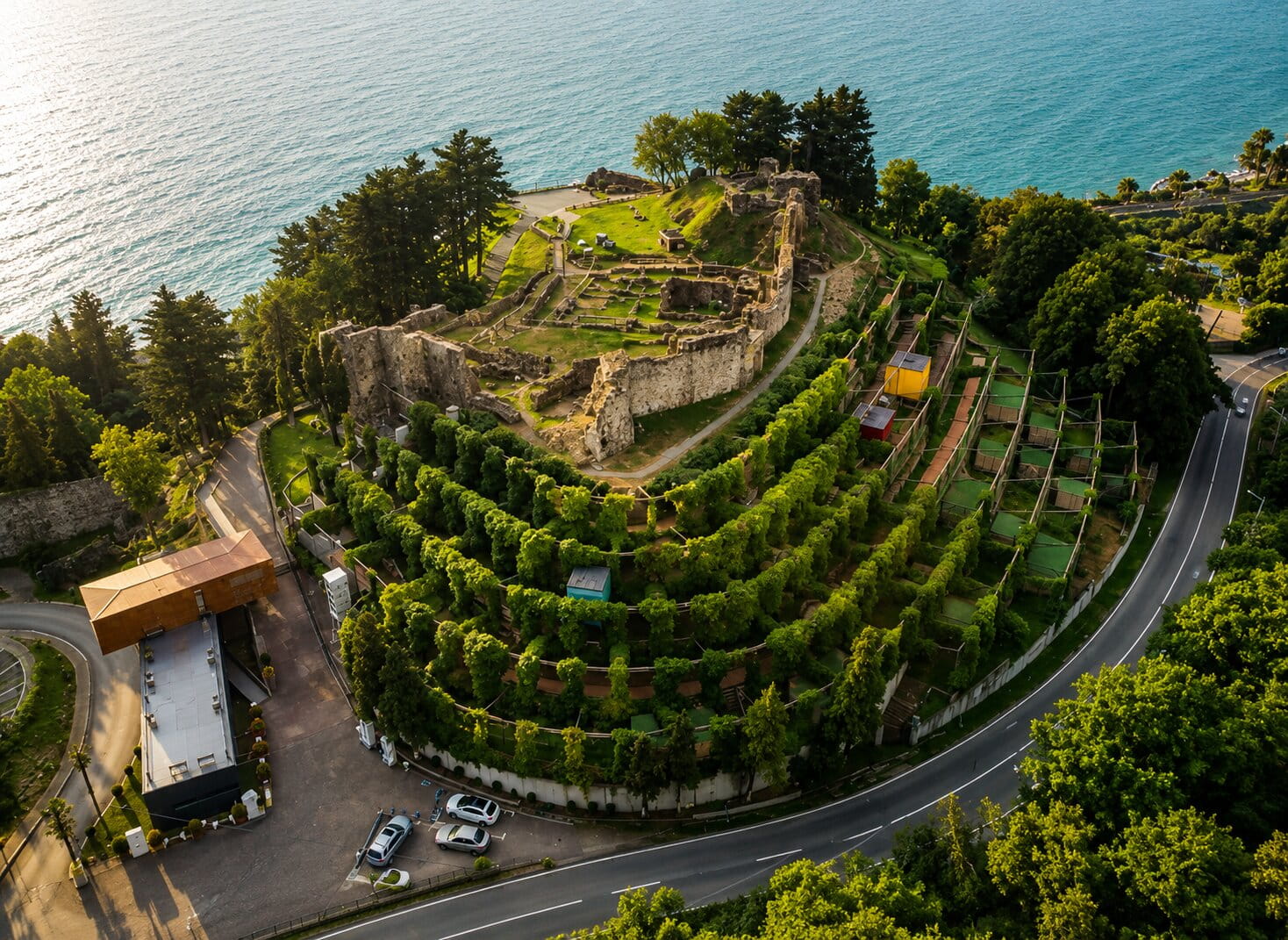
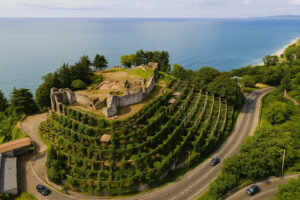
Petra Fortress is situated on a high rocky promontory between Batumi and Kobuleti and is considered one of the most scenic historical attractions on the coast. The ruins of the ancient Byzantine fortress are surrounded by lush greenery, and observation platforms open out to magnificent views of the Black Sea.
🔥 What you should definitely see:
📌 Practical information:
BeeTravel tip: Wear comfortable shoes, as paths in places lead over old stone steps that can be slippery after rain.
Interesting fact: The fortress was built in the 6th century by order of the Byzantine Emperor Justinian I and was considered one of the most important fortifications on the eastern coast of the Black Sea.
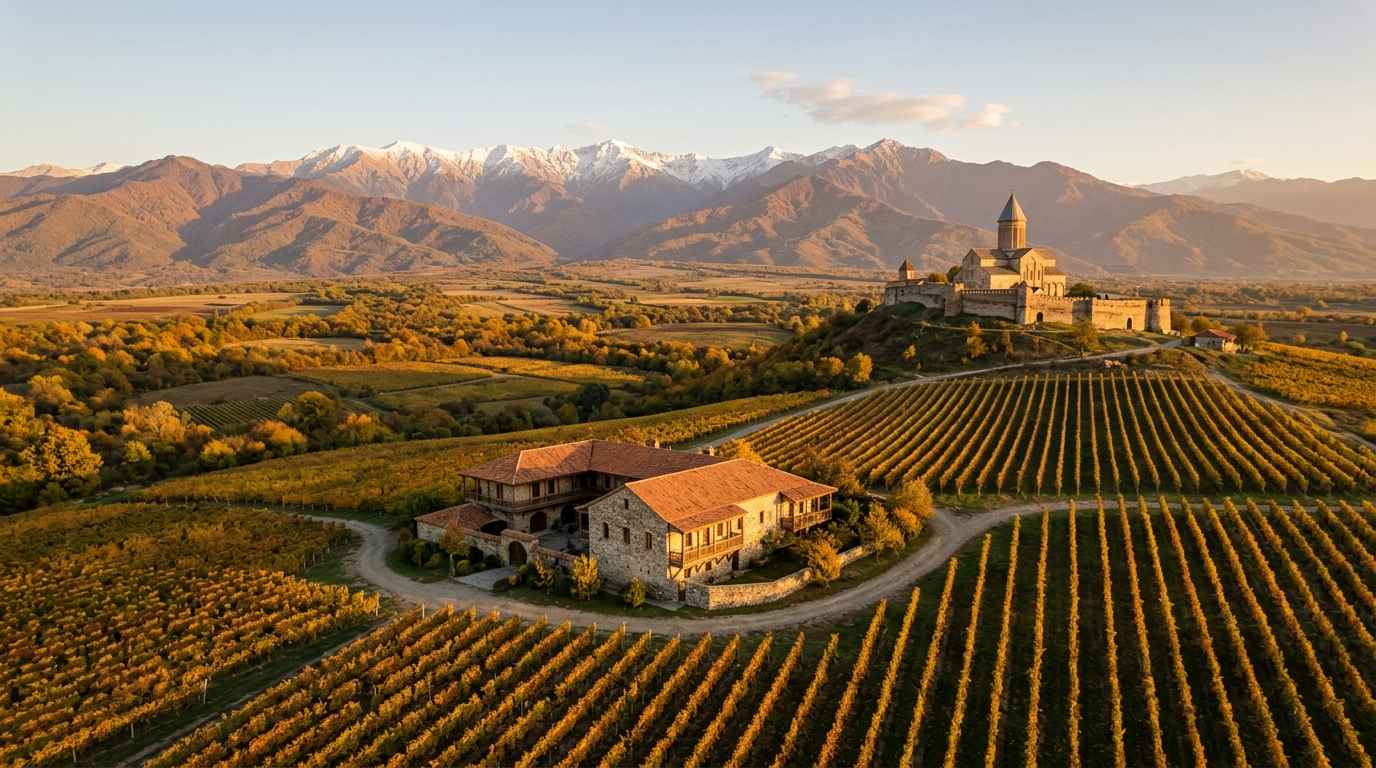
Kakheti is a land of sunshine, endless vineyards, and the cradle of world winemaking. It is right here that wine has been made in clay qvevri jars for 8000 years, in a way found nowhere else on the planet. The air in Kakheti is infused with the aromas of the vine, fresh shoti bread, and genuine Caucasian hospitality.
People travel here for the postcard panoramas of the Alazani Valley, leisurely tastings at family wineries, the tranquil silence of ancient monasteries, and strolls along the cobblestone streets of romantic Sighnaghi, the city of love with tiled roofs and fortress towers.
Sighnaghi • Kakheti
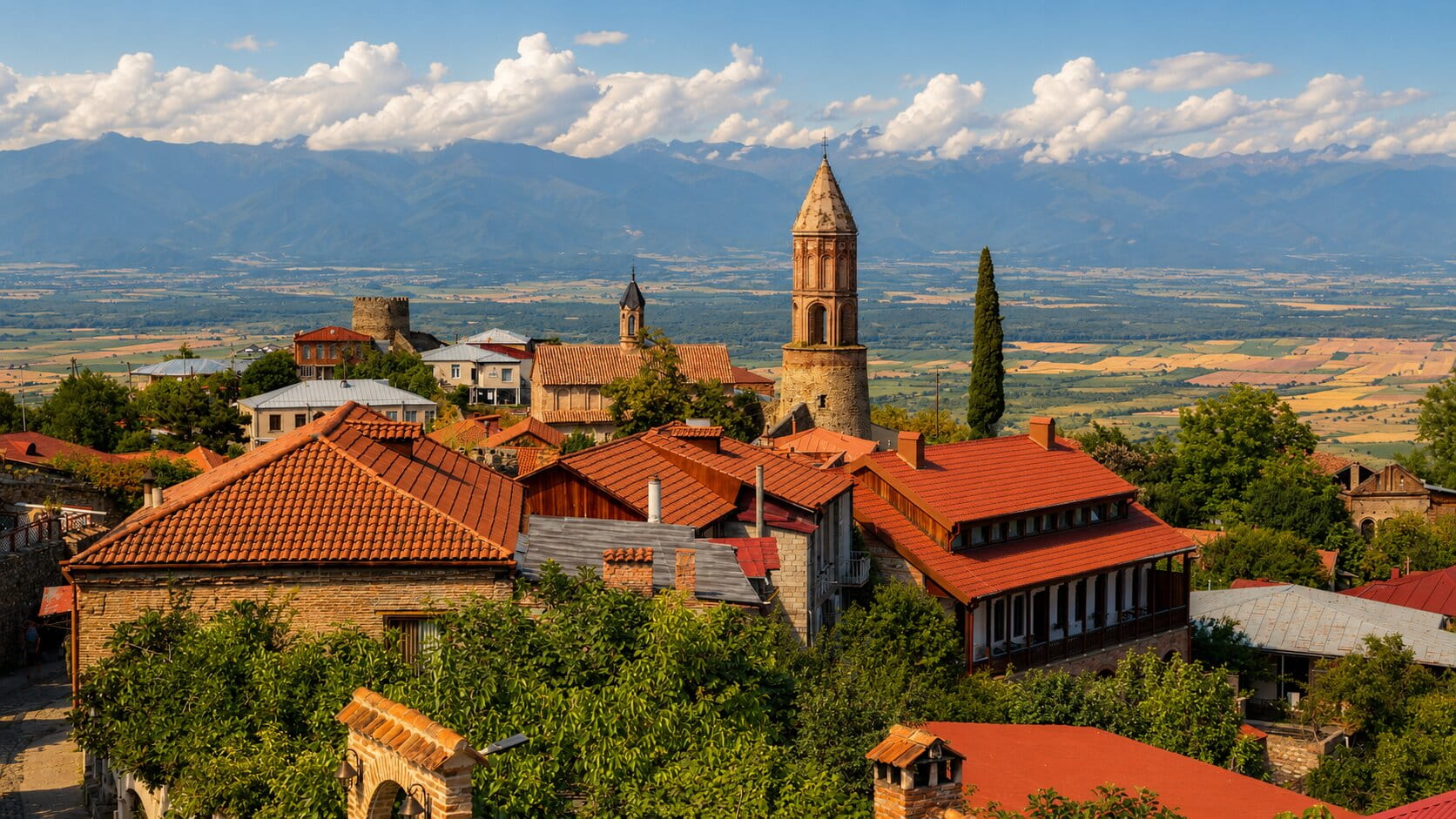
Sighnaghi is often called the "City of Love," and not by accident. This cozy town with cobblestone streets, tiled roofs, and fortress walls feels made for leisurely walks. From the top of the hill, magnificent views open across the Alazani Valley, while numerous wine bars and restaurants make Sighnaghi one of the most romantic destinations in Georgia.
🔥 What you should definitely see:
📌 Practical information:
BeeTravel tip: Stay here until evening; after sunset, the old streets become especially cozy thanks to warm lighting.
Interesting fact: Sighnaghi is one of the few towns in the world where a 24-hour wedding registry operated for a long time, which helped earn it the nickname "City of Love."
Sighnaghi • Kakheti
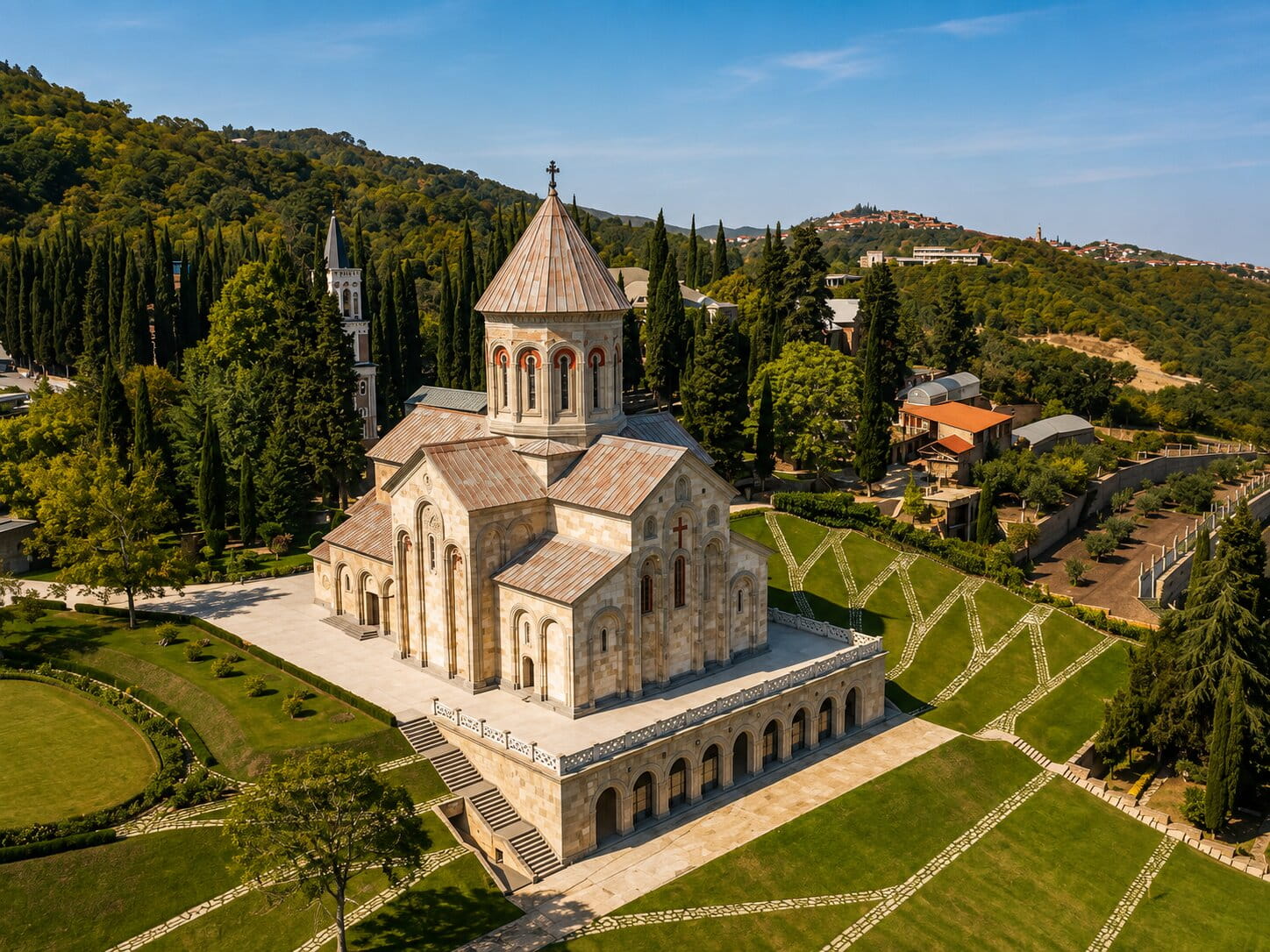
Bodbe Monastery is one of the most revered sites in Georgia. It is here that Saint Nino rests, through whom Christianity became the state religion of the country in the 4th century. Beyond its spiritual significance, the monastery is surrounded by well-kept gardens and viewpoints with splendid views of the Alazani Valley.
🔥 What you should definitely see:
📌 Practical information:
BeeTravel tip: Set aside time to walk around the monastery grounds, as many tourists only visit the church and miss the best views.
Interesting fact: Hundreds of thousands of pilgrims from around the world visit Bodbe Monastery every year, as Saint Nino is considered one of the most revered saints in the Caucasus.
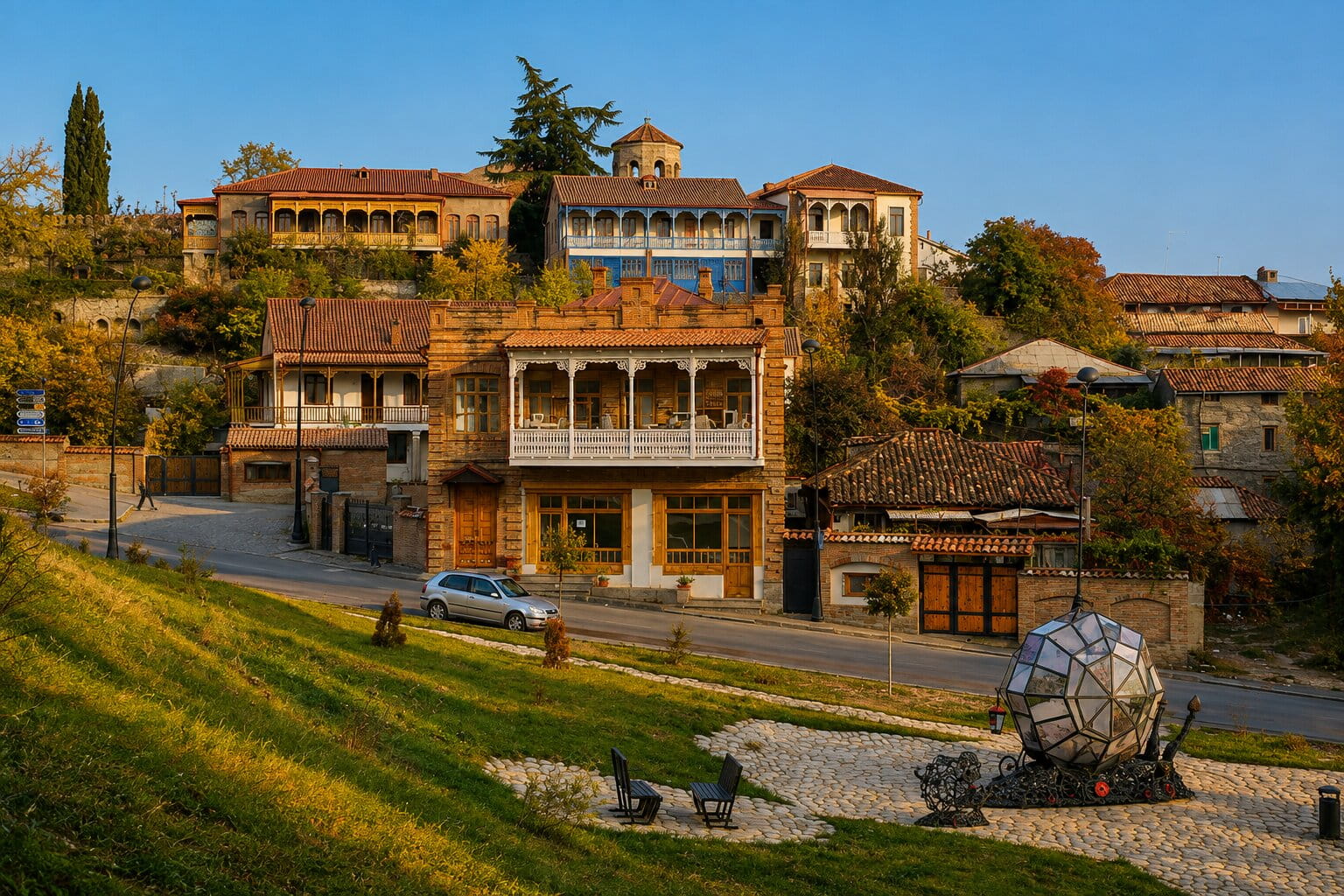
Telavi • Kakheti
Telavi is the main city of Kakheti and a convenient starting point for exploring the wine-producing region. It combines historic streets, cozy restaurants, heritage buildings, and impressive views of the Caucasus Mountains. It is from here that most journeys along the famous wine routes begin.
🔥 What you should definitely see:
📌 Practical information:
BeeTravel tip: Use Telavi as a base for traveling around Kakheti; it is convenient to reach most of the region's attractions from here.
Interesting fact: In the center of Telavi grows a plane tree about 900 years old, considered one of the oldest trees in Georgia.
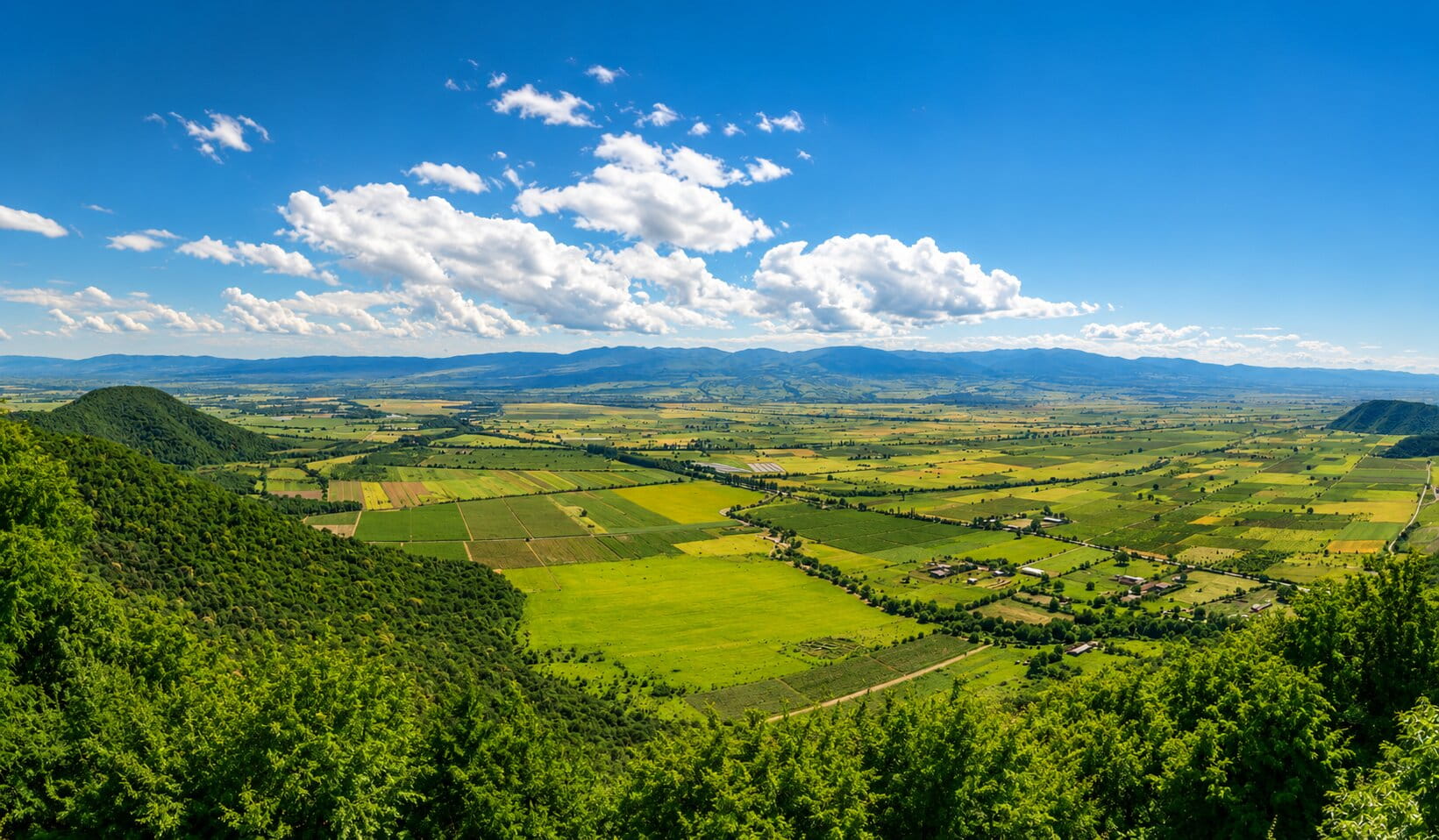
Kakheti
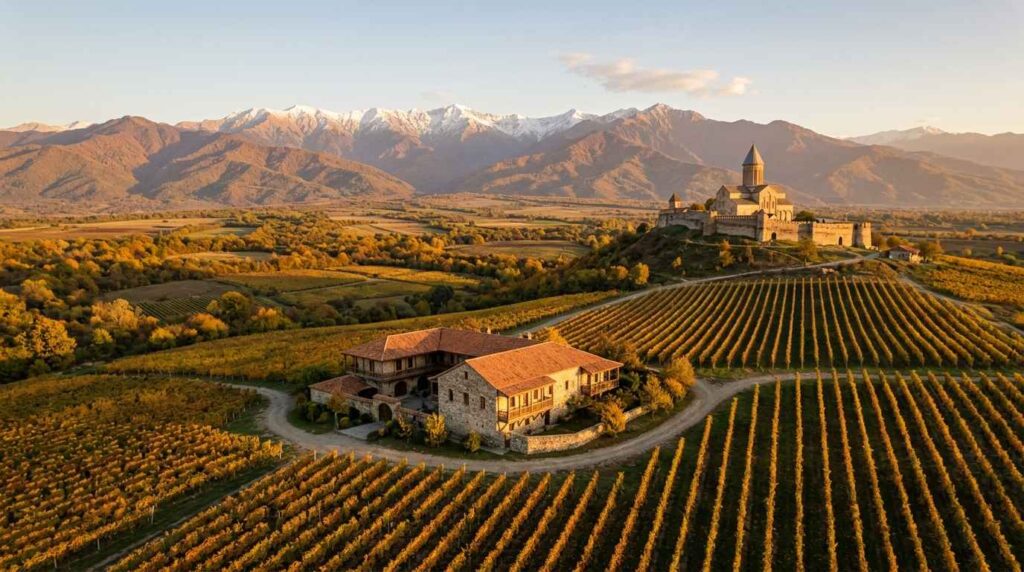
The Alazani Valley is the wine heart of Georgia and one of the country's most beautiful landscapes. Endless vineyards stretch to the very horizon, backed by the snow-covered peaks of the Greater Caucasus. Many famous Georgian wines are born right here.
🔥 What you should definitely see:
📌 Practical information:
BeeTravel tip: The best time to visit the valley is September and October, during the grape harvest (rtveli).
Interesting fact: More than 500 grape varieties are grown in the Alazani Valley, many of which are endemic and found nowhere else in the world.
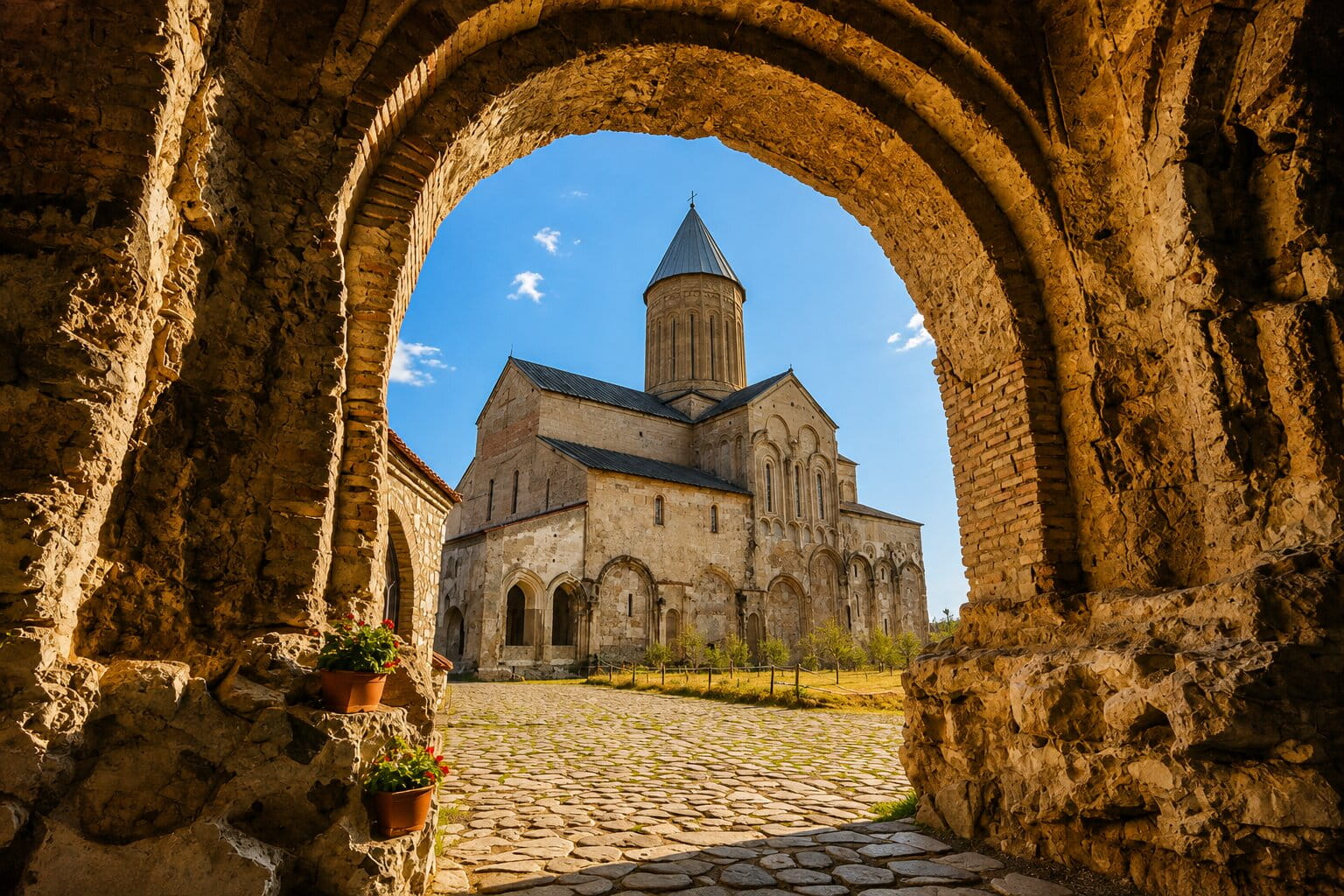
Akhmeta Municipality • Kakheti
Alaverdi Monastery is one of the most majestic churches in Georgia and a true symbol of Kakheti. Its vast cathedral rises above the vineyards of the Alazani Valley and has remained the spiritual center of the region for nearly a thousand years. It features a wonderful blend of monumental architecture, quiet, and incredible views of the surrounding mountains.
🔥 What you should definitely see:
📌 Practical information:
BeeTravel tip: The best photos of the monastery are taken not right at the entrance, but slightly to the side of the road, where the cathedral towers above the vineyards.
Interesting fact: For several centuries, Alaverdi Cathedral was the tallest church in all of Georgia, reaching a height of about 50 meters.
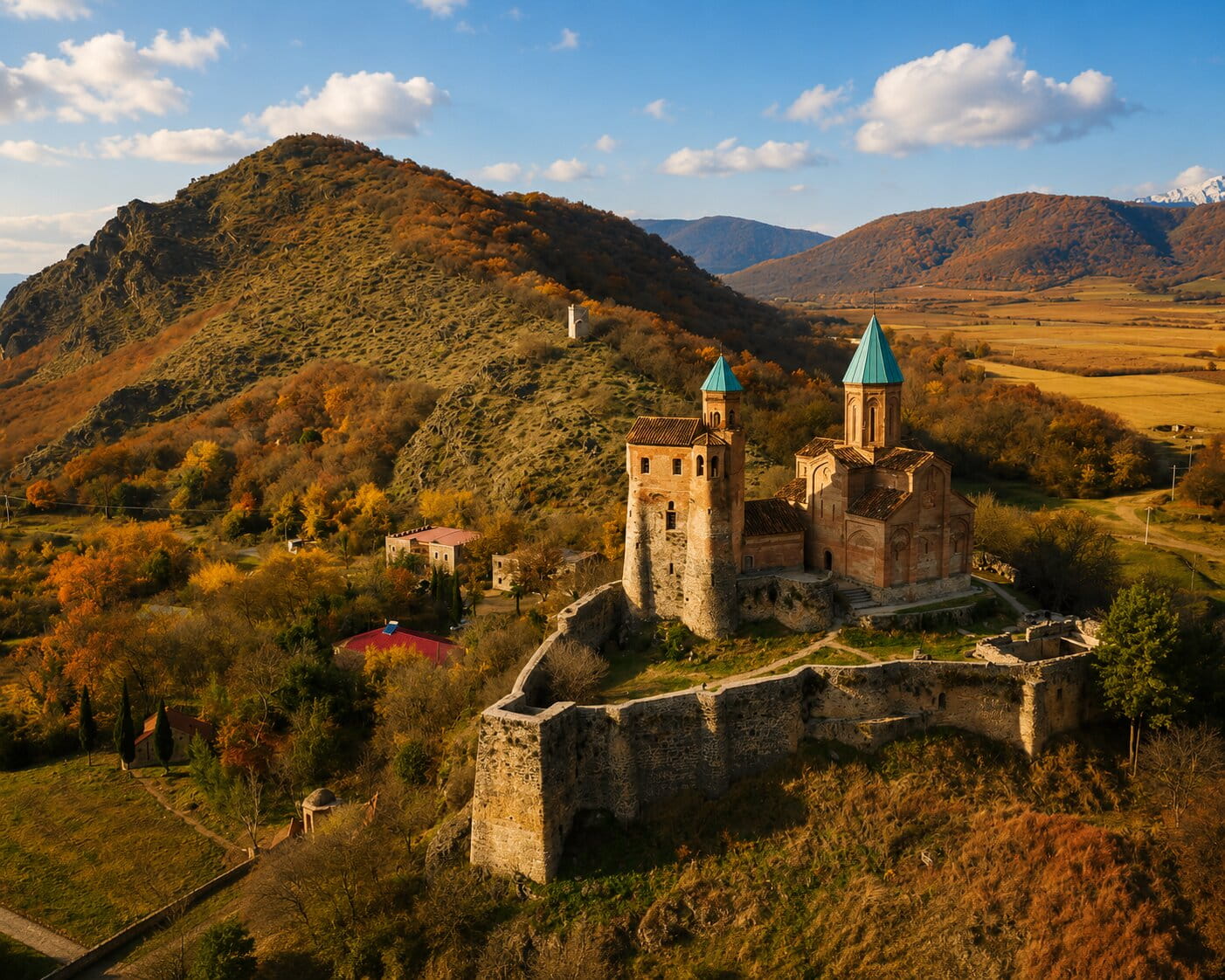
Gremi • Kakheti
Gremi Fortress is one of the most recognizable sights of Kakheti. In the 16th century, the capital of the Kingdom of Kakheti was located here, and today a majestic tower, the Church of the Archangels, and fortress walls look out over the Alazani Valley. This site combines rich history with some of the finest panoramas in the region.
🔥 What you should definitely see:
📌 Practical information:
BeeTravel tip: Walk up to the viewpoint near the fortress, which offers one of the most beautiful views of the Kakheti vineyards.
Interesting fact: Before being destroyed by Persian forces in the 17th century, Gremi was the largest commercial town in Eastern Georgia.
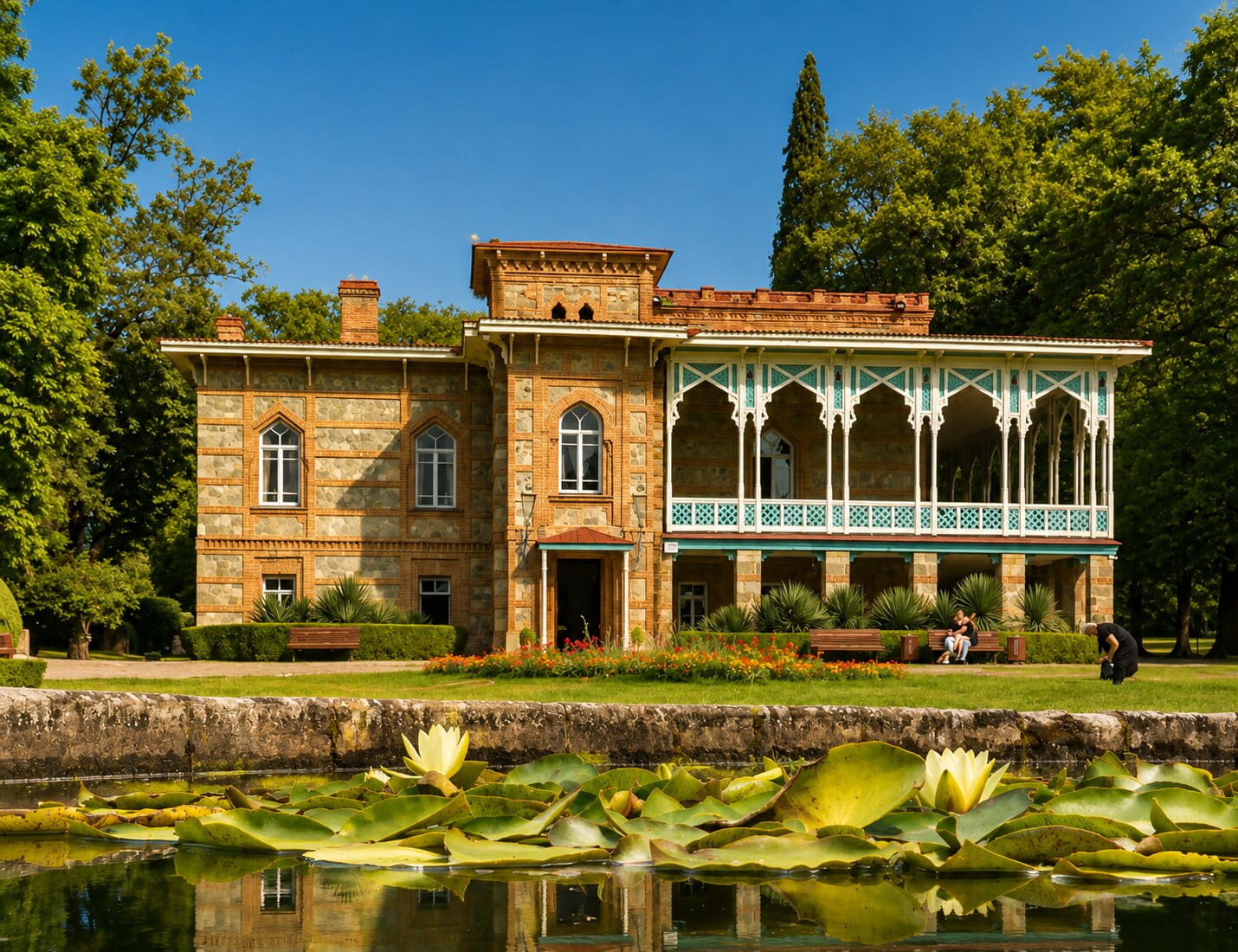
Tsinandali • Kakheti
Tsinandali Estate is the birthplace of modern Georgian winemaking. It is home to the historic residence of Prince Alexander Chavchavadze, surrounded by a magnificent park, wine cellars, and vineyards. This is one of the most elegant places in Kakheti, where history, culture, and wine complement one another seamlessly.
🔥 What you should definitely see:
📌 Practical information:
BeeTravel tip: After your walk, be sure to visit the tasting room to try wines produced in Tsinandali.
Interesting fact: It was in Tsinandali that wine was first produced in Georgia using European technology, while also preserving traditional Kakhetian winemaking methods.
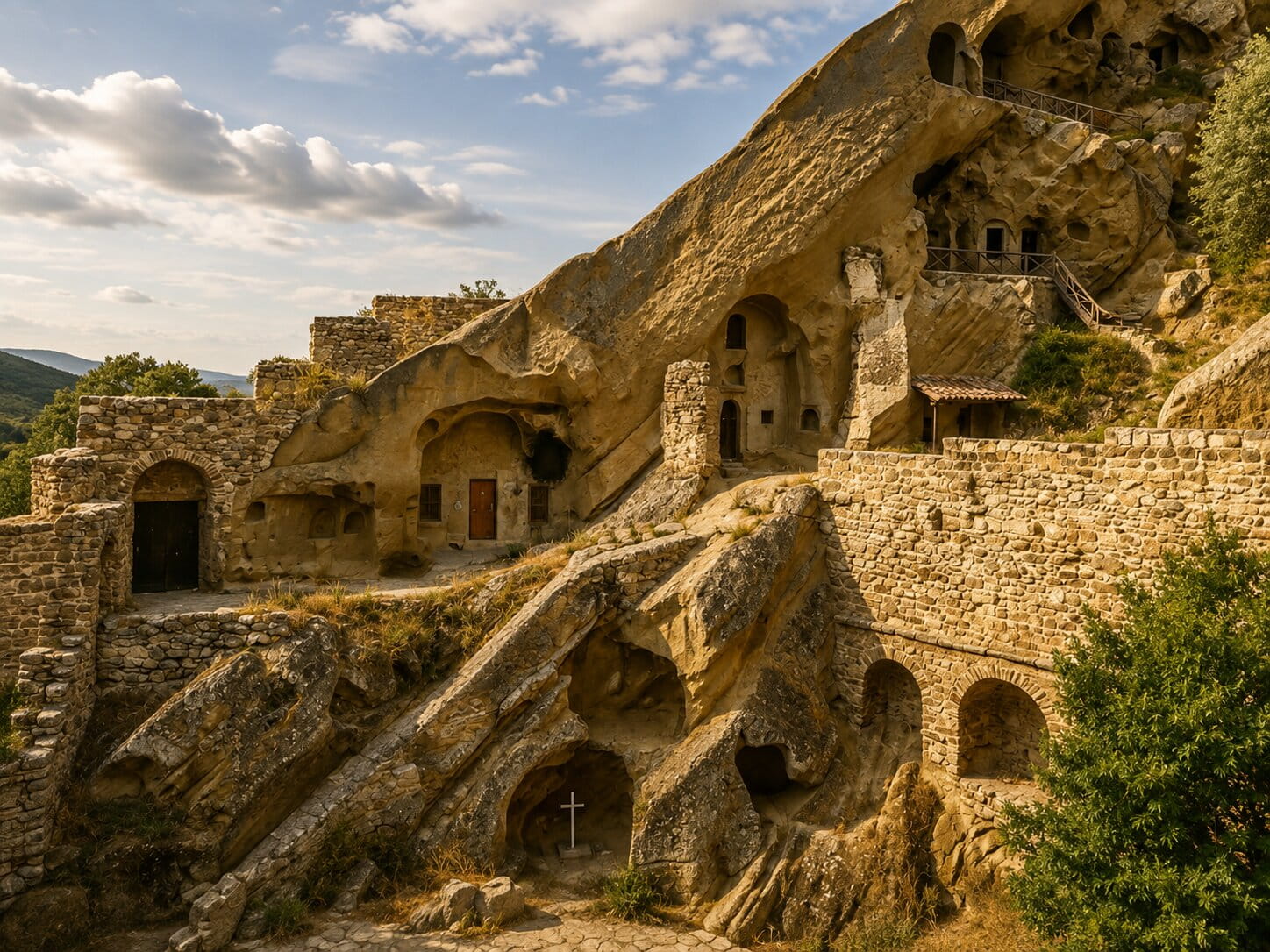
Kakheti Border • Gareja Desert
David Gareja is one of the most unusual monastery complexes in Georgia. It is set among semi-desert hills, where cave cells are literally carved into the rock. Austere landscapes, ancient monasteries, and panoramic vistas create the feeling that you are in a completely different country.
🔥 What you should definitely see:
📌 Practical information:
BeeTravel tip: Bring a hat, water, and comfortable shoes; in summer there is virtually no shade here, and the sun is intense.
Interesting fact: The monastery complex was founded in the 6th century by one of the Assyrian Fathers, Saint David of Gareja, and many chambers are still completely carved inside the rocks.
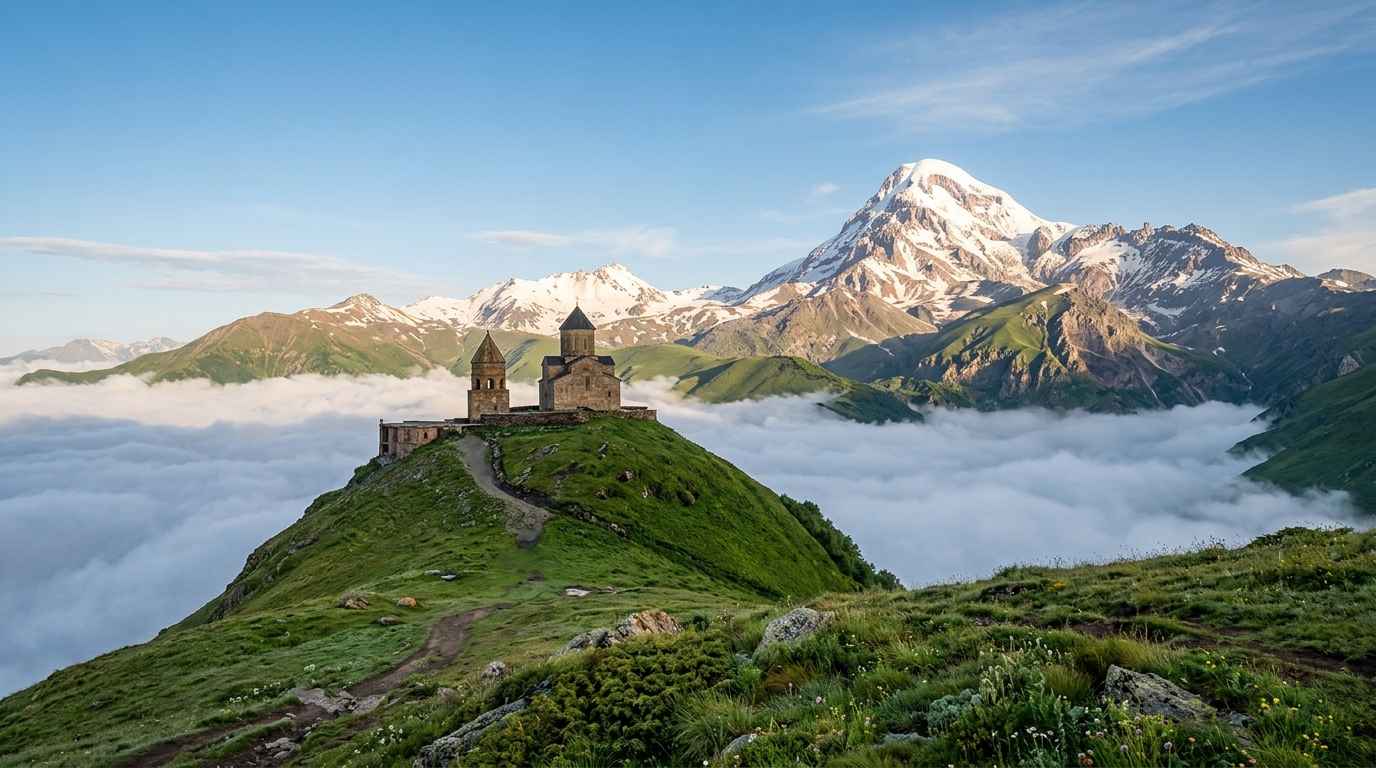
The Georgian Military Highway is one of those rare routes where you are thrilled at every turn of the serpentine road. Turquoise reservoirs, the mosaic Arch of Friendship of Peoples over the abyss, and Jvari Pass at an altitude of nearly 2400 meters lead to the very heart of the Caucasian highlands.
The main goal of the journey is Stepantsminda and the legendary Gergeti church soaring above the clouds at the foot of the majestic five-thousander Mount Kazbek. For those who love mountains and crisp air, nearby lie the alpine village of Juta and the jagged peaks of the Chaukhi Massif, Georgia's "Dolomite Alps."
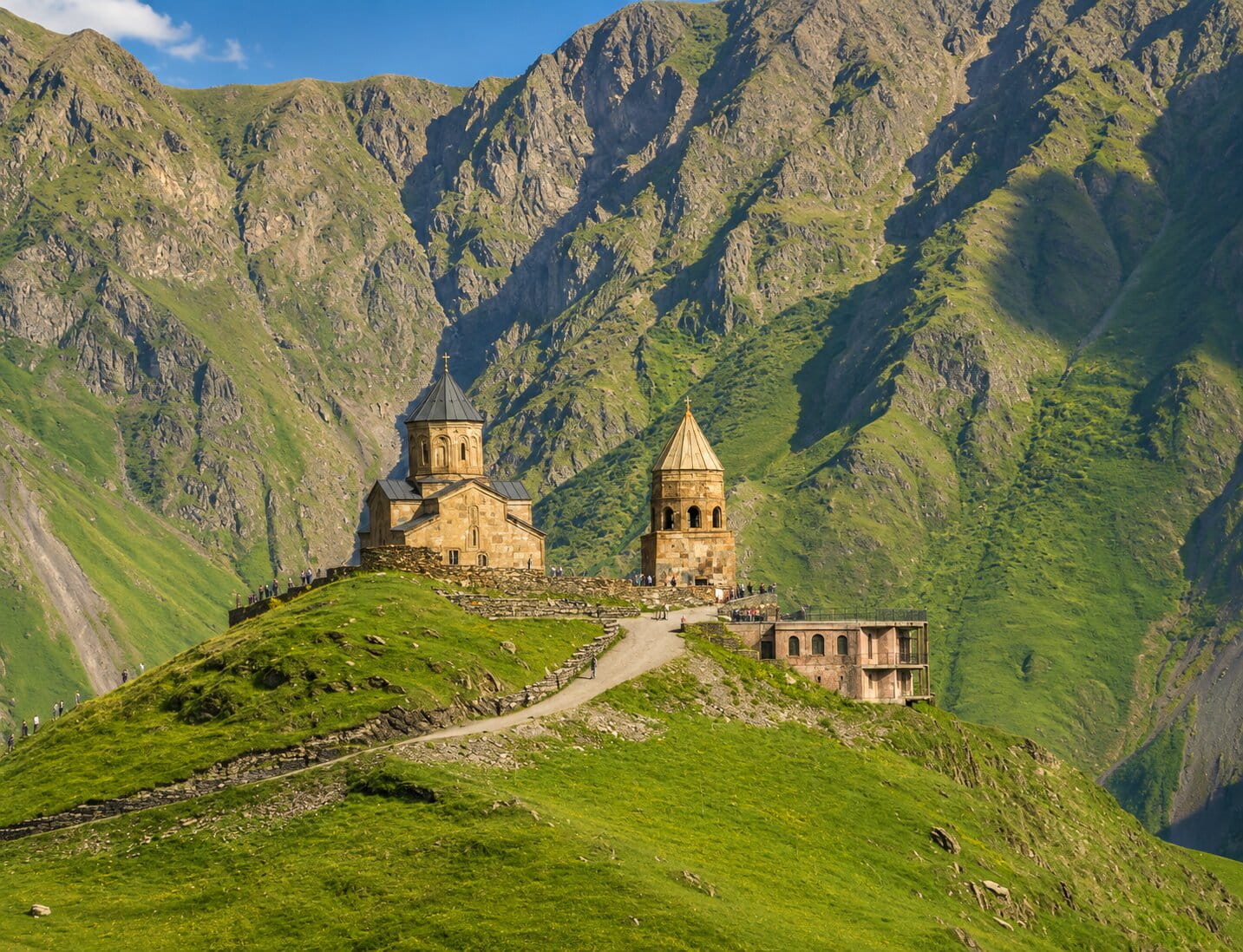
Stepantsminda • Kazbegi
Gergeti Trinity Church is one of the main symbols of Georgia. The 14th-century church stands at an altitude of over 2100 meters at the foot of majestic Mount Kazbek. This site impresses not only with its history, but also with incredible mountain landscapes considered among the most beautiful in the Caucasus.
🔥 What you should definitely see:
📌 Practical information:
BeeTravel tip: If weather permits, arrive in the morning, as Mount Kazbek's summit is most often clear of clouds at this time.
Interesting fact: During the invasion of Persian Shah Abbas, one of Georgia's greatest relics, the cross of Saint Nino, was temporarily hidden here.
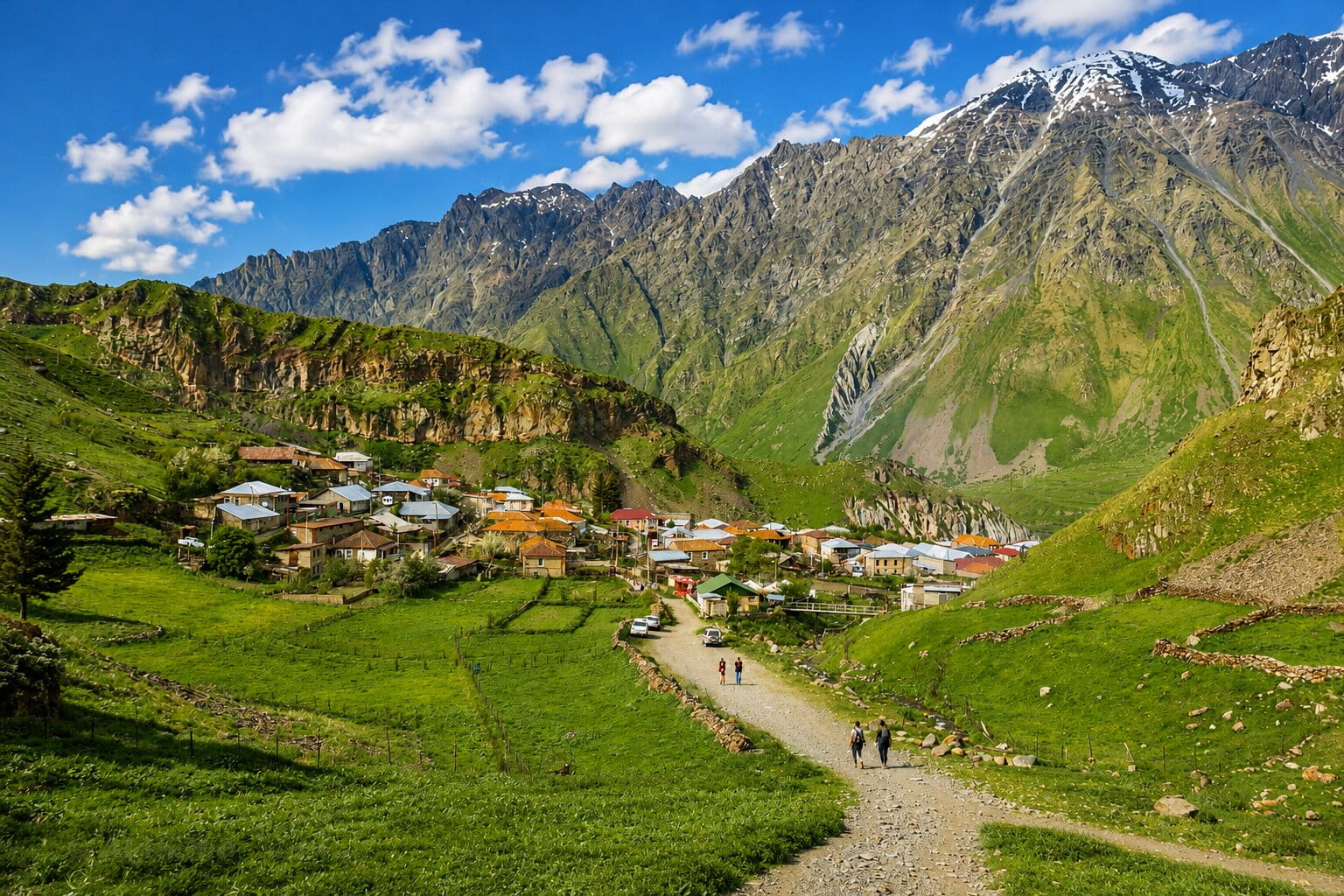
Stepantsminda • Kazbegi
Stepantsminda is the main settlement of the Kazbegi region and the starting point for virtually all journeys along the Georgian Military Highway. Splendid views of Mount Kazbek open from here, cozy hotels and restaurants operate, and dozens of hiking trails into the mountains begin all around.
🔥 What you should definitely see:
📌 Practical information:
BeeTravel tip: If possible, stay here overnight; in the morning the mountains look completely different than during the day.
Interesting fact: Until 2007, the settlement was officially named Kazbegi, before being restored to its historical name, Stepantsminda.
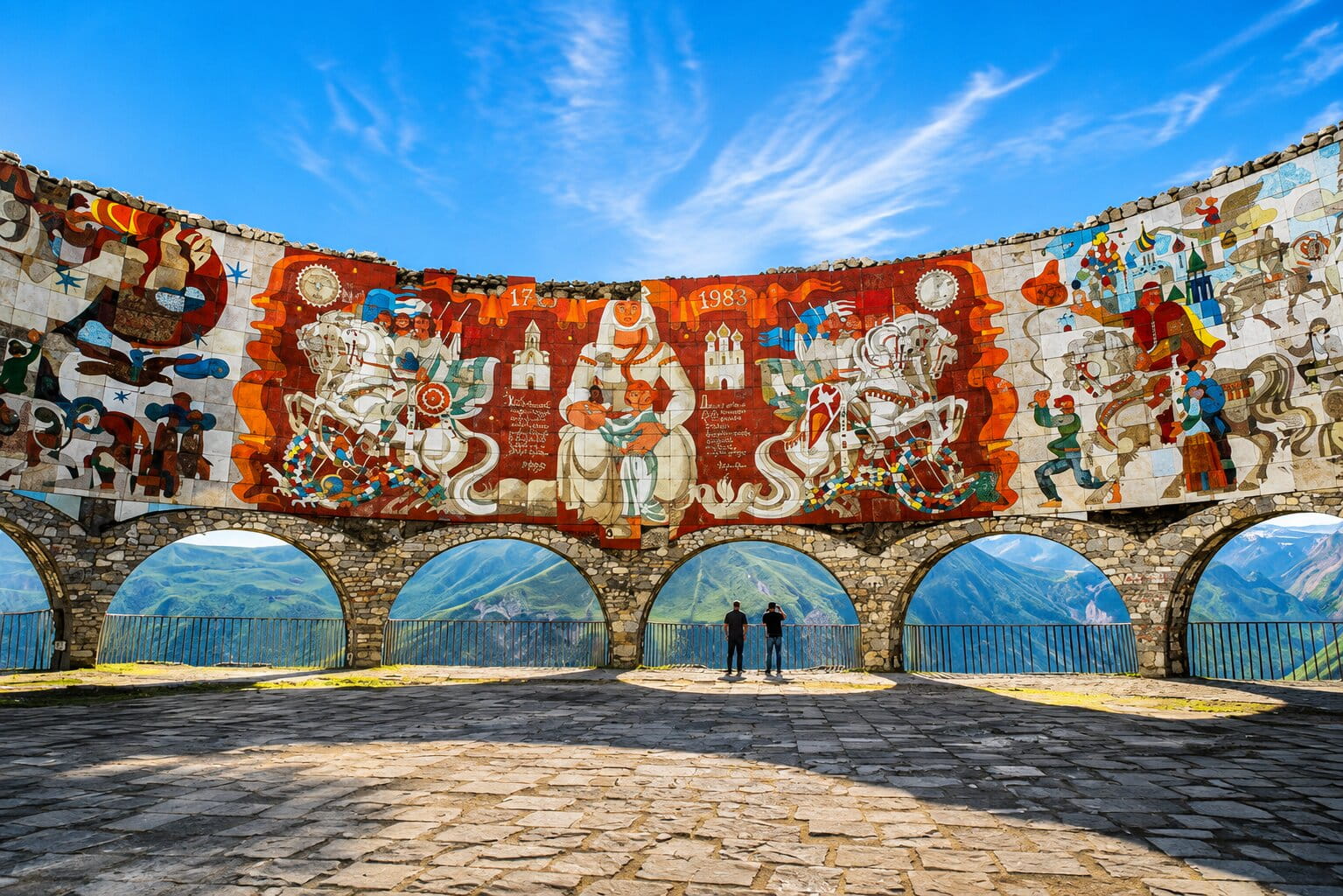
Jvari Pass • Kazbegi
The Arch of Friendship of Peoples is one of the most famous viewpoints in Georgia. The monument stands on the edge of a deep gorge, revealing a dramatic view of mountain peaks, canyons, and a turquoise lake to visitors. Even if you are simply driving along the Georgian Military Highway, stopping here is well worthwhile.
🔥 What you should definitely see:
📌 Practical information:
BeeTravel tip: Be prepared for strong winds even in summer, as they can be quite noticeable on the observation deck.
Interesting fact: The monument was erected in 1983 in honor of the 200th anniversary of the Treaty of Georgievsk and still remains one of the most photographed spots on the Georgian Military Highway.
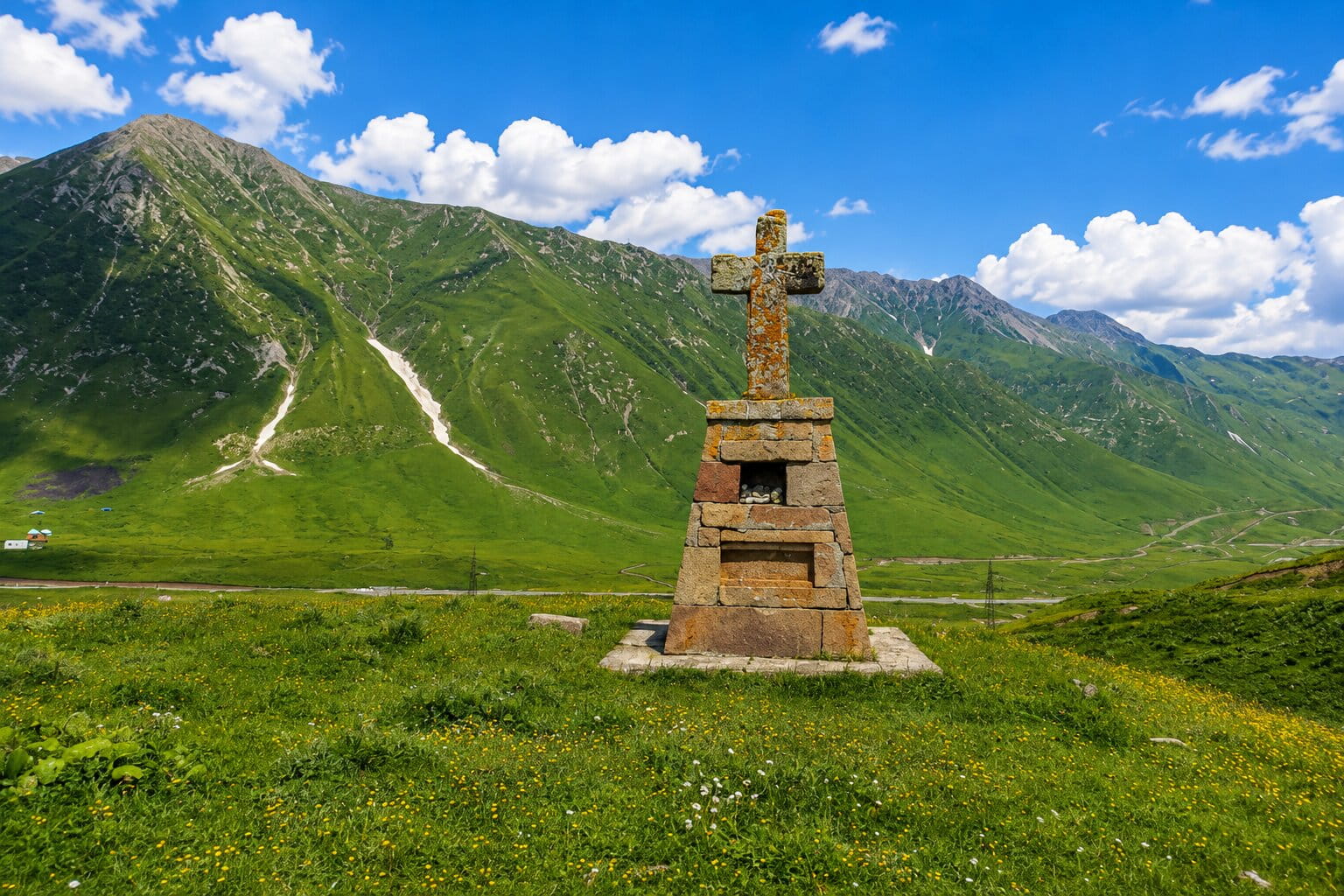
Georgian Military Highway • Kazbegi
Jvari Pass is the highest point of the Georgian Military Highway, located at an altitude of nearly 2400 meters. Here, the grandeur of the Caucasus Mountains is felt with special force: twisting serpentines, endless peaks, and constantly shifting clouds create truly memorable landscapes.
🔥 What you should definitely see:
📌 Practical information:
BeeTravel tip: Even in summer, bring warm clothing, as temperatures on the pass can be significantly lower than in the valley below.
Interesting fact: The pass received its name from a stone cross erected here back in the 19th century.
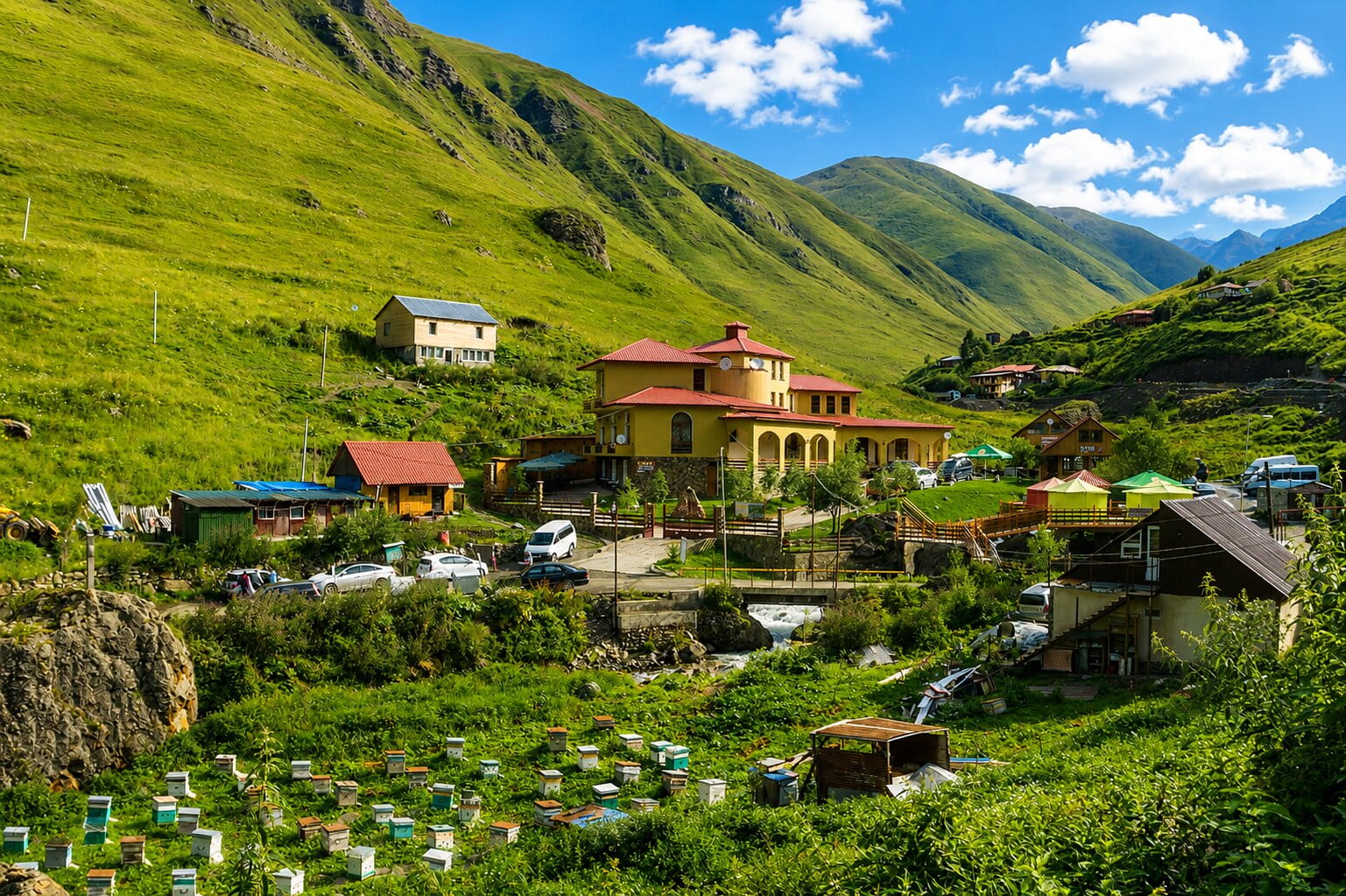
Juta • Kazbegi
Juta is one of the highest mountain villages in Georgia, located at an altitude of nearly 2200 meters. This spot has long been a favorite hub for trekking enthusiasts, and the surrounding scenery impresses even experienced travelers. Here, you want to turn off your phone, breathe in the mountain air, and simply enjoy nature.
🔥 What you should definitely see:
📌 Practical information:
BeeTravel tip: Even in summer, take a warm jacket; in the evening, temperatures here can quickly drop close to freezing.
Interesting fact: In winter, the road to Juta often becomes impassable, leaving the village virtually cut off from the outside world for several months.
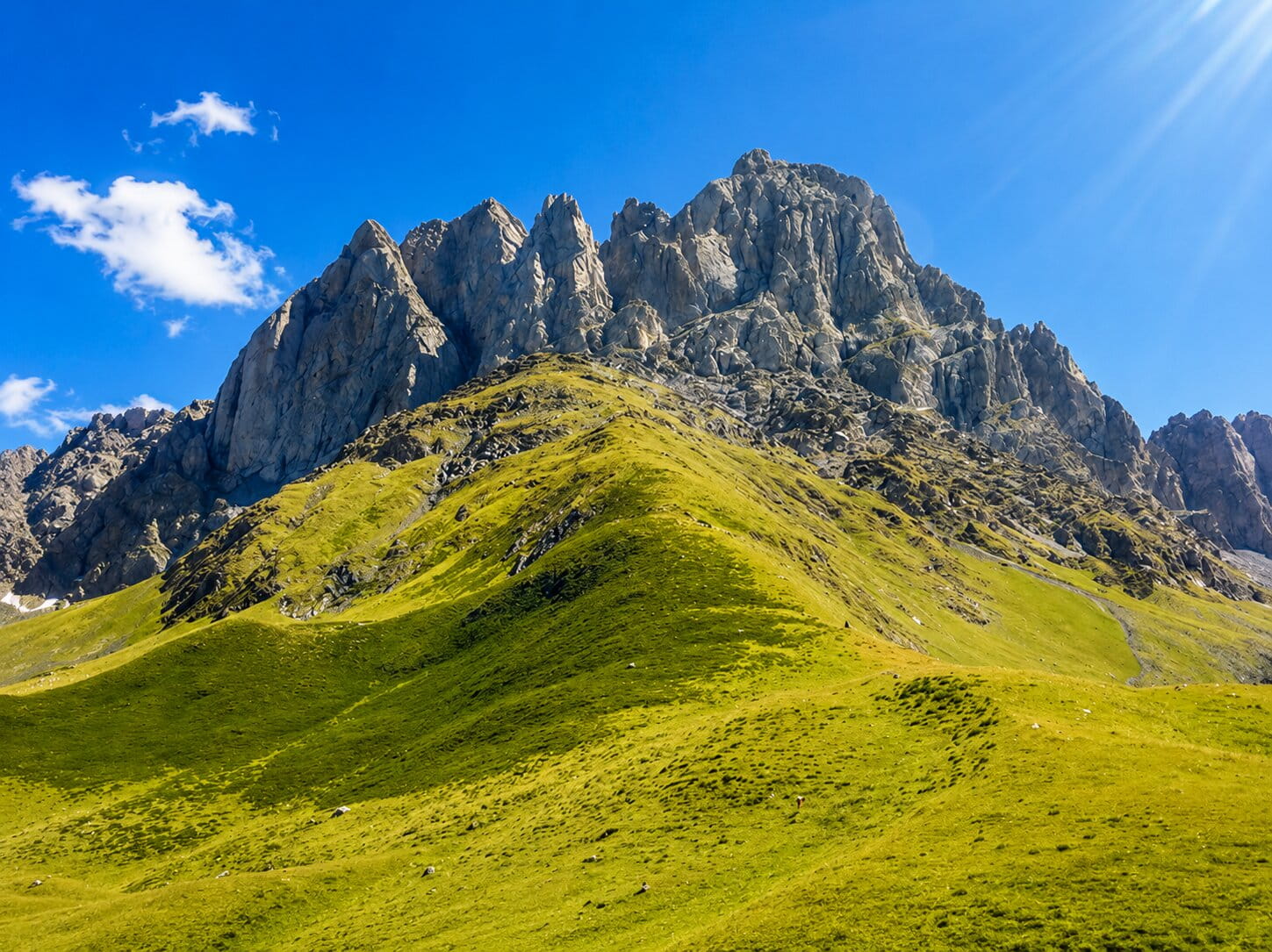
Kazbegi • Khevi
The Chaukhi Massif is often called the "Georgian Dolomites" thanks to its sharp, jagged peaks. It is one of the most beautiful hiking spots in the Caucasus, where monumental cliffs rise over green alpine valleys. Even a short walk here leaves lasting impressions.
🔥 What you should definitely see:
📌 Practical information:
BeeTravel tip: If you do not plan an extended trek, walk at least the first section of the route; within half an hour, magnificent views of the peaks open up.
Interesting fact: The highest point of the Chaukhi Massif reaches nearly 3800 meters, and the peaks themselves are considered among the finest mountaineering destinations in Georgia.
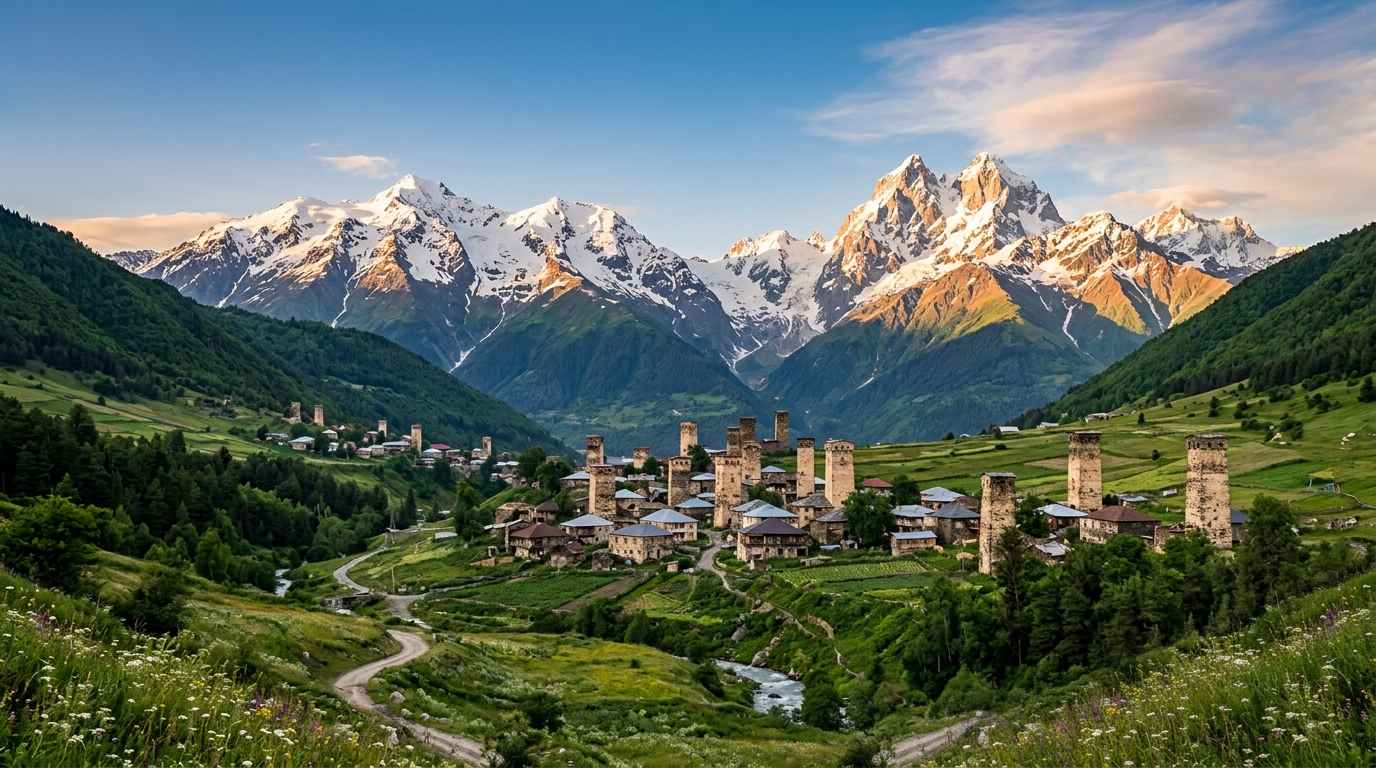
Svaneti is the most rugged, enigmatic, and high-altitude region of Georgia. It is a land of inaccessible glaciers, alpine meadows, and famous stone towers that Svan families built back in the Middle Ages for protection against avalanches and enemies.
Here you feel as if you are at the edge of the world: you can hike to the foot of the Chalaadi Glacier, see the reflection of snow-covered Ushba in the mirror-like Koruldi Lakes, and visit Ushguli, the highest continuously inhabited village in Europe at an altitude of 2200 meters.
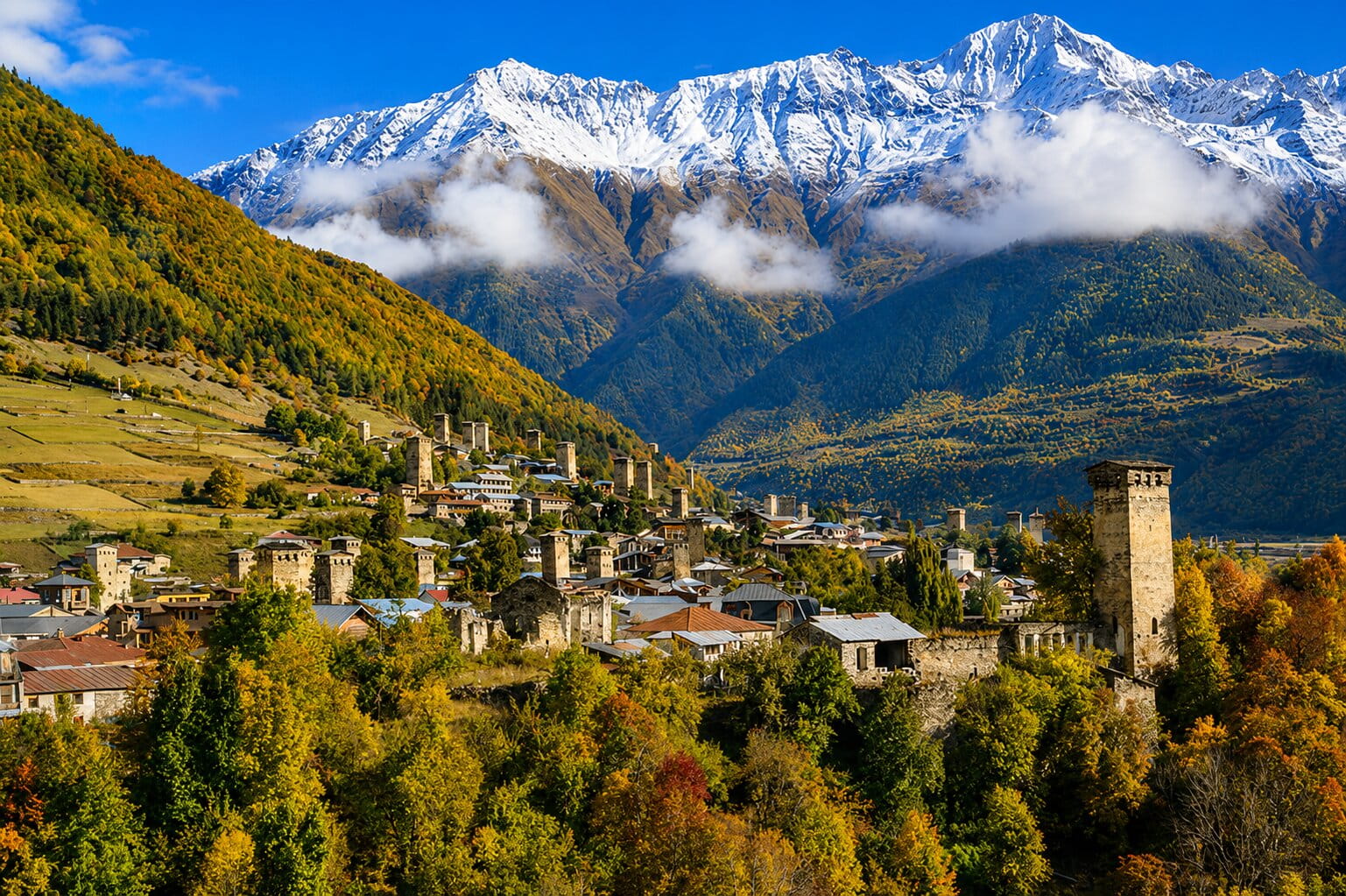
Mestia • Svaneti
Mestia is the heart of Svaneti and one of the most distinctive mountain settlements in Georgia. Here ancient stone towers stand beside modern cafes, while snow-capped Caucasus peaks rise above rooftops. It is an ideal base to experience Svan culture, set out on hikes, or simply enjoy impressive scenery.
🔥 What you should definitely see:
📌 Practical information:
BeeTravel tip: Do not attempt to see Svaneti in a single day; spending at least two nights lets you absorb the real atmosphere of the region.
Interesting fact: Mestia is located at an altitude of about 1500 meters and is considered one of the main mountaineering centers in the Caucasus.
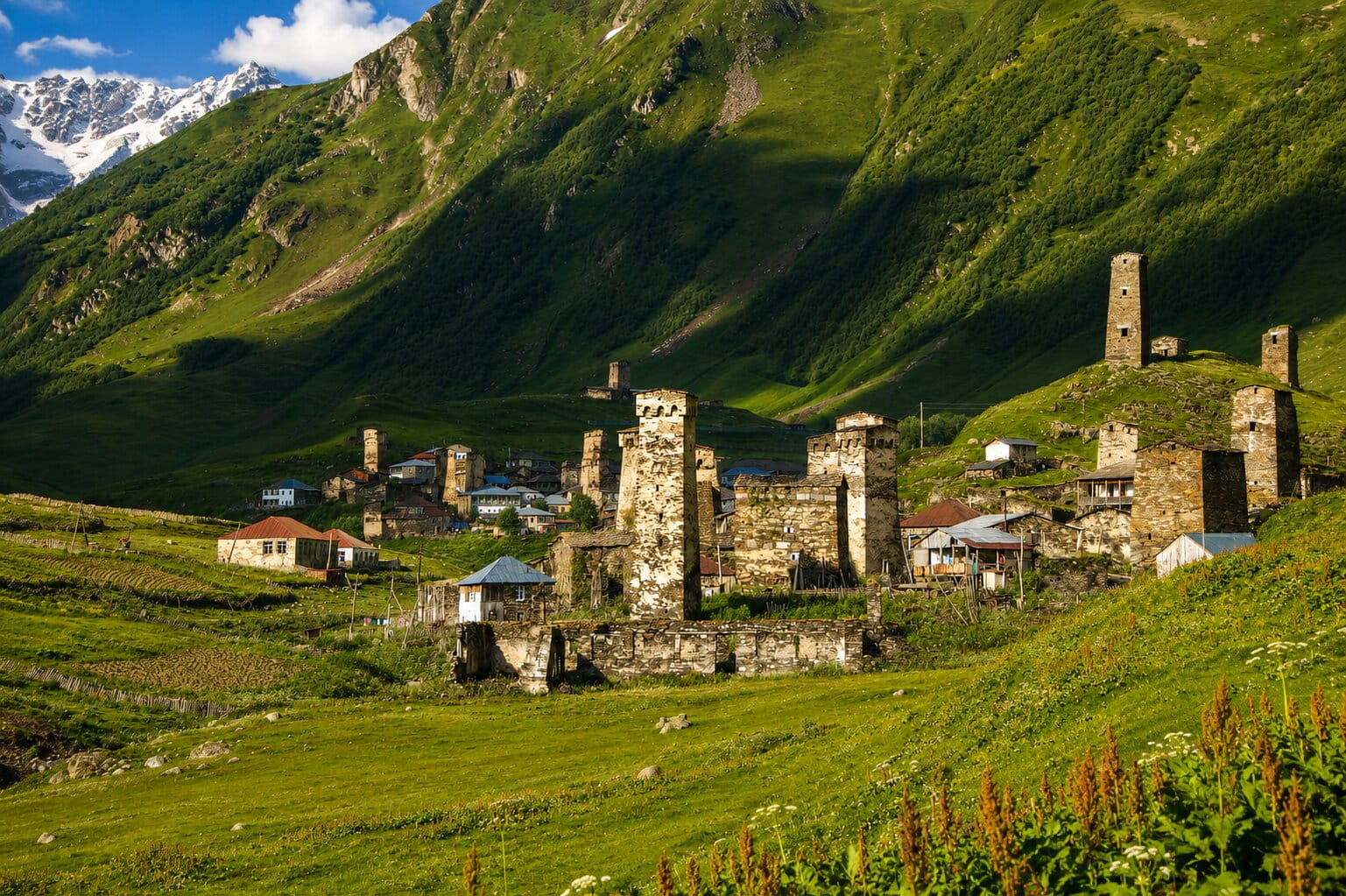
Ushguli • Svaneti
Ushguli is one of the highest continuously inhabited settlements in Europe. Stone Svan towers, ancient dwellings, and majestic Mount Shkhara create a landscape that appears almost fairy-tale. The site is included on the UNESCO World Heritage List and is regarded as a true jewel of Svaneti.
🔥 What you should definitely see:
📌 Practical information:
BeeTravel tip: If time allows, stay overnight; in the morning and evening, Ushguli looks entirely different than in midday.
Interesting fact: Ushguli lies at an altitude of about 2200 meters and is considered one of the highest continuously inhabited settlements in Europe.
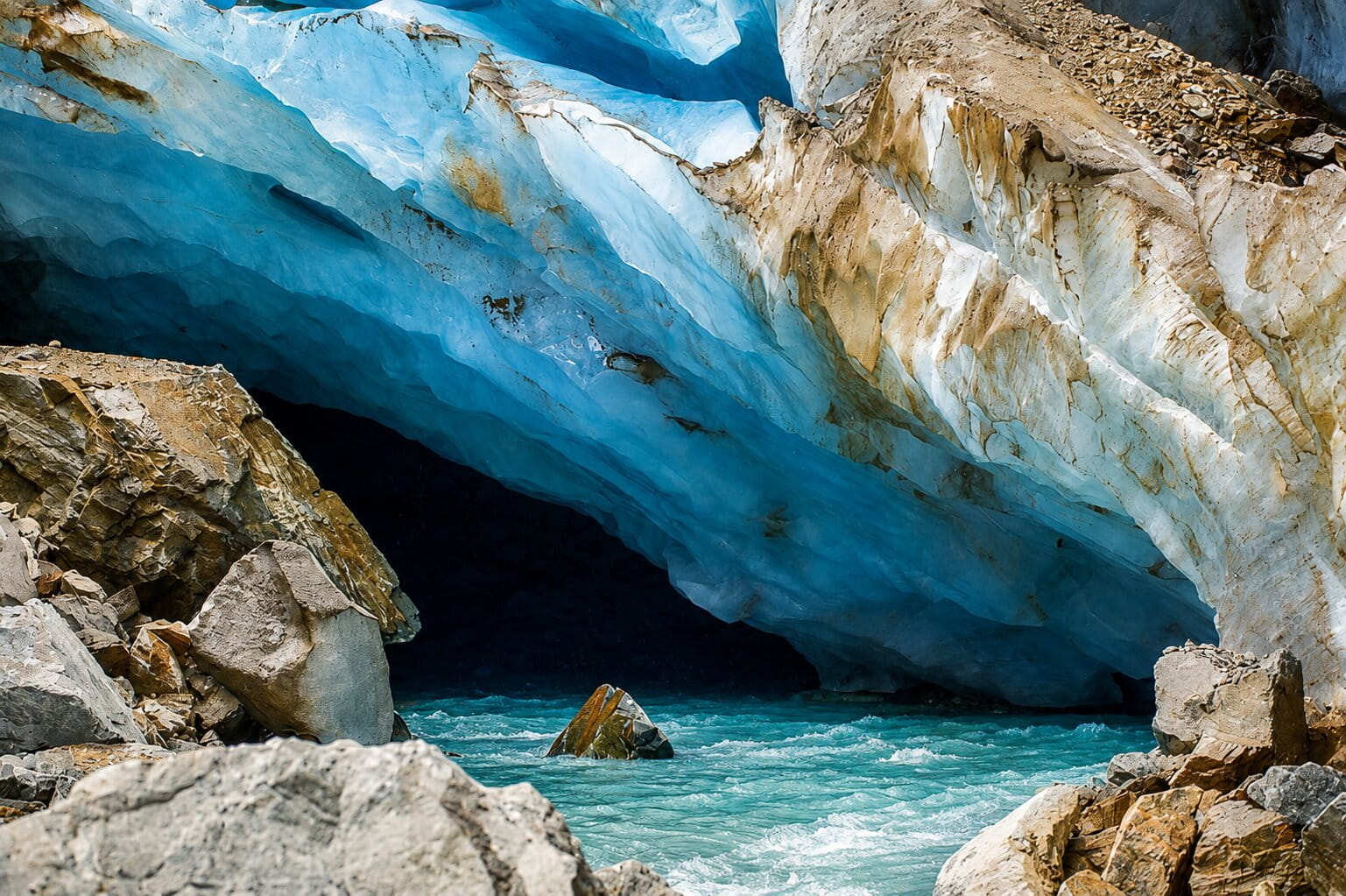
Mestia • Svaneti
Chalaadi Glacier is one of the most accessible glaciers in Georgia. After just a few hours of an easy walk, you can stand next to immense masses of ice descending directly from the Caucasus peaks. Along the way, views open up to swift rivers, coniferous forests, and snow-dusted peaks.
🔥 What you should definitely see:
📌 Practical information:
BeeTravel tip: Do not approach the glacier too closely, as falling ice can occur even in fair weather.
Interesting fact: Over recent decades the glacier has been gradually retreating, so its edge today sits significantly further back than shown in historic photographs.
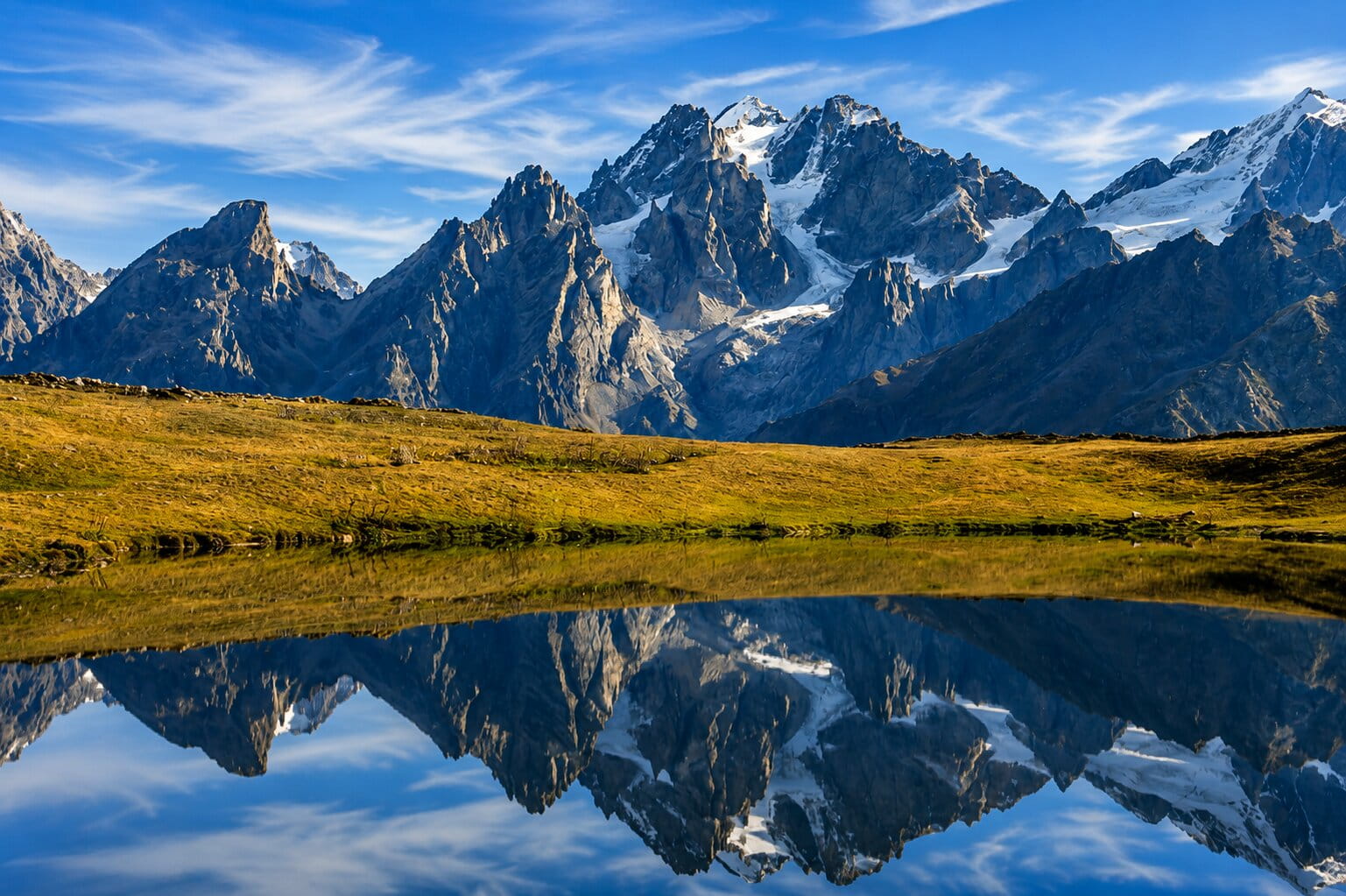
Mestia • Svaneti
Koruldi Lakes is one of the most famous viewing locations in Svaneti. Small alpine lakes reflect the snowy peaks of Ushba and other Caucasian giants, creating one of Georgia's most impressive landscapes. This destination is especially loved by photographers and mountain hikers.
🔥 What you should definitely see:
📌 Practical information:
BeeTravel tip: If you are not prepared for a long hike, you can drive up in an SUV and walk the final kilometers on foot.
Interesting fact: In calm weather, the water surface becomes so still that Mount Ushba's summit reflects in the lake like a mirror.
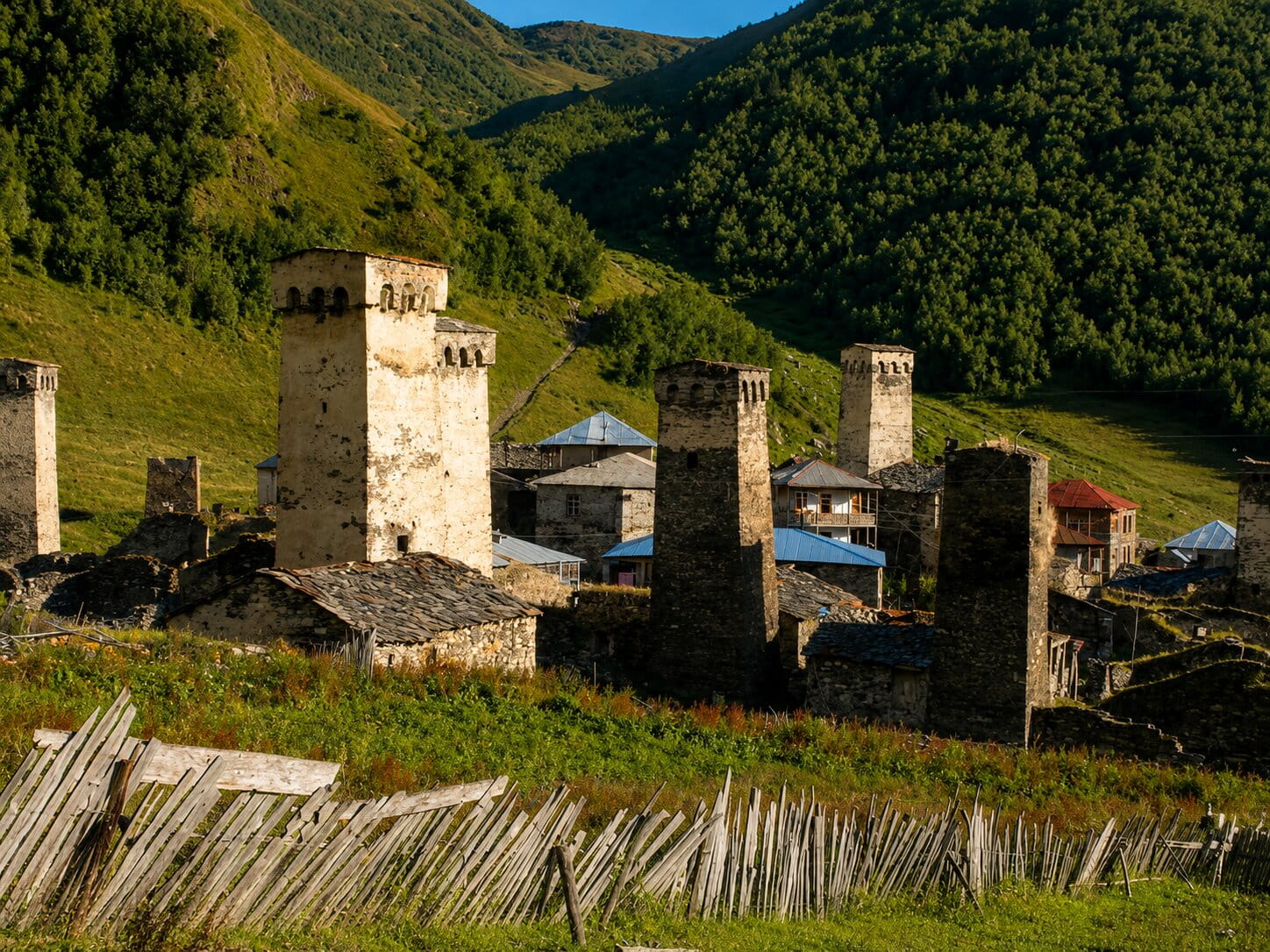
Svaneti
Svan towers are the primary symbol of Svaneti and among the most recognizable sights in all of Georgia. These stone structures were built nearly a thousand years ago and served concurrently as home, fortress, and refuge for local families. Against snowy summits, the towers create a truly unique landscape.
🔥 What you should definitely see:
📌 Practical information:
BeeTravel tip: The most beautiful photos of the towers are captured early in the morning, when mountain peaks are already lit by the sun while villages remain in soft shadow.
Interesting fact: More than 170 medieval towers survive in Svaneti, most of which were constructed between the 9th and 13th centuries.
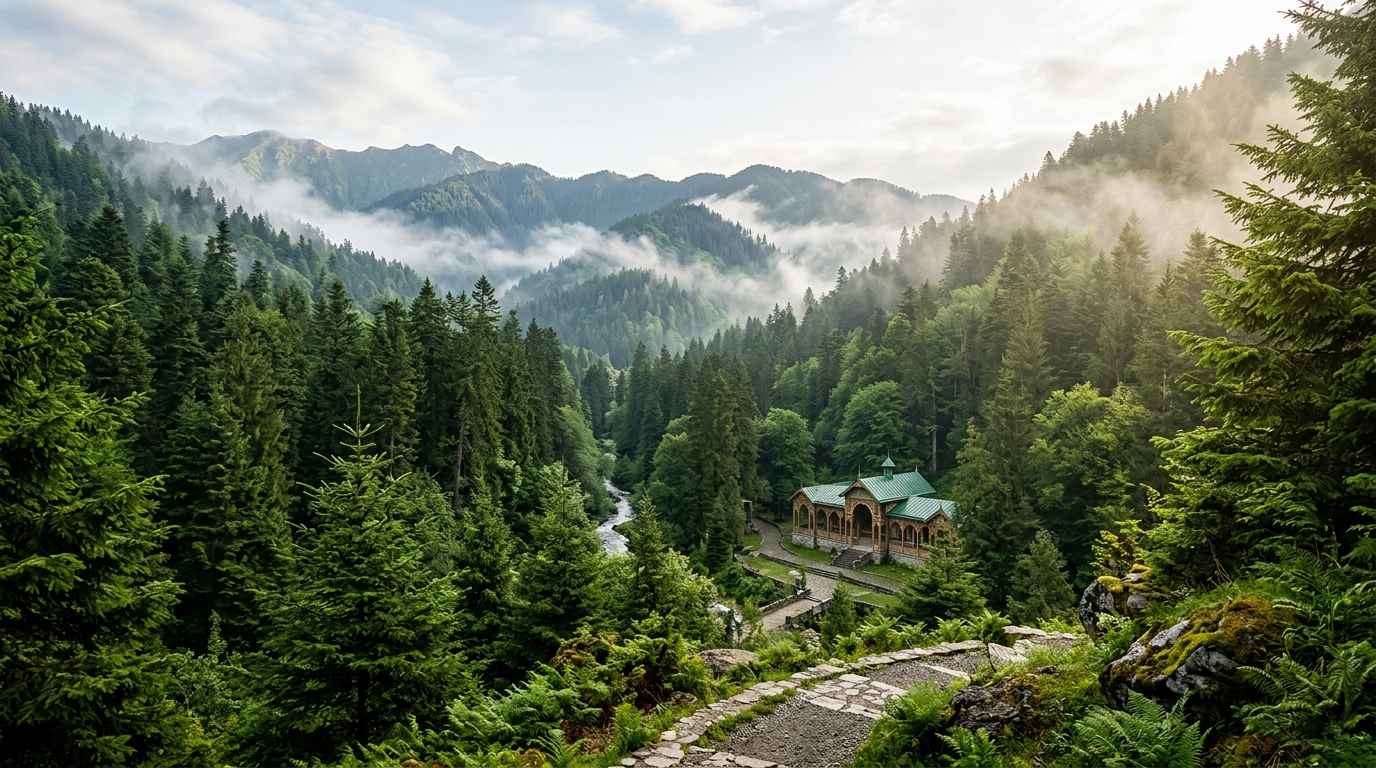
Borjomi is a legendary resort town in a picturesque gorge, surrounded by relict coniferous forests. Since the 19th century, people have come here for pristine mountain air and the famous mineral water originating in thermal volcanic depths.
In Borjomi, it is pleasant to slow down: drink warm mineral water straight from the historic pump room, bathe in warm open-air sulfur pools, walk along eco-trails in Borjomi-Kharagauli National Park, or take the narrow-gauge train up to the snow-covered slopes of Bakuriani.
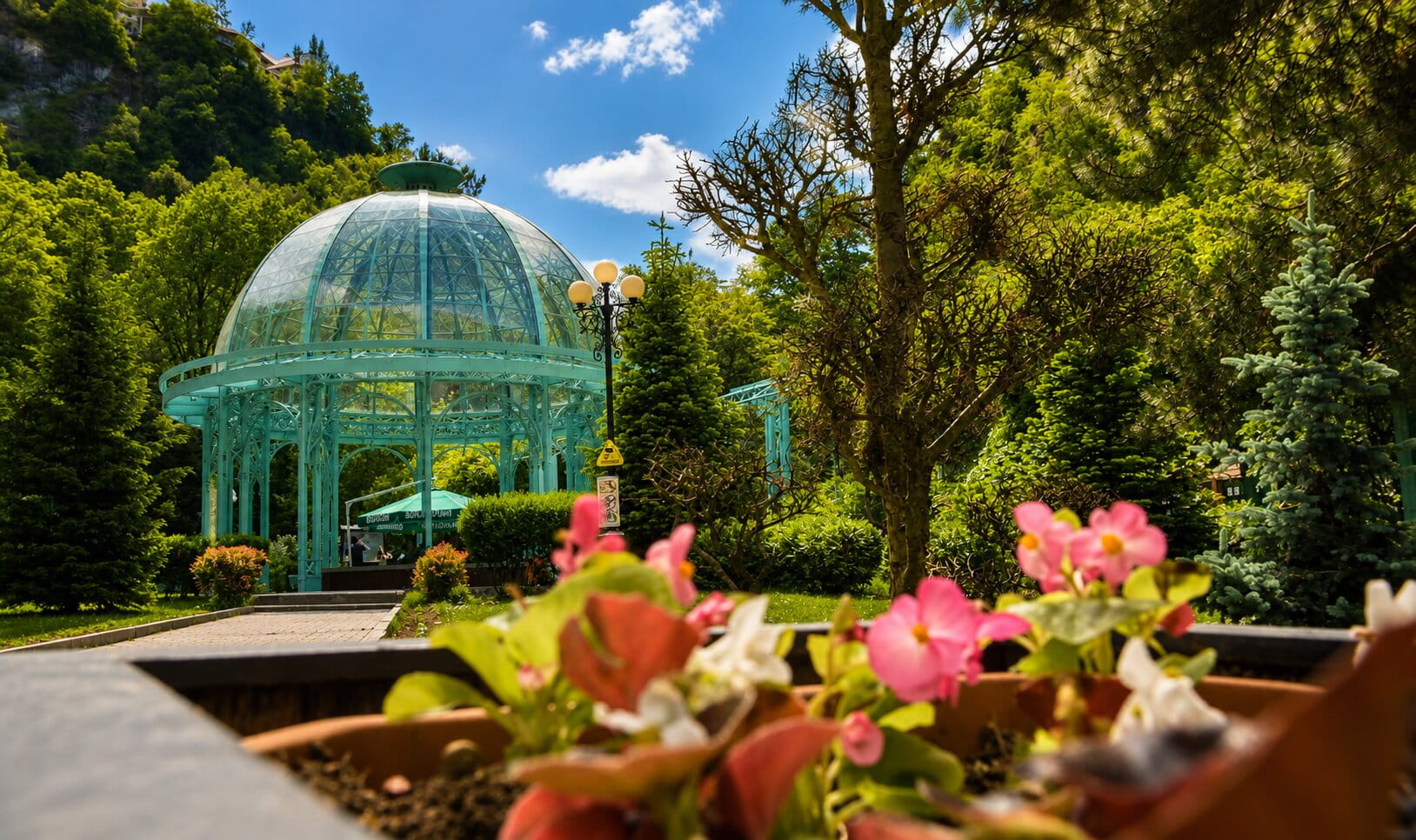
Borjomi • Samtskhe-Javakheti
Borjomi Central Park is the main recreation ground of the famous resort. Here you can stroll along a mountain river, taste legendary mineral water directly from the spring, ride the cable car, or simply enjoy fresh mountain air among century-old trees.
🔥 What you should definitely see:
📌 Practical information:
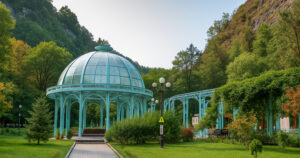
BeeTravel tip: Do not rush to leave after walking through the central park area; the prettiest spots are located further up the valley.
Interesting fact: The park was established back in the 19th century, when Borjomi became a favorite retreat for the Russian imperial family.
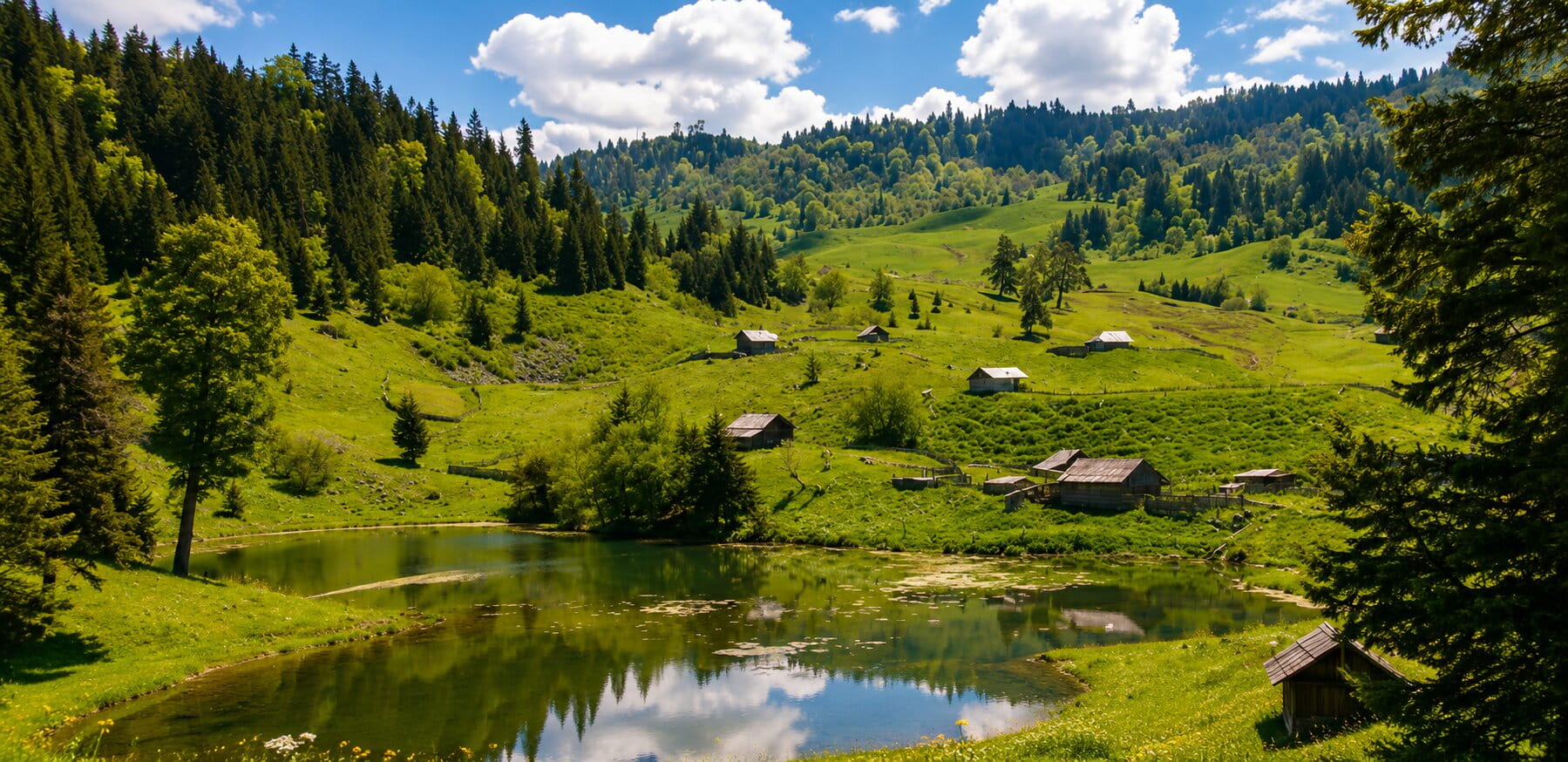
Borjomi • Samtskhe-Javakheti
This is one of the largest national parks in Europe, preserving primeval forests, high-altitude meadows, and dozens of hiking trails. Here you can spot red deer, roe deer, and eagles, and enjoy genuine silence that is rarely found in popular tourist destinations.
🔥 What you should definitely see:
📌 Practical information:
BeeTravel tip: Even for a short route, take comfortable shoes, water, and a light jacket; weather in the mountains shifts very quickly.
Interesting fact: The national park covers more than 85,000 hectares, making it one of Europe’s largest protected areas.
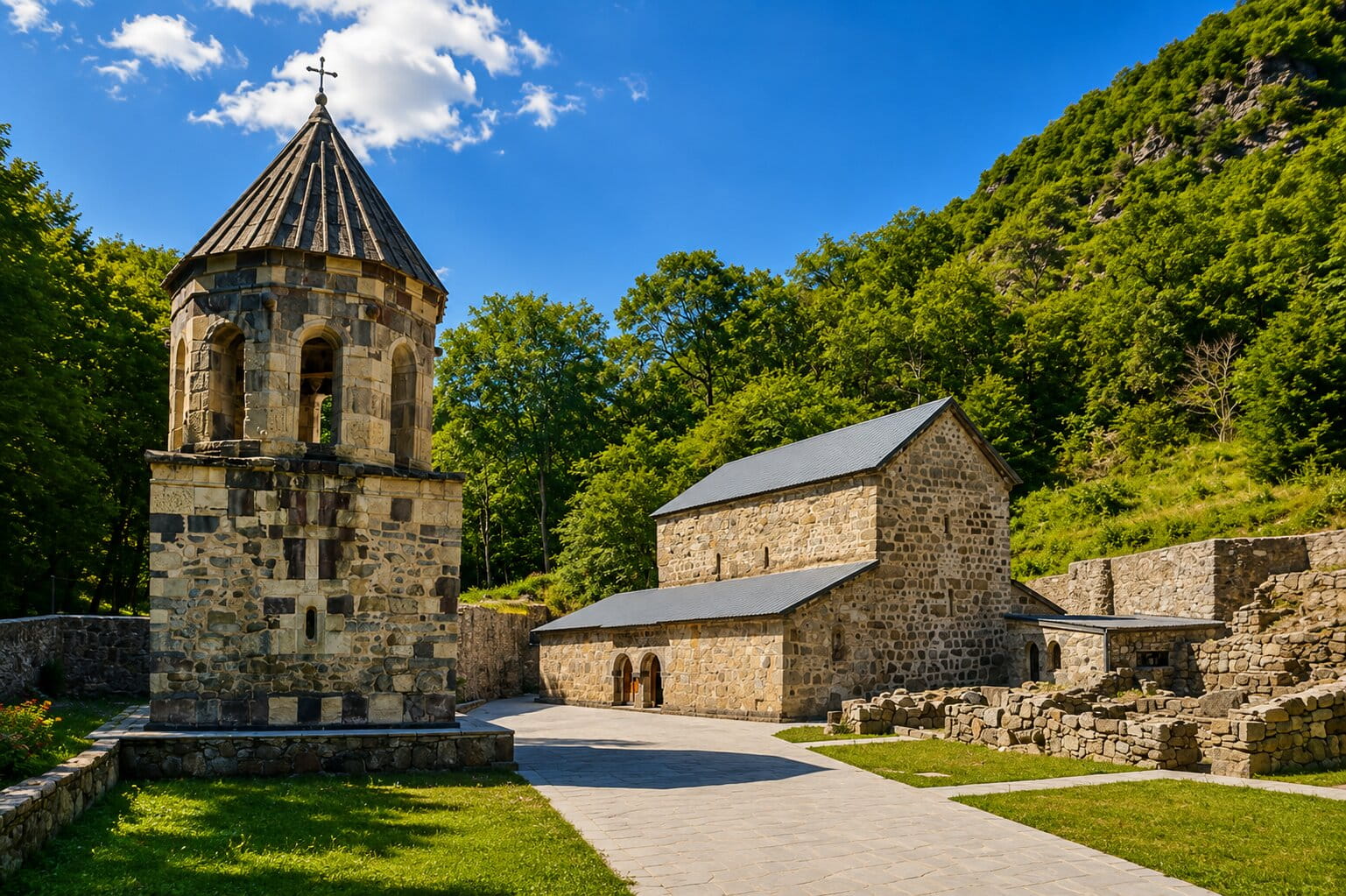
Chitakhevi • Borjomi
Green Monastery is one of the most atmospheric places in Borjomi Gorge. It is hidden among dense woods next to a mountain river, ensuring cool air and remarkable tranquility throughout the year. It is an ideal spot to pause from urban bustle and sense a special spiritual environment.
🔥 What you should definitely see:
📌 Practical information:
BeeTravel tip: After visiting the monastery, take a short walk along the river; this is one of the quietest and prettiest spots around Borjomi.
Interesting fact: The monastery got its name from the dense evergreen forests surrounding it on all sides, creating the impression that it is immersed in greenery.
Likani • Borjomi
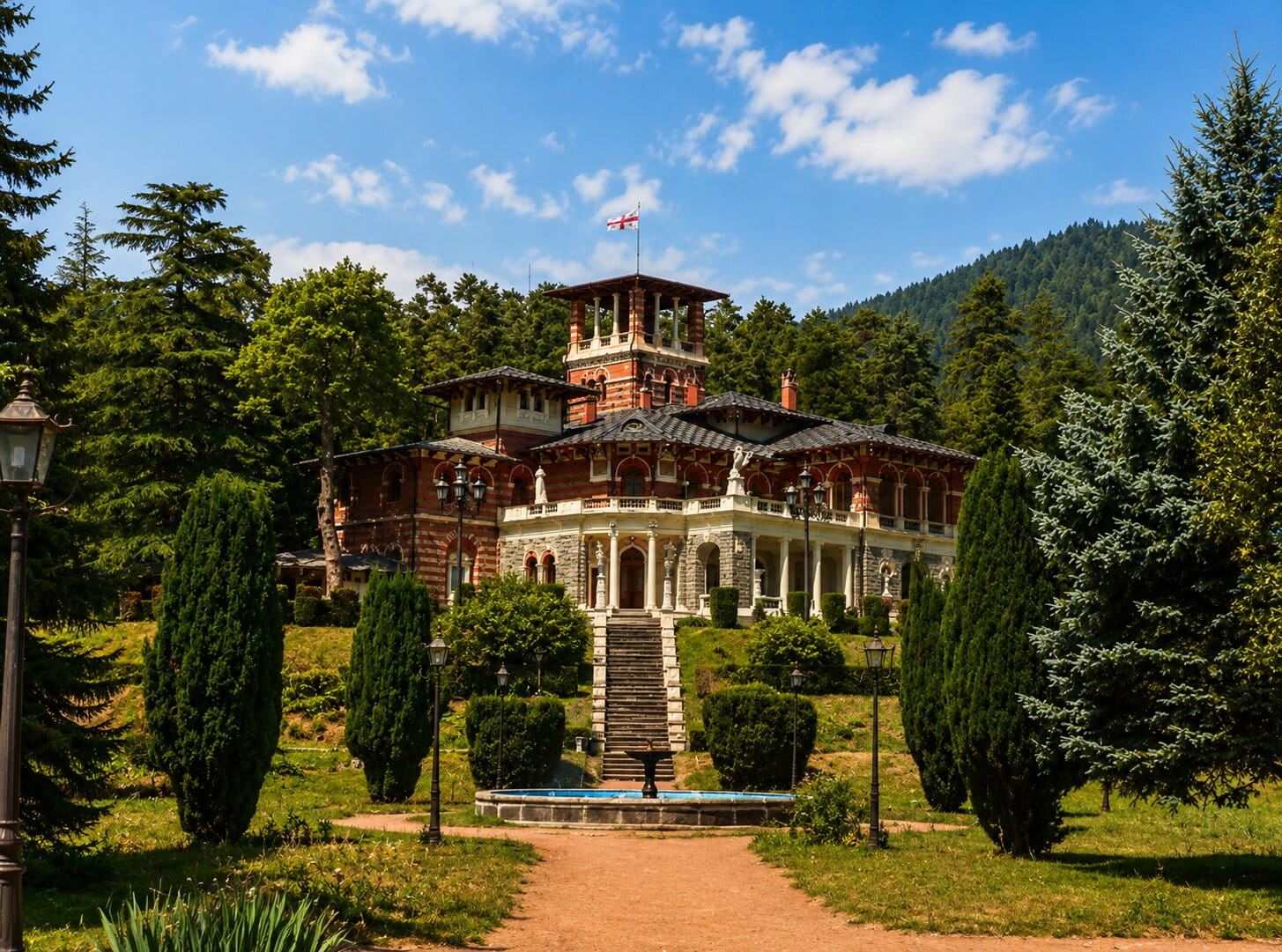
The Romanov Palace is a former country retreat of the Russian imperial family, set inside a picturesque park in the village of Likani. Elegant architecture, manicured grounds, and rich history make this site one of the most intriguing attractions in the Borjomi Gorge.
🔥 What you should definitely see:
📌 Practical information:
BeeTravel tip: Combine visiting the palace with a stroll around Likani; it is much quieter here than in central Borjomi.
Interesting fact: It was here that the last Russian Emperor Nicholas II vacationed with his family, and following the revolution, the palace served as a state residence.
Borjomi • Central Park
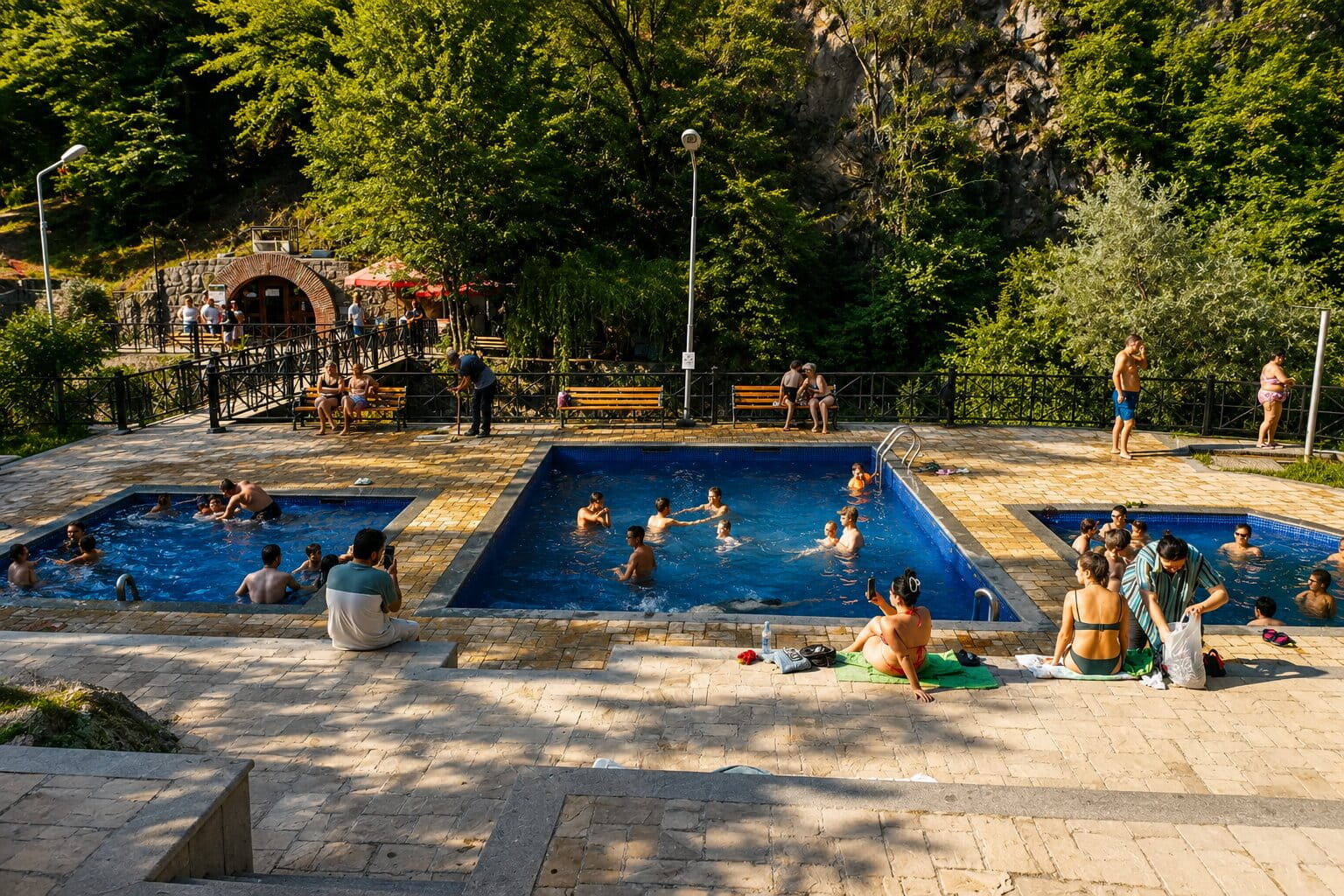
The sulfur pools are situated in the upper section of Borjomi Central Park and are regarded as one of the most unusual natural features of the resort. Warm mineral water flows here directly from natural springs, and the surrounding forest creates the atmosphere of a genuine open-air mountain spa.
🔥 What you should definitely see:
📌 Practical information:
BeeTravel tip: Bring a towel and swimwear; many tourists regret discovering the pools too late.
Interesting fact: The water temperature in the pools stays comfortable in virtually every season, attracting visitors even in winter.
Bakuriani • Samtskhe-Javakheti
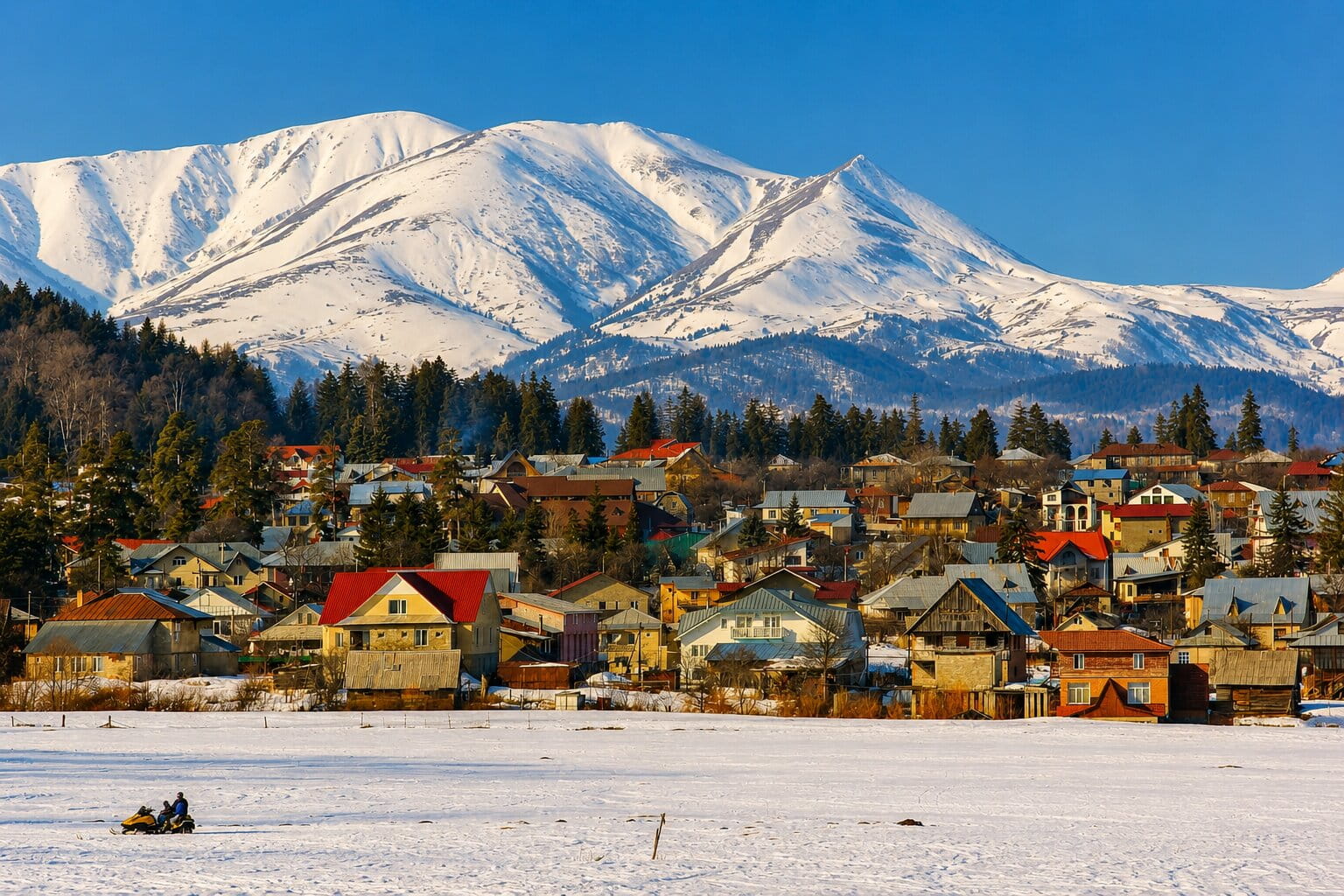
Bakuriani is one of the most famous mountain resorts in Georgia. In winter visitors come here for skiing and snowboarding, while in summer they come to wander through coniferous forests, breathe clean air, and admire mountain landscapes. It is a wonderful destination for a getaway at any time of year.
🔥 What you should definitely see:
📌 Practical information:
BeeTravel tip: If traveling in summer, definitely ride the cable car; the views rival those in winter.
Interesting fact: Bakuriani has repeatedly hosted international winter sports competitions, and the resort continues to actively develop as one of the primary ski centers of the Caucasus.
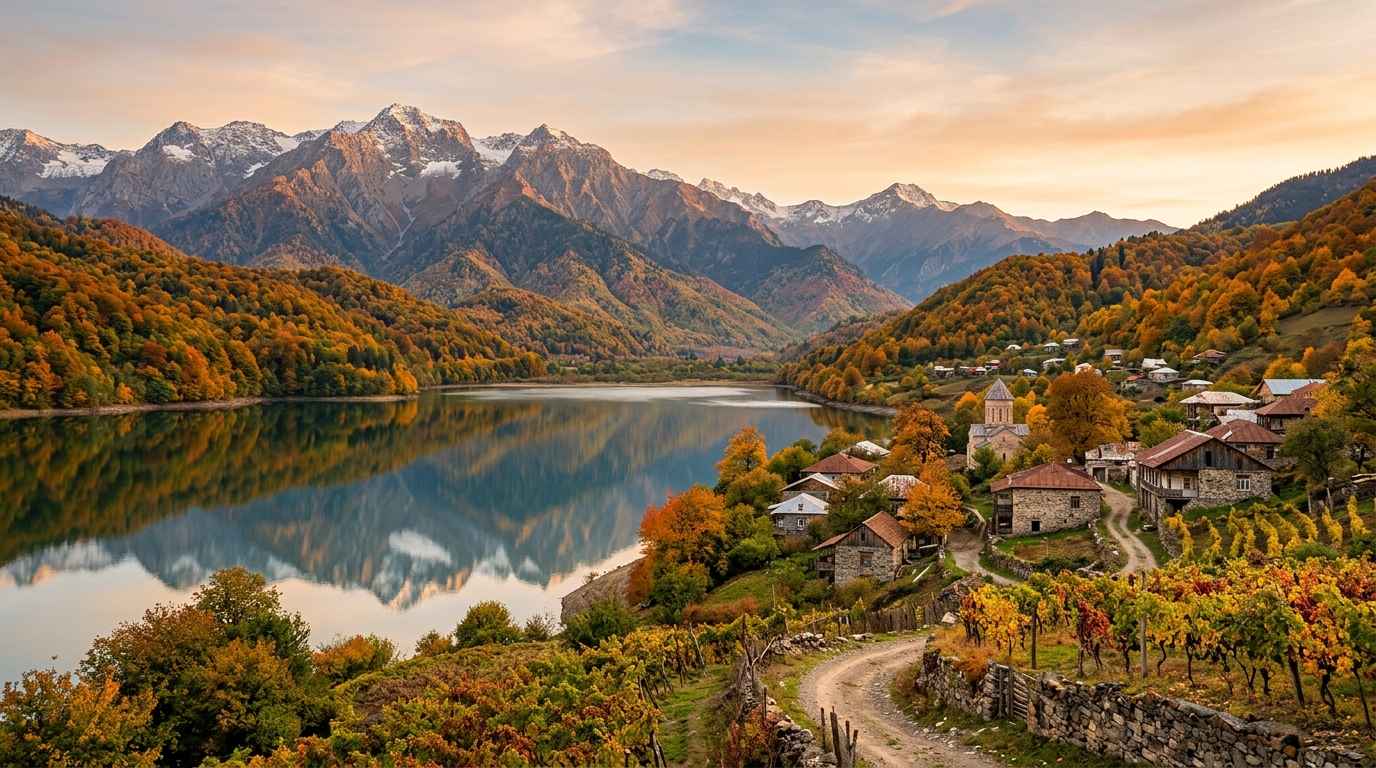
Racha is a secret jewel of Georgia, which Georgians themselves affectionately call their "Switzerland." There are no noisy crowds of tourists here: only ringing mountain silence, emerald hills, the mirror-like surface of Shaori Lake, and authentic wooden cottages.
It is on the slopes of the Rioni River in the Khvanchkara microzone that rare grapes ripen for the famous naturally semi-sweet wine. In the village of Nikortsminda, an 11th-century cathedral awaits you with exquisite stone carvings that have no equal in the entire country.
Racha
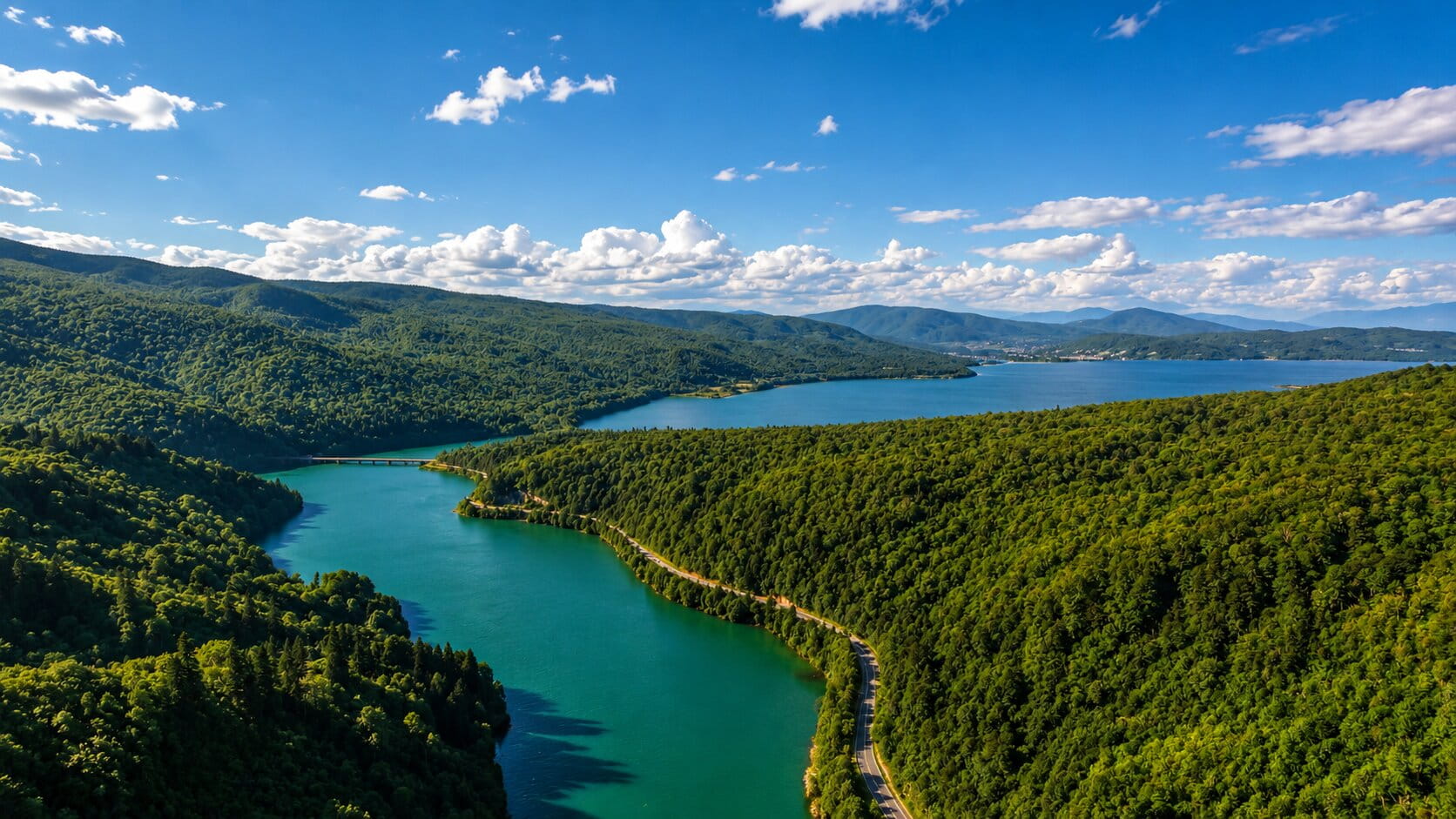
Shaori Lake is the largest lake in the Racha region and one of the most beautiful places in Western Georgia. Turquoise water, coniferous forests, and surrounding mountains create ideal conditions for quiet relaxation, a picnic, or a photo shoot. Stopping here is especially pleasant during a road trip across Racha.
🔥 What you should definitely see:
📌 Practical information:
BeeTravel tip: The best photos are taken in the morning, when the water is calm and reflects the surrounding mountains.
Interesting fact: Shaori Lake is an artificial reservoir, yet thanks to its natural setting it looks like a natural mountain lake.
Nikortsminda • Racha
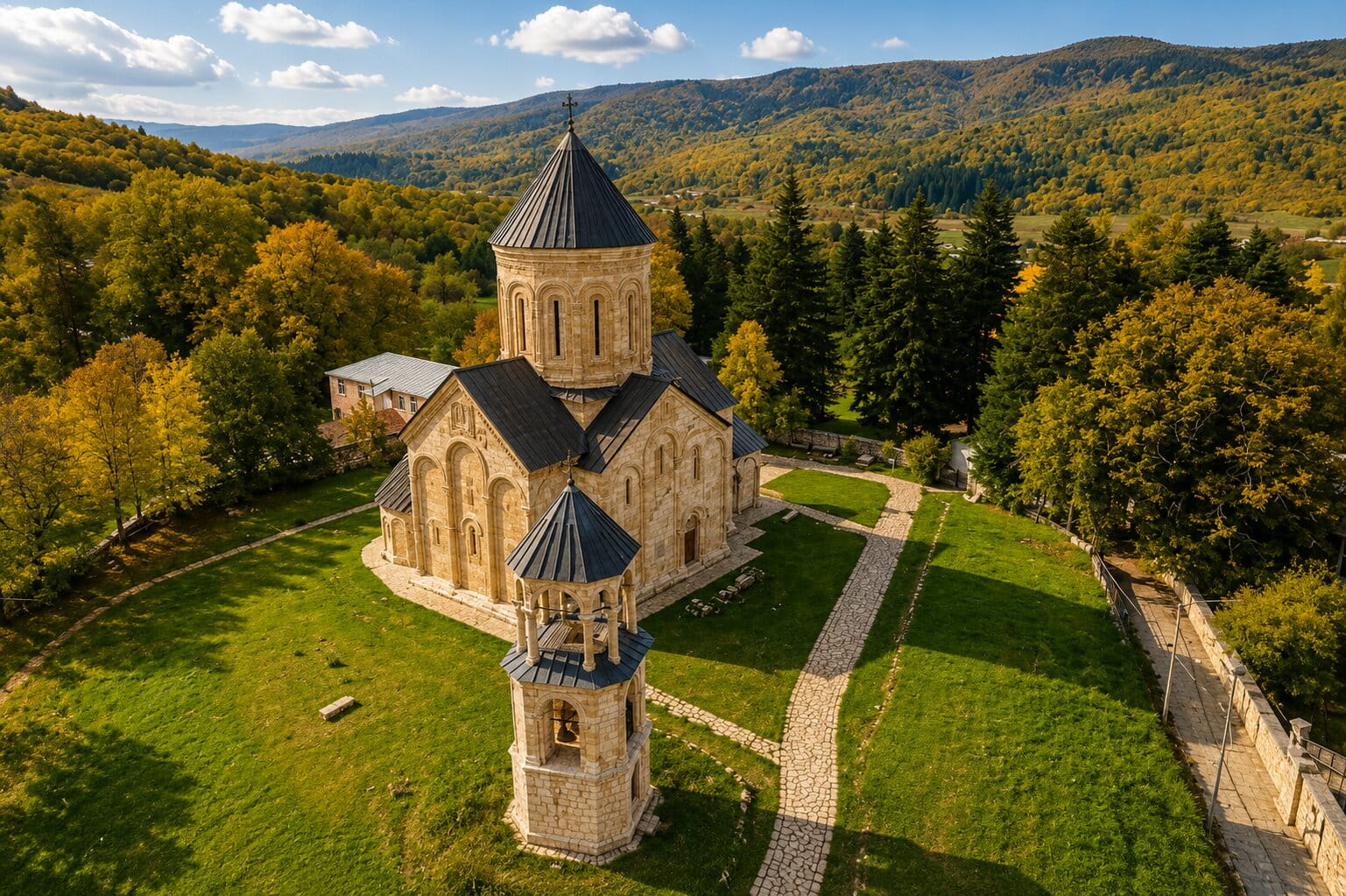
Nikortsminda Cathedral is one of the most beautiful monuments of Georgian medieval architecture. It is famed for its magnificent stone carving and ancient frescoes, which are considered true masterpieces of Georgian art. Even after a thousand years, the cathedral impresses with its elegance.
🔥 What you should definitely see:
📌 Practical information:
BeeTravel tip: Do not rush to leave after viewing the facade; the main treasures of Nikortsminda are located inside the cathedral.
Interesting fact: The cathedral was built in the 11th century during the reign of King Bagrat III and is considered one of the finest examples of Georgian church architecture.
Khvanchkara • Racha
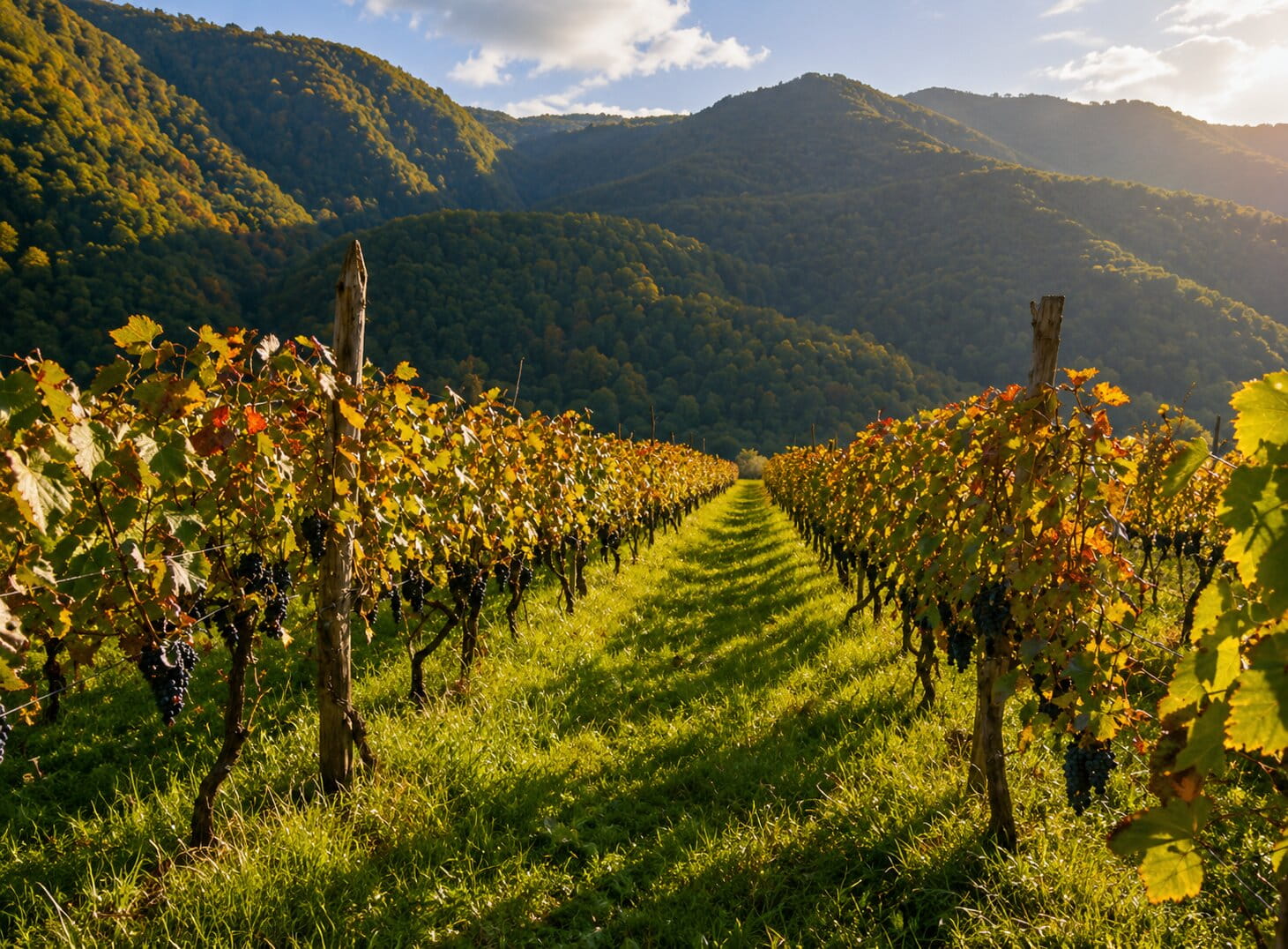
The small valley of Khvanchkara is known far beyond Georgia thanks to the eponymous wine. It is here, in small vineyards, that rare Aleksandrouli and Mujuretuli grape varieties are cultivated, giving birth to the famous naturally semi-sweet red wine.
🔥 What you should definitely see:
📌 Practical information:
BeeTravel tip: Choose small family-run wineries, as that is where you can best get acquainted with Racha winemaking traditions.
Interesting fact: Genuine Khvanchkara can only be made from grapes grown in Racha’s designated microzone.
Racha
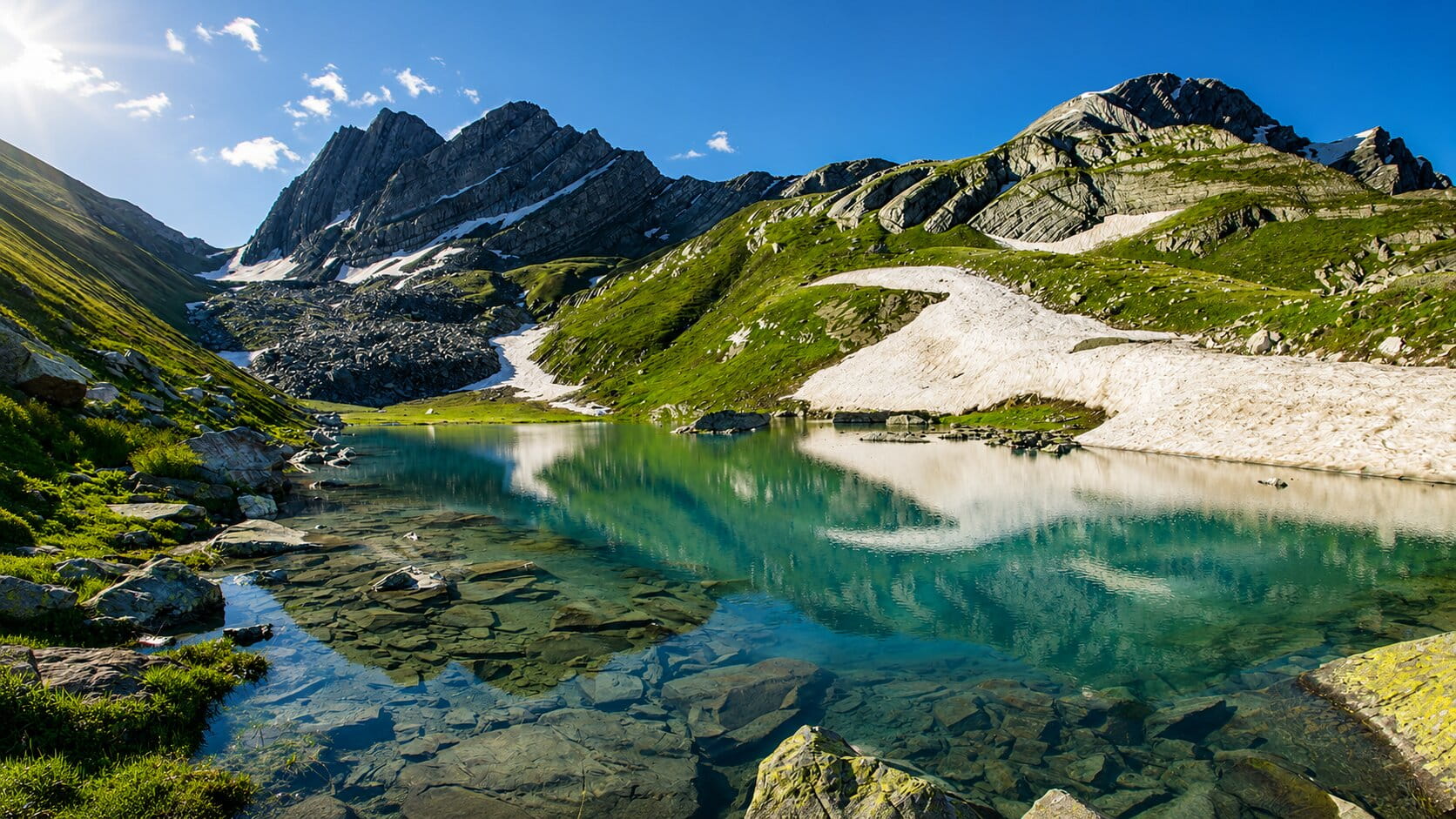
Udziro Lake is one of the most beautiful alpine lakes in Georgia. It is set among alpine meadows at an altitude of over 2800 meters, and its water changes hue depending on the weather, from deep blue to emerald. This location feels tailor-made for those who dream of experiencing the authentic wilderness of the Caucasus.
🔥 What you should definitely see:
📌 Practical information:
BeeTravel tip: Start out on the trail as early as possible in the morning; the route is quite long, and clouds often gather in the mountains after midday.
Interesting fact: The name “Udziro” means “bottomless” ; local legend says its depth cannot be measured.
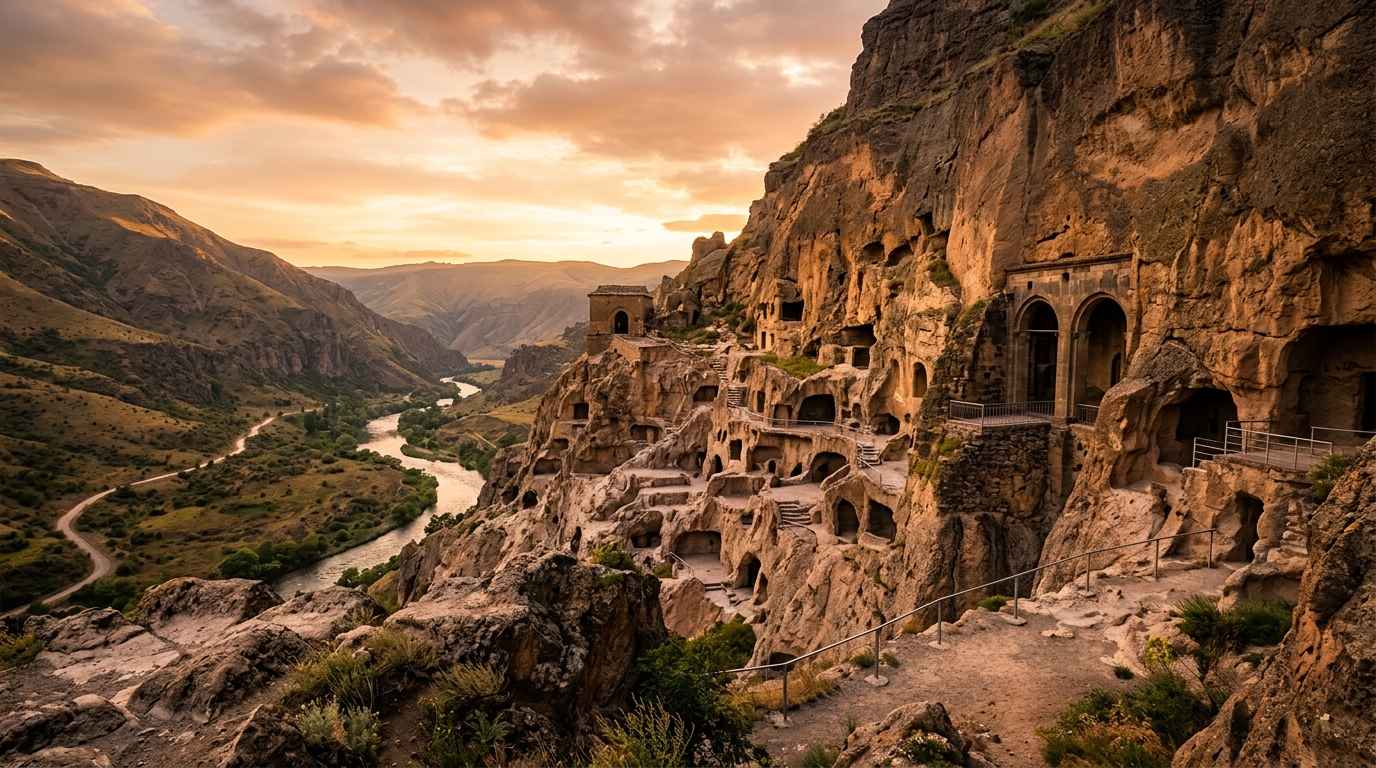
Samtskhe-Javakheti is a land of epic scale, impregnable fortresses, and rugged volcanic plateaus. The main treasure of the region is the cave city of Vardzia carved into a sheer cliff during the era of Queen Tamar, featuring multi-tiered streets, churches, and secret tunnels.
In Akhaltsikhe, it is well worth visiting the restored Rabati Citadel, where an Orthodox church and an oriental mosque meet on a single square. Meanwhile, the Javakheti Plateau, with its endless lakes of volcanic origin, delights lovers of primeval, almost otherworldly landscapes.
Aspindza • Samtskhe-Javakheti
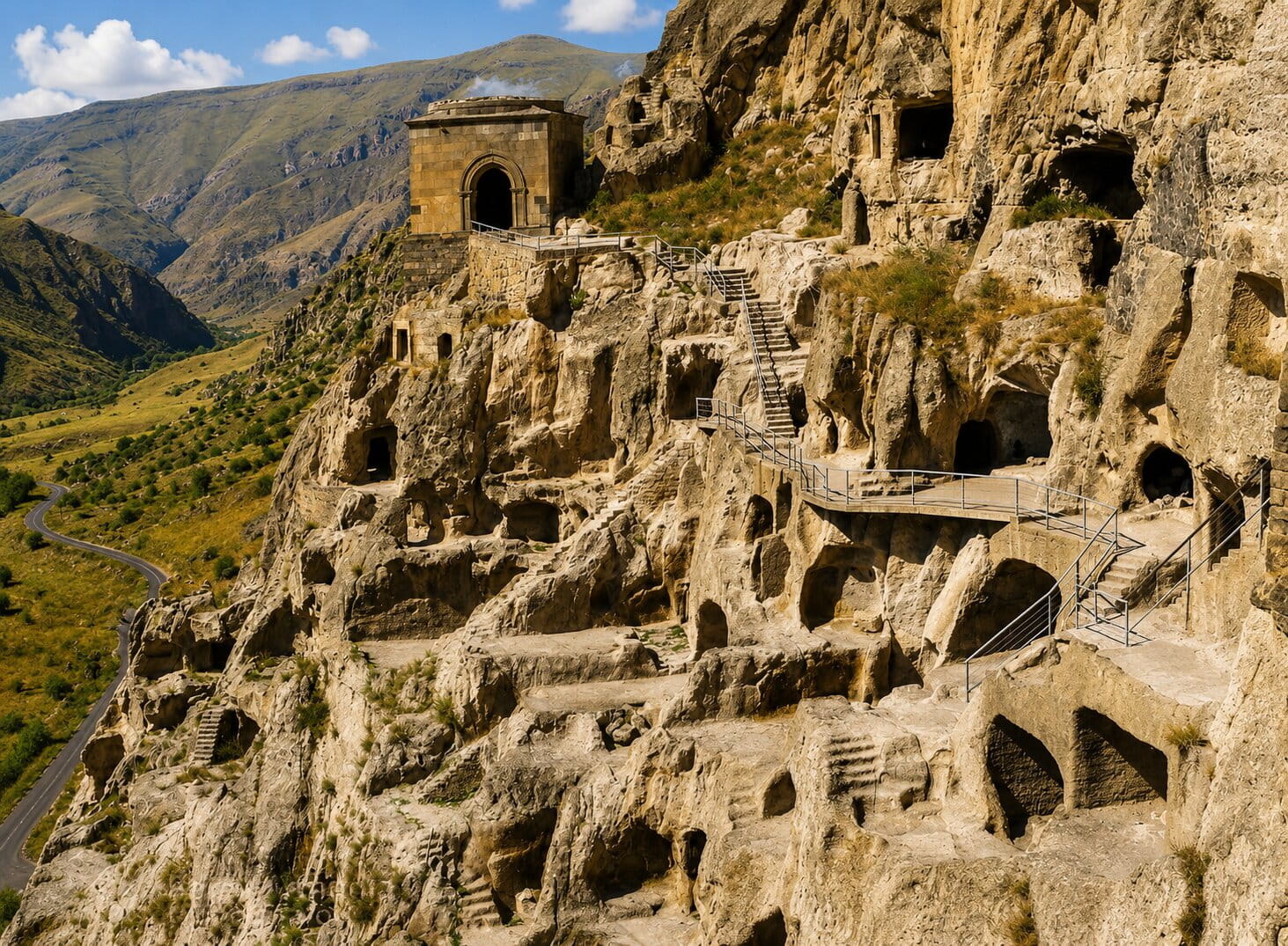
Vardzia is one of the most impressive monuments in Georgia and the country's largest cave monastery complex. Dozens of chambers cut directly into the sheer cliff are interconnected by tunnels, stairways, and passageways. A walk through Vardzia resembles a journey into a lost ancient city.
🔥 What you should definitely see:
📌 Practical information:
BeeTravel tip: Be sure to climb up to the upper levels of the complex, as that is where the finest views of the Kura Valley open up.
Interesting fact: In its heyday, Vardzia numbered several thousand chambers and could shelter tens of thousands of people simultaneously.
Akhaltsikhe • Samtskhe-Javakheti
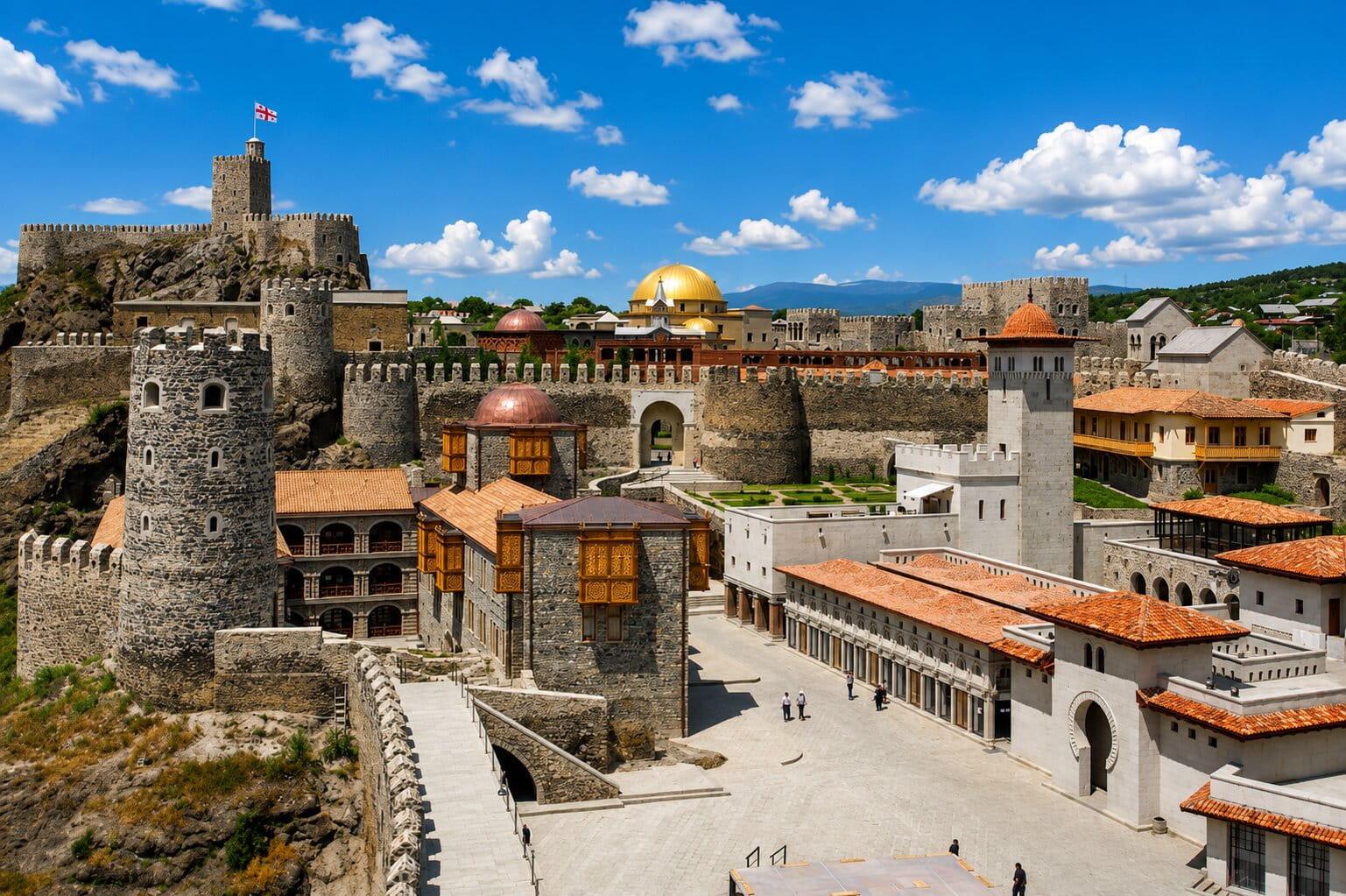
Rabati Fortress is one of the most beautiful historical complexes in Georgia, where Georgian, Ottoman, and European architecture intertwine in remarkable harmony. Following extensive restoration, the fortress became an authentic open-air museum with cozy courtyards, towers, gardens, and splendid panoramas.
🔥 What you should definitely see:
📌 Practical information:

BeeTravel tip: It is best to arrive in the morning or a couple of hours before sunset, when the fortress is especially beautifully illuminated.
Interesting fact: Rabati is one of the few historical complexes in Georgia where an Orthodox church, a mosque, a synagogue, and a Catholic church stand right next to one another.
Khertvisi • Samtskhe-Javakheti
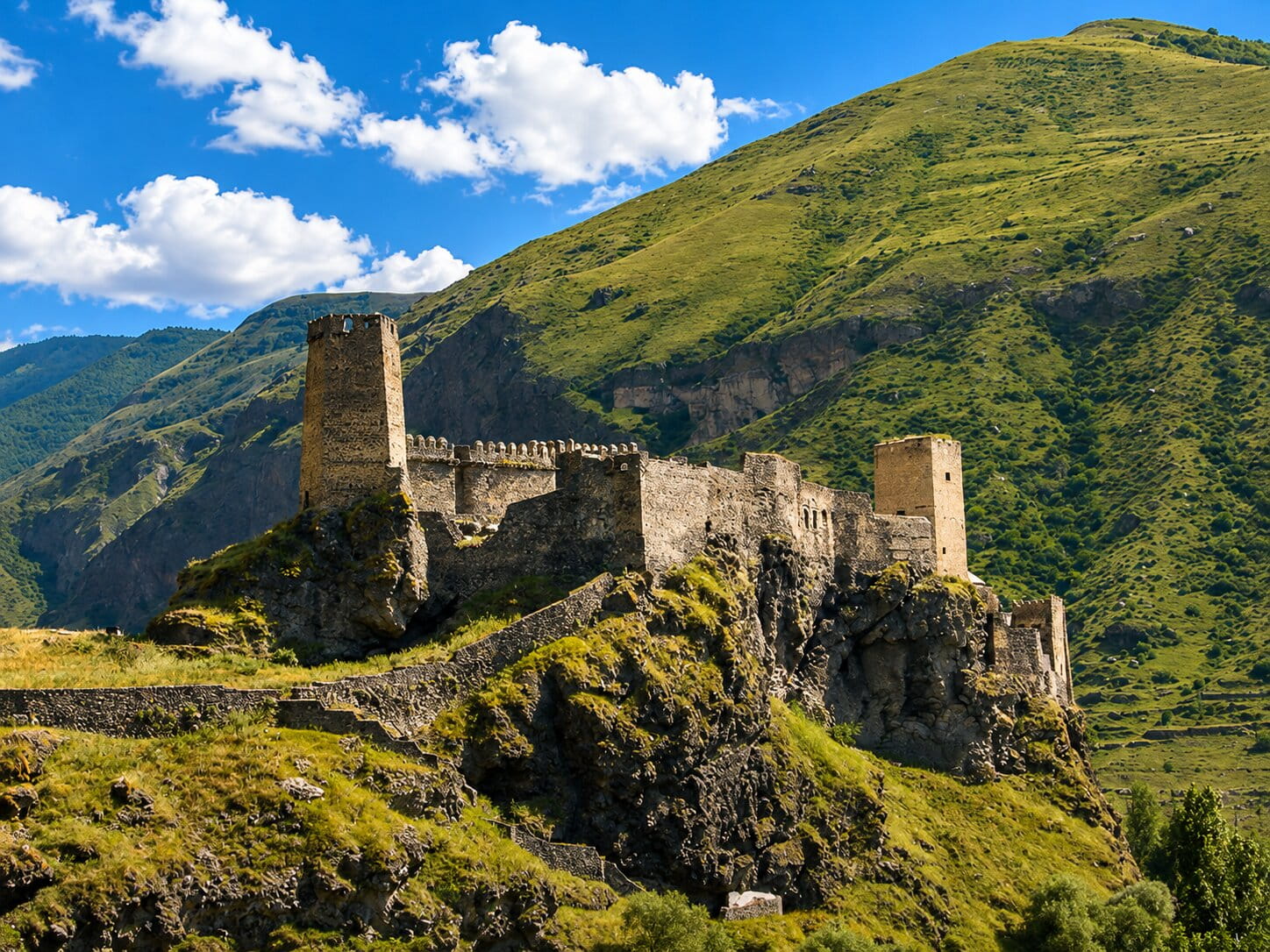
Khertvisi Fortress rises on a rocky hill at the confluence of two rivers and is considered one of the oldest fortresses in Georgia. Massive walls and towers look especially impressive against the surrounding mountains.
🔥 What you should definitely see:
📌 Practical information:
BeeTravel tip: The best photographs of the fortress are captured not inside, but from the opposite bank of the river.
Interesting fact: According to legend, the fortress already existed in the days of Alexander the Great, although the present fortifications date from a later period.
Akhaltsikhe • Samtskhe-Javakheti
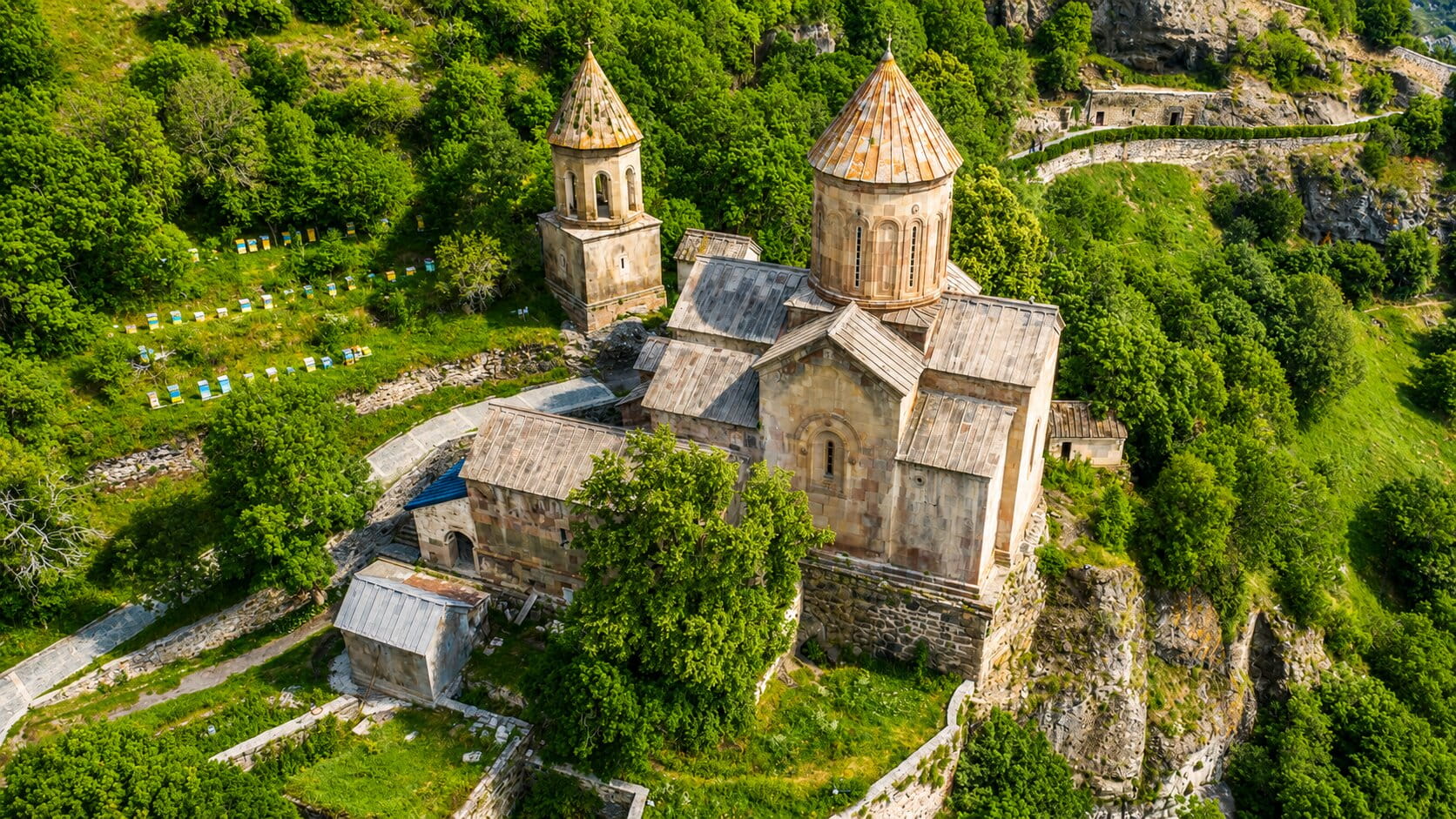
Sapara Monastery is tucked away among dense forests, which kept it virtually unnoticed by invaders for long centuries. Today it is one of the most atmospheric locations in southern Georgia, where silence, ancient architecture, and nature create a distinctive feeling of peace.
🔥 What you should definitely see:
📌 Practical information:
BeeTravel tip: It is best to arrive in the morning, when it is exceptionally peaceful and there are hardly any visitors.
Interesting fact: The name “Sapara” means “hidden”, reflecting the monastery’s forest setting.
Samtskhe-Javakheti
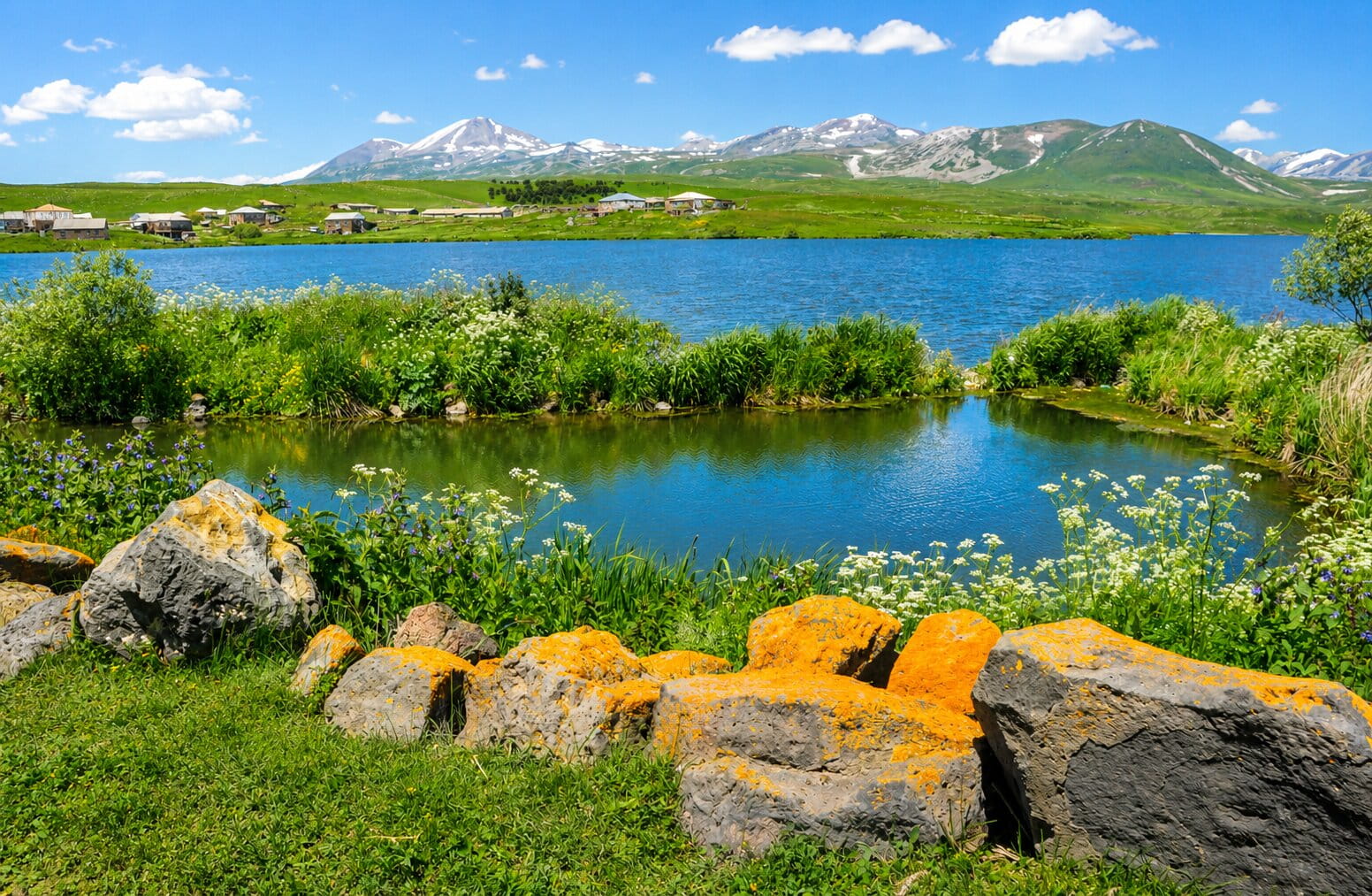
Paravani Lake is the largest lake in Georgia, situated on a high-altitude plateau at an elevation of more than 2000 meters. A special atmosphere of open space reigns here: the boundless water surface, volcanic landscapes, and near-total absence of tourists make this location truly unique.
🔥 What you should definitely see:
📌 Practical information:
BeeTravel tip: Even in summer it can be cool and windy here, so bring warm clothing.
Interesting fact: Paravani Lake lies more than 2000 meters above sea level and is Georgia’s largest lake by surface area.
To ensure your trip is as comfortable and delicious as possible, we also recommend checking out our practical guides: