EN

Batumi is best explored on foot. Old streets, early 20th-century European architecture, cozy courtyards, and facade details are all easy to miss if you simply walk past. Often tourists walk through the center without suspecting what stories hide behind familiar buildings and squares.
We have walked this route many times, collecting places and details that visitors often miss. Over time, these walks became a single route past old mansions, churches, and atmospheric courtyards. Here are the main stops, so you can explore the Old Town on your own.
Table of contents:
The historic center is quite compact. If you walk without haste, look into entryways, and stop for coffee, the walk will take about 3–4 hours.
We built a logical path: it begins at Europe Square, passes along key early 20th-century streets, and ends by the sea, at the famous Batumi colonnades, from where it is convenient to continue along Seaside Boulevard.

Old Batumi walking map / Photo: BizzzMedia
What is in the route:

Reading from a screen while walking can make you miss a carved balcony, an old entrance, or a small detail on a facade. To help you enjoy the city, we created the audio tour “Secrets of Old Batumi” from BeeTravel.
It brings together the same landmark and secret locations of the Old Town that we describe in this article, but in the format of an engaging audio story with professional voice narration, rare archival photos, and city legends.
How it works:
🎧 The first 5 stops of the route can be listened to free in demo mode: right now, without registration and without entering a card.

And now let us begin the walk and see what is worth seeing in Old Batumi.

Europe Square / Photo: BizzzMedia
The square received its name in 2006 in honor of Adjara joining the Assembly of European Regions. The architecture here is a mix of restored old facades and new buildings styled after the Belle Époque. Pay attention to the variety of styles: elements of Baroque, Renaissance, and Art Nouveau stand side by side here. The square was designed to resemble classic European town hall squares, and today it is the main venue for city festivals and Christmas markets.


Statue of Medea / Photo: EyeEm / Freepik
The monument by David Khmaladze cost the city approximately one million GEL. The Golden Fleece in the hands of the Colchian princess is covered in genuine gold leaf. This monument is not just a decoration, but a political gesture recalling Georgia's deep historical and cultural ties with Europe through the ancient world. Medea here symbolizes the greatness of the ancient state of Colchis, which was famous for its metal masters and wealth.


Astronomical Clock / Photo: BizzzMedia
The mechanism was made in Germany specifically for Batumi. In addition to the time, the dials show the position of the Sun and Moon in the signs of the zodiac, sunrise and sunset times, and the current lunar phase. The tower itself belongs to the former National Bank building, built in an eclectic style. If you look closely at the facade, you can see rich stucco moldings and forged details typical of "oil" Batumi, when local magnates competed in the luxury of their mansions.


Memed Abashidze Monument / Photo: BizzzMedia
Memed Abashidze was an epochal figure for Adjara. He came from a noble princely family, but dedicated his life to ensuring that the region's Muslim population (including himself) felt part of a unified Georgia. He founded the first Georgian newspaper in Batumi and opened a network of schools. The monument stands near the house where he lived and symbolizes Adjara's return to Georgia's cultural space after centuries of Ottoman influence.


Apollo Cinema / Photo: BizzzMedia
The Art Nouveau building with recognizable round windows is an architectural gem of Abashidze Street. It was built in 1911, at the peak of cinema's popularity. In that period Batumi was an extraordinarily advanced port city where dozens of consulates operated and the most modern venues opened. Although the cinema does not welcome viewers now, the building's facade remains one of the brightest examples of Art Nouveau in the city.


Batumi Drama Theater / Photo: BizzzMedia
The building with monumental columns and sculptures on the roof is an example of Soviet Neoclassicism, completed in 1952. The theater stands on the square of the same name and is the architectural dominant of the center. Theatrical traditions in Batumi originated back in the 19th century, but this very building became the main cultural symbol of the city. Inside hides a luxurious "Golden Hall," while outside is a spacious square where locals like to arrange meetings.


Neptune Fountain / Photo: BizzzMedia
The fountain in front of the Batumi Drama Theater appeared here in 2010 and quickly became one of the most recognizable spots in the center. The sculptural composition was inspired by the famous Neptune Fountain in Bologna. In the center is the sea god with a trident, surrounded by figures of mermaids. The bronze sculptures are covered in gilding, so the fountain looks especially striking in the evening when the illumination is turned on.


Merchant Sabaev's House / Photo: BizzzMedia
This house is easy to recognize by the sculptures of atlantes supporting the second-floor balcony. The building was constructed in the late 19th century for the wealthy merchant Sabaev. The architecture of the house combines elements of Eclecticism and Baroque. Similar decorative details were characteristic of the period of rapid economic growth in Batumi, when the city was developing swiftly thanks to trade and the oil business.


Square in the historic center / Photo: BizzzMedia
A small green square is tucked among historic buildings in the city center. Locals often relax here, and in summer you can escape the heat in the shade of the trees.

Church of the Holy Savior / Photo: BizzzMedia
The Armenian Apostolic Church was built in the 1880s to a design by architect Robert Marfeld. The light stone building with distinctive pointed domes stands out markedly against the cityscape. The church has an unusual history: during Soviet times a planetarium operated here, and only in the 90s was the building returned to believers. The church is a reminder of Batumi's multinational past, where different cultures and religions always coexisted peacefully.


Tobacco Magnate's Mansion / Photo: BizzzMedia
One of the most unusual monuments of Batumi Art Nouveau. The early 20th-century mansion stands out for its asymmetrical form and mix of materials: brick, wood, and reinforced concrete. Its owner, Lazar Biniat-ogly, was a Greek who fled the Ottoman Empire. In 1882, he opened a tobacco factory here, which became one of the first in the city. In Soviet times, the house hosted all kinds of things: from an aviation club to a wax museum. Locals still call it the "Architects' House" or the "Mushroom." Currently the building is empty, but it remains a worthwhile stop on a walk through the center.


Saint Nicholas Church / Photo: BizzzMedia
One of the oldest churches in the city, built in the 1860s with funds from the Greek community. To get permission for construction from the Turkish sultan, the Greeks had to agree to a condition: the church could not have bells (they were installed much later). The light stone church with a cozy courtyard is a quiet corner in the Old Town and a reminder of the times when Batumi was a small port settlement.


Piazza Square / Photo: BizzzMedia
Modern "little Italy" right in the center of Batumi. Opened in 2010, the square is famous for its giant floor mosaic: creating it took 88 million pieces of marble and smalt. Every three hours a small show begins on the clock tower: figures in national costumes come out to music. This is an ideal place for those who want to drink coffee surrounded by stained glass and arches reminiscent of Venetian ones.


House of the Pharmacist / Photo: BizzzMedia
The house is easy to recognize by its defining feature: a figure of a young musician in the attic window. Legend has it that when a strong wind blows in from the sea and passes through openings in the sculpture, it makes a sound like a flute or duduk.


Turkish Quarter / Photo: BizzzMedia
The area around Orta Jame Mosque is the place where Batumi preserved its oriental flavor. The narrow streets here are filled with the scent of freshly ground coffee and Turkish sweets. The mosque itself was built in the 1860s and is the only surviving one in the city. The quarter is interesting for the contrast between its historical past and modern life: here the best coffee shops sit next to old residential courtyards, creating that very atmosphere of a port city where different cultures meet.


Orta Jame Mosque / Photo: BizzzMedia
The only surviving mosque in the city, built in 1866. Its name translates as "Middle Mosque": it once stood between two others that no longer survive. The building was ordered by the influential Khimshiashvili family. Inside, the mosque is decorated with bright floral ornaments painted by Laz masters. This is an important place recalling centuries of Ottoman influence and how different faiths coexist in Batumi.


Batumi Cathedral / Photo: Ephraim Stillberg / Wikimedia
One of the most beautiful churches in Georgia, which is easy to mistake for a European Catholic church. The cathedral was indeed built at the turn of the 19th and 20th centuries as a Catholic church with funds from the Zubalashvili brothers, well-known philanthropists of the time. The Neo-Gothic building was erected from a special white stone that changes hue depending on the weather. In Soviet times, a high-voltage network laboratory operated here, and in the late 80s the building was handed over to the Orthodox Church. Be sure to step inside to see the large-scale stained-glass windows.


Demetre Tavdadebuli Street / Photo: BizzzMedia
This street is an excellent example of how Old Batumi lives beyond ceremonial squares. Typical architecture of the beginning of the last century is preserved here: forged balconies, massive wooden doors, and shady courtyards where laundry is still dried on lines. Walking along it, you can spot original moldings on facades and old signs. This is an ideal place to turn off the tourist path and feel the real rhythm of the city.

Supreme Council of Adjara / Photo: master78 / Freepik
The administrative center of the region is located in a building whose architecture emphasizes Batumi's transition to a stricter, official style. It contrasts noticeably with the lavish merchant mansions next door. This building recalls Batumi's status as the capital of the Autonomous Republic of Adjara. The contrast between old residential quarters and the strict state institution clearly shows how the city developed and changed over the decades.


Music School / Photo: BizzzMedia
Even if you just walk past, sounds of piano or violin often drift from the school's open windows, adding special charm to the street. Batumi has always been not only a trading port, but also a city with rich musical traditions. The school building looks quite restrained, but it was places like this that shaped Batumi's cultural character. This is an important point of the route that reminds us: the Old Town is not only stones and architecture, but also a living atmosphere of creativity.

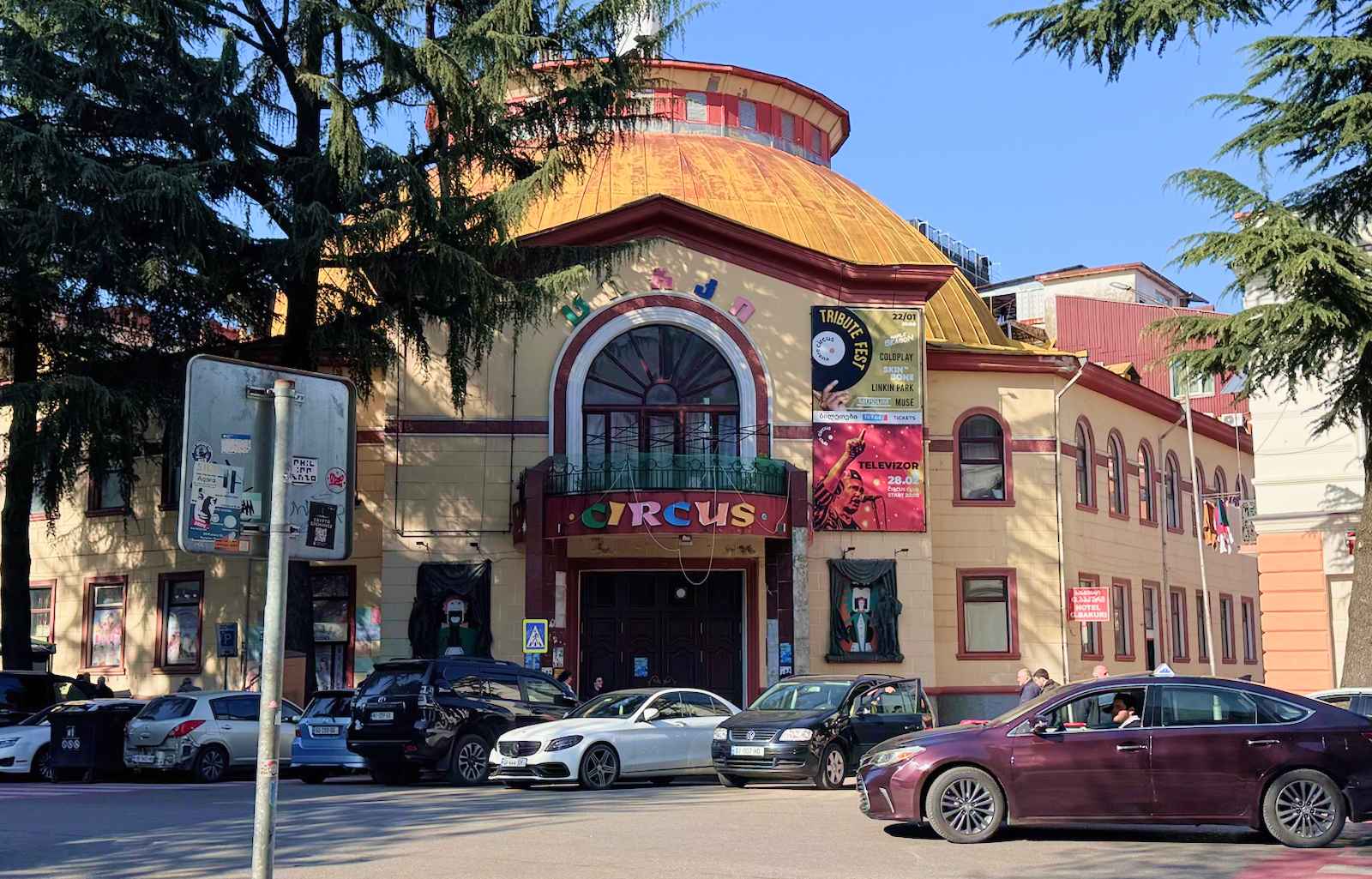
Batumi Circus / Photo: BizzzMedia
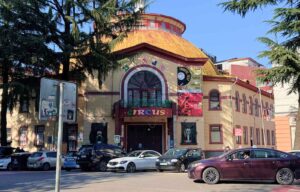
The building with a recognizable round shape appeared in Batumi in the 1970s. Before that, circus troupes performed in big tops, but the city needed a permanent venue. The circus became an important element of Soviet construction in Batumi: its architecture is simple and functional, but the place itself still preserves the atmosphere of the city's main celebrations of the last century.

Batumi General Post Office / Photo: BizzzMedia
On the corner of Abashidze Avenue and Baratashvili Street stands a building that many call the most beautiful in the Old Town. It is hard to believe that ordinary soldiers' barracks were once located here. In 1907, the Yakobashvili brothers bought the plot, deciding to build an exemplary postal and telegraph office. Architect Mikhail Neprintsev designed the building in the Italian Renaissance style with elements of Baroque. In the 2010s, the building underwent a large-scale reconstruction: the landmark facade was preserved, but now a five-star hotel and casino are located inside, and nothing remains of the old post office interiors.


Doctor Gigineishvili's House / Photo: BizzzMedia
This house is associated with the name of Platon Gigineishvili, a legendary doctor and philanthropist. The doctor was a key figure in fighting malaria and typhus in Adjara, but city residents remember him for his exceptional kindness. Platon Georgievich had a secret: if he saw that a patient was poor, he prescribed medicines on special green forms. The pharmacist knew: the bill for such prescriptions would be paid at the end of the month by the doctor himself.
Respect for the doctor was so great that during Soviet times the house was not nationalized, and it still belongs to Gigineishvili's descendants today. A memorial plaque is installed on the facade.


Batumi Puppet Theater / Photo: BizzzMedia
The Batumi Puppet Theater was founded in 1936 and today occupies a building recognized as a cultural heritage monument. After a recent renovation, the theater received a modern stage while preserving its historical charm. The repertoire has about 30 performances, from world fairy tales to Georgian folklore. The productions are very visual and musical, so they are interesting to watch even without knowing the language. Performances usually take place on weekends and last about 40 minutes, a great pause if you are walking the route with children.


Akaki Tsereteli Library / Photo: BizzzMedia
The library bears the name of the great Georgian poet and educator. This is not just a book depository, but a real intellectual center that united students and the creative elite of the city in the 20th century. The building emphasizes the educational side of Batumi's life, which has always strived to be not only a commercial, but also an enlightened city.


Adjara Art Museum / Photo: BizzzMedia
The museum occupies a Neoclassical building constructed in 1949 to a design by architect Kakha Javakhishvili. Inside is a rich collection of Georgian paintings and graphic art, including works by the great Niko Pirosmani and Lado Gudiashvili. Even if you do not plan to go inside, pay attention to the strict grandeur of the facade, which stands out against earlier merchant buildings.


Batumi Synagogue / Photo: Jcornelius / Wikimedia
The building was built in 1904 by architect Semyon Volkovich. An interesting fact: synagogues in The Hague and Amsterdam served as prototypes for it. The snow-white facade with characteristic rose windows looks very solemn. In Soviet times a gym operated here, but in the 90s the building was returned to the community. This is an important symbol of multinational Batumi, where there was always a place for representatives of different faiths.


Adjara Museum / Photo: BizzzMedia
One of the oldest museums in Georgia, founded in 1908. It is located in the former treasury building. Unique archaeological finds, ethnographic collections, and documents telling about the life of the region, from ancient Colchis to the present day, are gathered here. This is one of the best places for visitors who want to understand how the character of Adjara and Batumi took shape.


Church of Saint Joachim and Saint Anne / Photo: BizzzMedia
A small and cozy Catholic church that often remains outside the main tourist routes. Its modest architecture and calm atmosphere contrast with large cathedrals. This church is a reminder of the city's Catholic community, which was traditionally strong in Batumi thanks to ties with Europe.


Kupata the dog graffiti / Photo: BizzzMedia
The kindest stop on the route. A dog named Kupata became a world celebrity thanks to a video where she helps children cross the road safely by barking at cars. Kupata turned into a popular symbol of Batumi. The graffiti depicting her is a modern monument to loyalty and friendship, where tourists always stop to take a photo as a keepsake.


Batumi Colonnade / Photo: BizzzMedia
A monument to Georgian aviator Fadiko Gogitidze is installed at the central entrance to 6 May Park, next to the colonnade. It is dedicated to the first female aviator from Adjara, whose fate became a symbol of courage and striving toward a dream.
The final chord of the walk is the snow-white colonnade, erected in 1934. These symbolic gates to the sea became a calling card of the city. The project was brought from Italy by Batumi doctor Ivan Mchedlidze and implemented by architect Bogdan Kirakosyan. Passing through the columns, you find yourself on Seaside Boulevard: an ideal place to meet the sunset and conclude this journey through Batumi's history.

To discover more of the city, follow this route with our audio guide “Secrets of Old Batumi”. It tells the stories of Batumi merchants, 19th- and 20th-century architecture, mosques, churches, and hidden corners of the city.
When you finish at the colonnade and reach the sea, continue with our second route along Batumi Boulevard and waterfront, which tells the stories behind the coast’s landmarks.
We hope your walk through Old Batumi will be full of discoveries. Have a pleasant trip and see you on the streets of the city!